

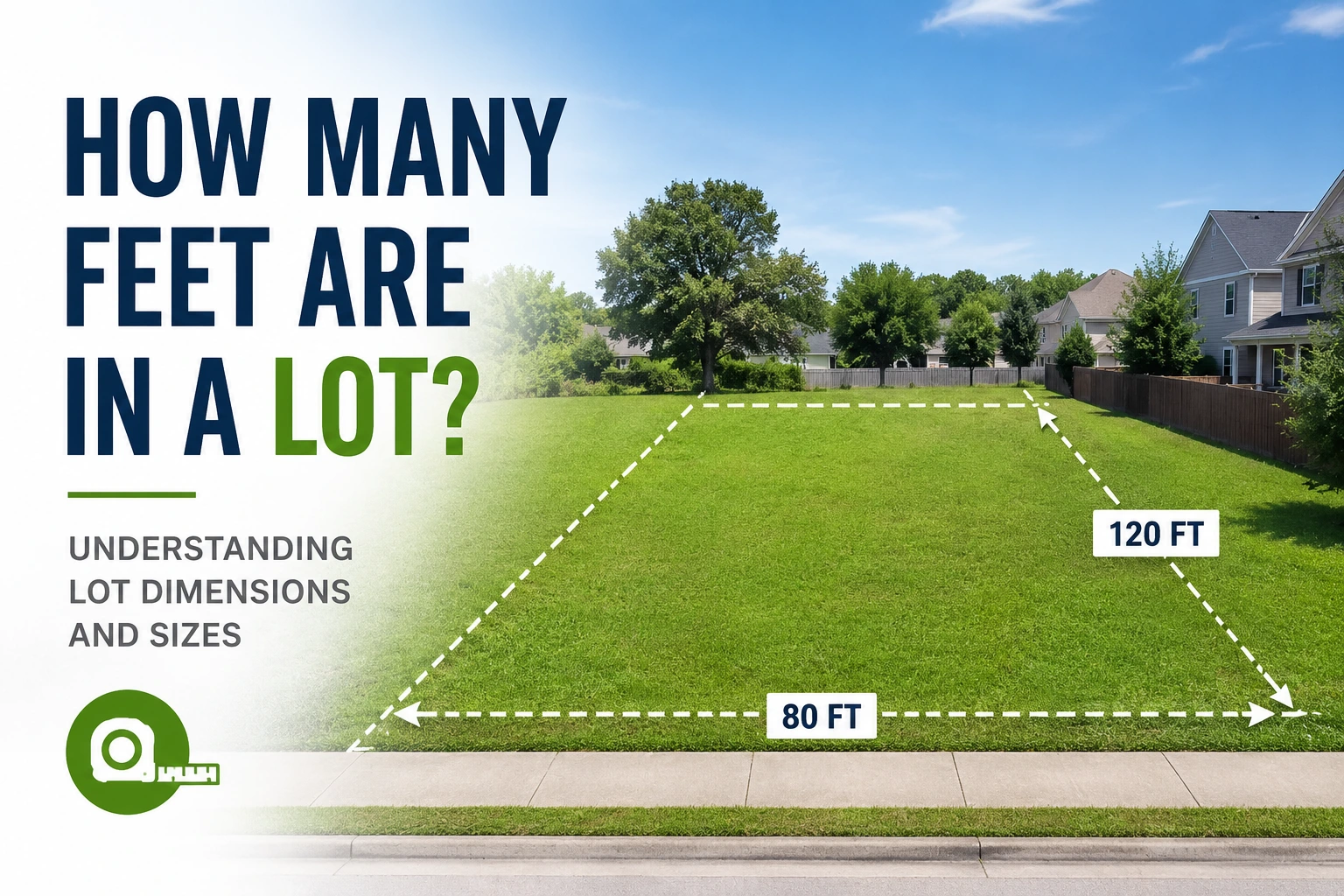
When people ask, “how many feet are in a lot,” they are usually trying to understand the size of a piece of land. However, there is not one fixed answer because a lot can come in many different shapes and sizes.
In real estate, a lot refers to a parcel of land. Some lots are small enough for a single-family house, while others can cover several acres. Because of this, the number of feet in a lot depends on its dimensions and total area.
For example, a common residential lot in the United States may measure:
- 50 feet wide × 100 feet deep
- 60 feet × 120 feet
- 80 feet × 100 feet
That means the total square footage can vary greatly.
Understanding lot measurements is important when buying property, building a home, planning landscaping, or investing in real estate. In this guide, you will learn how lot sizes work, how to calculate square footage, and what standard lot dimensions look like.
What Does “Lot” Mean in Real Estate?
A lot is a defined piece of land legally recorded for ownership or development. In simple terms, it is the land where a house, building, or structure can be built.
Lots are usually measured using:
- Width (frontage)
- Depth
- Total square footage
- Acres
For example:
| Lot Width | Lot Depth | Total Square Feet |
|---|---|---|
| 50 ft | 100 ft | 5,000 sq ft |
| 60 ft | 120 ft | 7,200 sq ft |
| 80 ft | 125 ft | 10,000 sq ft |
So when someone asks how many feet are in a lot, they often mean either:
- The width and depth of the land
- The total square footage
How Are Lots Measured?
Lots are usually measured in square feet or acres.
A square foot is the area of a square measuring:
1 foot×1 foot=1 square foot
To calculate the size of a rectangular lot:
Lot Size=Width×Depth
Example:
If a lot is 50 feet wide and 100 feet deep:
50×100=5,000 square feet
This means the lot contains 5,000 square feet.
How Many Feet Are in a Standard Lot?
There is no universal standard lot size because property dimensions vary by:
- Country
- State
- City zoning laws
- Neighborhood
- Property type
However, many residential lots fall within common ranges.
Typical Residential Lot Sizes
| Property Type | Common Lot Size |
|---|---|
| Small urban lot | 2,500–4,000 sq ft |
| Standard suburban lot | 5,000–8,000 sq ft |
| Large suburban lot | 10,000–20,000 sq ft |
| Rural property | 1 acre or more |
A common suburban lot is often around:
- 50 ft × 100 ft
- 60 ft × 120 ft
These are popular because they provide enough space for:
- A house
- Driveway
- Yard
- Garage
- Landscaping
Common Residential Lot Sizes
Here are some of the most common lot dimensions used in residential real estate.
| Width | Depth | Square Footage |
|---|---|---|
| 40 ft | 100 ft | 4,000 sq ft |
| 50 ft | 100 ft | 5,000 sq ft |
| 60 ft | 120 ft | 7,200 sq ft |
| 75 ft | 120 ft | 9,000 sq ft |
| 100 ft | 100 ft | 10,000 sq ft |
These measurements help builders and buyers understand how much usable space the property has.
Understanding Square Feet vs Linear Feet
One common mistake is confusing square feet with linear feet.
Linear Feet
Linear feet measure length only.
Example:
- A fence that is 100 feet long = 100 linear feet
Square Feet
Square feet measure area.
Example:
- A 50 ft × 100 ft lot = 5,000 square feet
This formula is important:
Square Feet=Length×Width
Understanding the difference helps avoid errors when buying land or planning construction projects.
How to Calculate Lot Size in Feet
Calculating lot size is usually simple.
Step 1: Measure Width
Measure the front of the property from one side boundary to the other.
Example:
- Width = 60 feet
Step 2: Measure Depth
Measure from the front property line to the back.
Example:
- Depth = 120 feet
Step 3: Multiply the Numbers
60×120=7,200 sq ft
The total lot size is 7,200 square feet.
Lot Size Conversion Chart
Sometimes land is measured in acres instead of square feet.
Important Conversion
1 acre=43,560 square feet
Conversion Table
| Acres | Square Feet |
|---|---|
| 0.10 acre | 4,356 sq ft |
| 0.25 acre | 10,890 sq ft |
| 0.50 acre | 21,780 sq ft |
| 1 acre | 43,560 sq ft |
| 2 acres | 87,120 sq ft |
This helps buyers compare different property listings.
Factors That Affect Lot Dimensions
Not all lots are rectangular. Several factors can affect the number of feet in a lot.
1. Property Shape
Lots may be:
- Rectangular
- Square
- Triangular
- Irregular
Irregular lots require more advanced calculations.
2. Zoning Rules
Local governments may require minimum lot sizes for building permits.
3. Road Frontage
Corner lots often have different dimensions compared to interior lots.
4. Neighborhood Design
Urban areas usually have smaller lots, while rural properties are much larger.
City Lots vs Rural Lots
Lot size changes dramatically based on location.
Urban Lots
City properties are smaller because land is more expensive.
Typical urban lot:
- 25 ft × 100 ft
- 2,500 sq ft total
These are common in dense neighborhoods.
Suburban Lots
Suburban properties offer more yard space.
Typical suburban lot:
- 50 ft × 100 ft
- 5,000 sq ft total
Rural Lots
Rural land can be several acres.
Example:
- 2-acre property
- 87,120 sq ft
Rural lots provide more privacy and open space.
Why Lot Size Matters
Understanding lot size is important for several reasons.
Home Construction
Builders need enough space for:
- House footprint
- Setbacks
- Driveways
- Garages
- Landscaping
Property Value
Larger lots often increase property value.
Outdoor Space
A bigger lot provides:
- Gardens
- Pools
- Patios
- Play areas
Future Expansion
Extra land allows future additions or structures.
Common Mistakes When Measuring a Lot
Many people misunderstand property measurements. Here are common mistakes to avoid.
Confusing Acres With Square Feet
Remember:
1 acre=43,560 sq ft
Ignoring Irregular Shapes
Some lots are not perfect rectangles.
Using Approximate Measurements
Even small errors can create major issues during construction or land purchases.
Not Checking Official Surveys
Always verify lot dimensions using official survey documents.
Expert Tips for Understanding Lot Measurements
Read Property Surveys Carefully
A land survey provides the most accurate dimensions.
Use Online Mapping Tools
Property mapping software can estimate lot size quickly.
Understand Zoning Requirements
Different cities have minimum setback and lot requirements.
Think Beyond Square Footage
A smaller but well-shaped lot may be more useful than a larger irregular lot.
Compare Usable Space
Steep slopes or easements can reduce usable land area.
Practical Examples of Lot Sizes
Here are real-world examples to make lot measurements easier to understand.
| Lot Size | Comparison |
|---|---|
| 2,500 sq ft | Small urban home lot |
| 5,000 sq ft | Standard suburban lot |
| 10,000 sq ft | Large residential property |
| 43,560 sq ft | One acre |
| 87,120 sq ft | Two-acre property |
These examples help visualize how much land different lots provide.
How Real Estate Listings Show Lot Size
Property listings may display lot size in several ways:
- Square feet
- Acres
- Frontage × depth
Example listing:
- Lot Size: 60 × 120
- Total Area: 7,200 sq ft
Or:
- Lot Size: 0.25 acre
Knowing how to interpret these numbers makes comparing properties easier.
FAQs
How many feet are in a standard lot?
A standard residential lot is commonly around 5,000 to 8,000 square feet, although sizes vary by location.
How many square feet is a 50×100 lot?
A 50 ft × 100 ft lot equals:
50×100=5,000 sq ft
Is lot size measured in feet or acres?
Lot size can be measured in both square feet and acres depending on the property size.
How many feet are in one acre?
One acre contains:
43,560 square feet
How do I calculate the size of my lot?
Multiply the width by the depth to determine total square footage.
Conclusion
Understanding how many feet are in a lot is essential when buying property, planning construction, or comparing real estate listings. Since lot sizes vary widely, there is no single answer. A lot may contain anywhere from a few thousand square feet to several acres depending on location and property type.
Most residential lots are measured using width and depth. By multiplying these dimensions, you can calculate total square footage quickly and accurately.
Whether you are purchasing land, building a home, or simply learning about real estate measurements, knowing how lot sizes work can help you make smarter decisions and avoid costly mistakes.
Discover more