
Plywood is one of the most widely used building materials in construction and home improvement projects. Whether you are building a floor, roof, wall, cabinet, or furniture piece, knowing the exact coverage of a plywood sheet helps you estimate materials correctly and avoid waste.
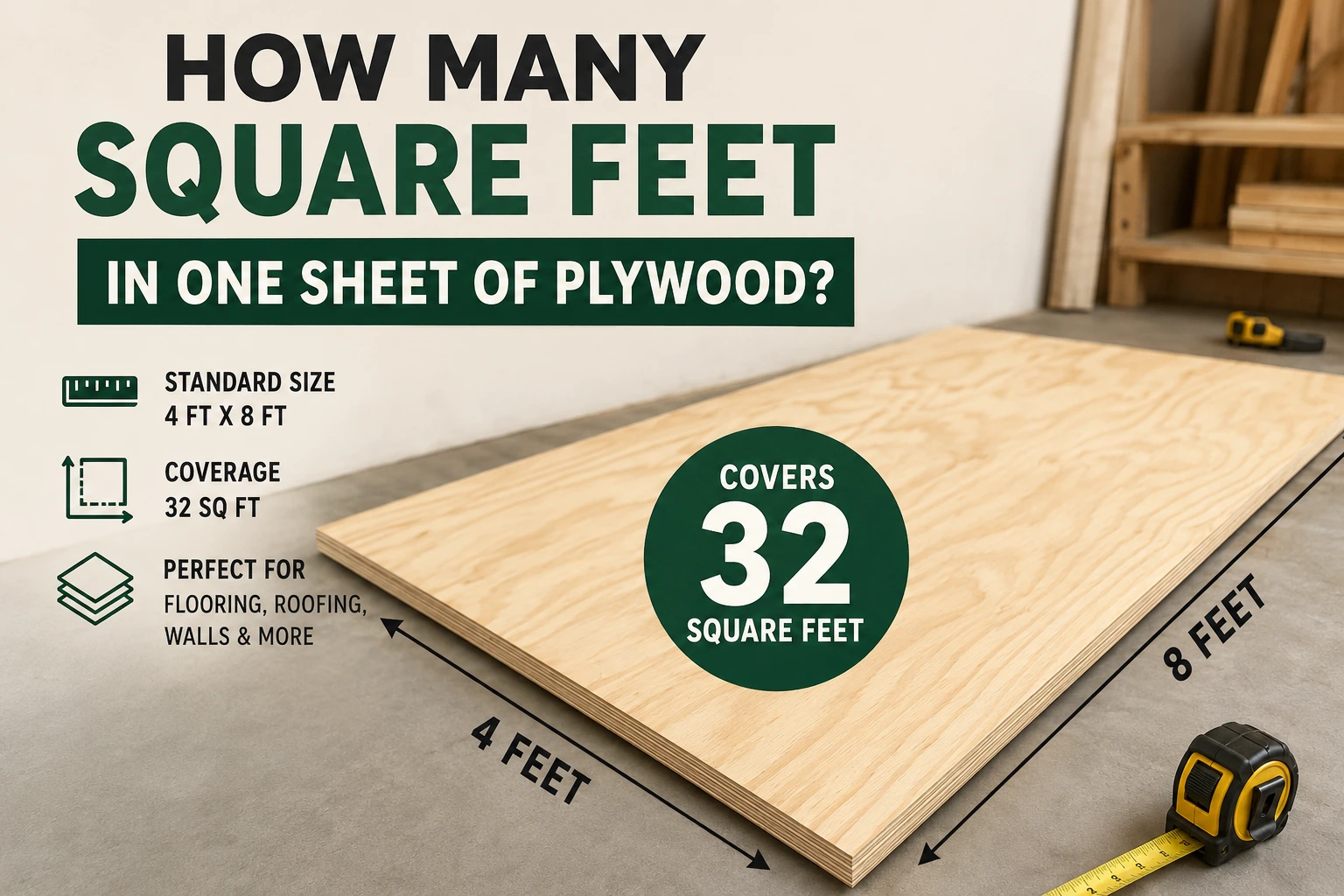
Many people ask, “how many square feet in one sheet of plywood?” The answer depends on the size of the plywood sheet. The most common plywood size is 4 feet by 8 feet, which covers 32 square feet.
Understanding plywood dimensions and square footage is important for contractors, DIY homeowners, and anyone planning a renovation project. In this guide, you will learn how to calculate plywood coverage, compare common sheet sizes, and estimate how many sheets you need for your project.
Understanding Standard Plywood Sizes
Plywood comes in several standard dimensions. However, some sizes are more common than others in residential and commercial construction.
Most Common Plywood Sheet Dimensions
Here are the standard plywood sheet sizes you will usually find:
| Plywood Size | Square Feet Covered |
|---|---|
| 4 x 8 feet | 32 sq ft |
| 4 x 10 feet | 40 sq ft |
| 5 x 5 feet | 25 sq ft |
| 2 x 4 feet | 8 sq ft |
The most common choice is the 4×8 plywood sheet because it works well for floors, walls, roofs, and furniture projects.
Why 4×8 Sheets Are Popular
Builders prefer 4×8 plywood because it matches standard wall stud spacing and floor joist layouts. It is also easy to transport and install.
A single 4×8 sheet covers enough area for many small home projects while reducing seams and joints in larger installations.
How Many Square Feet in One Sheet of Plywood?
The exact square footage depends on the plywood dimensions.
For example:
- A 4-foot by 8-foot plywood sheet covers 32 square feet.
- A 4-foot by 10-foot sheet covers 40 square feet.
- A 5-foot by 5-foot sheet covers 25 square feet.
The calculation is simple:
Square Feet=Length×Width
If a plywood sheet measures 4 feet wide and 8 feet long:
4×8=32 square feet
So, the answer to “how many square feet in one sheet of plywood” for a standard sheet is usually 32 square feet.
Square Foot Formula Explained
Square footage measures area. To calculate area, multiply the sheet’s length by its width.
For example:
- Width = 4 feet
- Length = 8 feet
Multiply both numbers:
32 square feet
This simple formula works for all plywood sizes.
Coverage of Common Plywood Sizes
Here is a quick breakdown:
| Sheet Dimensions | Area Covered |
|---|---|
| 4×8 | 32 sq ft |
| 4×10 | 40 sq ft |
| 4×12 | 48 sq ft |
| 5×5 | 25 sq ft |
Plywood Size and Coverage Chart
Using a plywood chart makes project planning easier.
4×8 Plywood
A 4×8 plywood sheet is the industry standard. It covers:
4×8=32 sq ft
This size is commonly used for:
- Flooring
- Roof decking
- Wall sheathing
- Subfloors
- Furniture
4×10 Plywood
Larger projects may use 4×10 plywood sheets.
Coverage:
4×10=40 sq ft
These sheets reduce seams and can speed up installation.
5×5 Plywood
This square plywood format is often used for specialty woodworking.
Coverage:
5×5=25 sq ft
How to Calculate Plywood Square Footage
Calculating plywood coverage is easy once you know the dimensions.
Step-by-Step Formula
Use this formula:
A=l×w
Where:
- A = Area
- l = Length
- w = Width
Real-Life Examples
Example 1: Flooring Project
Suppose your room measures:
- 12 feet wide
- 16 feet long
Room area:
12×16=192 sq ft
A standard plywood sheet covers 32 square feet.
Now divide:
192÷32=6
You need about 6 sheets of plywood.
Example 2: Small Wall Project
Wall dimensions:
- 8 feet high
- 10 feet long
Area:
8×10=80 sq ft
Divide by 32:
80÷32=2.5
You should buy 3 sheets to account for cuts and waste.
Common Uses for Plywood Sheets
Plywood is extremely versatile. Different sheet sizes work for different construction jobs.
Flooring Projects
Plywood is often used as a subfloor beneath hardwood, vinyl, or carpet.
Benefits include:
- Strong support
- Smooth surface
- Easy installation
- Good durability
A standard 4×8 sheet is ideal for most flooring layouts.
Roofing Applications
Roof decking commonly uses plywood sheets because they are strong and weather resistant.
Contractors usually install plywood over rafters to create a stable roofing base.
Wall Sheathing
Exterior walls often use plywood sheathing to improve structural strength.
Plywood also helps:
- Resist wind pressure
- Support siding materials
- Improve insulation systems
Factors That Affect Plywood Coverage
Although plywood sheets have fixed dimensions, actual usable coverage may vary.
Waste and Cutting Loss
You rarely use 100% of every plywood sheet. Some material is lost due to:
- Corner cuts
- Door openings
- Window openings
- Irregular room shapes
Experts usually recommend adding 10% extra material.
Example:
If your project needs 10 sheets, buy 11 sheets.
Thickness and Project Type
Thickness does not change square footage, but it affects performance.
Common plywood thicknesses include:
| Thickness | Common Use |
|---|---|
| 1/4 inch | Decorative panels |
| 1/2 inch | Walls and cabinets |
| 3/4 inch | Flooring and heavy-duty use |
Choose thickness based on load requirements and project goals.
Expert Tips Before Buying Plywood
Planning properly can save money and reduce waste.
Measure Twice
Always double-check room dimensions before purchasing materials.
Small measuring errors can lead to:
- Material shortages
- Extra costs
- Delays in construction
Buy Extra Material
Extra plywood helps cover mistakes and future repairs.
Most professionals recommend:
- 5% extra for simple layouts
- 10–15% extra for complex cuts
Check Sheet Quality
Inspect plywood before purchase.
Look for:
- Flat panels
- Minimal warping
- Smooth surfaces
- Strong edges
Lower-quality plywood may create installation problems later.
Common Mistakes to Avoid
Many DIY builders make plywood estimation mistakes.
Here are the most common ones:
Ignoring Waste
Not accounting for cuts can leave you short on material.
Using Wrong Measurements
Always measure in feet when calculating square footage.
Forgetting Layout Direction
Some projects require plywood sheets to run in a specific direction for strength.
Buying the Cheapest Option
Low-quality plywood may warp or crack over time.
Choosing better material often saves money in the long run.
Frequently Asked Questions
How many square feet in one sheet of plywood 4×8?
A standard 4×8 plywood sheet covers 32 square feet.
What is the most common plywood sheet size?
The most common plywood size is 4 feet by 8 feet.
How many plywood sheets do I need for 500 square feet?
Divide 500 by 32.
500÷32≈15.6
You need about 16 sheets, plus extra for waste.
Does plywood thickness affect square footage?
No. Thickness changes strength and durability, not area coverage.
Can plywood sizes vary?
Yes. Some specialty plywood sheets come in different lengths and widths depending on the manufacturer and project needs.
Conclusion
Understanding how many square feet in one sheet of plywood is essential for planning construction and renovation projects accurately. The standard 4×8 plywood sheet covers 32 square feet, making it the most widely used option for flooring, roofing, and wall applications.
Knowing plywood dimensions helps you estimate costs, reduce waste, and buy the correct number of sheets for your project. Whether you are building a subfloor, installing roof decking, or completing a DIY woodworking project, accurate plywood calculations can save both time and money.
Before purchasing materials, always measure carefully, allow for waste, and choose the right plywood thickness for your specific application.
Discover more