

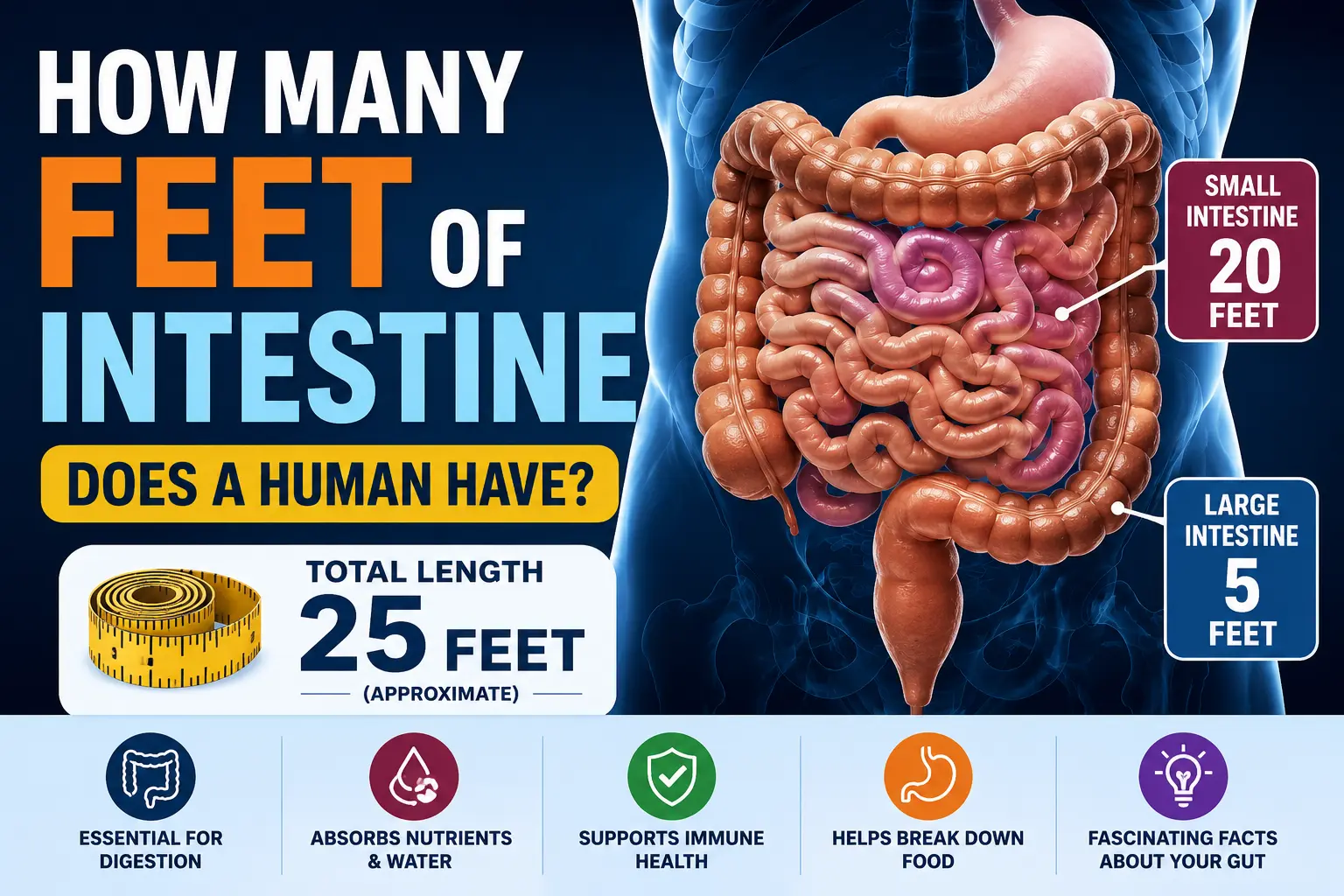
Many people are surprised when they learn how many feet of intestine are packed inside the human body. Although the abdomen looks relatively small, the intestines are incredibly long and tightly folded to fit inside. These organs play a major role in digestion, nutrient absorption, immune support, and waste removal.
The average adult human has around 25 feet of intestines combined. Most of this length comes from the small intestine, while the large intestine makes up a smaller portion. Despite their names, the small intestine is actually much longer than the large intestine.
Understanding intestine length is not only interesting but also important for learning how the digestive system works. In this guide, you will discover the exact length of the intestines, how they function, why they are so long, and how to keep them healthy.
Understanding the Human Intestine
Before discussing measurements, it helps to understand what the intestines are and why they matter.
What Is the Intestine?
The intestine is a long tube-like organ in the digestive system. It connects the stomach to the anus and helps process food after it leaves the stomach.
The intestines are responsible for:
- Breaking down food further
- Absorbing nutrients
- Absorbing water
- Moving waste through the body
- Supporting healthy gut bacteria
Without intestines, the body could not absorb the nutrients needed for energy and survival.
Main Parts of the Intestinal System
The intestinal system has two major sections:
- Small intestine
- Large intestine
Each section has a different role and structure.
How Many Feet of Intestine Are in the Human Body?
The total intestine length in an average adult is usually around 25 feet. However, this can vary slightly depending on age, body size, and measurement method.
Small Intestine Length
The small intestine is the longest part of the digestive system.
Small Intestine Length≈20 feet
In most adults, the small intestine measures about 20 feet long. In some people, it may reach up to 22 feet.
The small intestine has three sections:
- Duodenum
- Jejunum
- Ileum
These sections work together to digest food and absorb nutrients.
Large Intestine Length
The large intestine is shorter but wider.
Large Intestine Length≈5 feet
The large intestine usually measures around 5 feet long.
It includes:
- Cecum
- Colon
- Rectum
Its main role is absorbing water and preparing waste for removal.
Combined Total Length
When combined, the total intestinal length is approximately:
20 feet+5 feet=25 feet
So, the average adult human has around 25 feet of intestine.
Why Are Human Intestines So Long?
Many people wonder why the intestines need to be this long. The answer lies in digestion and nutrient absorption.
Digestion Process
Food digestion does not happen instantly. The body needs time to:
- Break down proteins
- Digest fats
- Process carbohydrates
- Separate nutrients
A longer intestine gives food more time to move through the digestive tract.
Nutrient Absorption
The small intestine absorbs nutrients into the bloodstream. Its long structure provides a huge surface area for absorption.
Important nutrients absorbed include:
- Vitamins
- Minerals
- Sugars
- Amino acids
- Fatty acids
Without enough intestinal length, the body would struggle to absorb nutrients properly.
Waste Removal
The large intestine absorbs water and forms solid waste. Its structure allows the body to remove waste efficiently while conserving fluids.
Small Intestine vs Large Intestine
Although their names sound simple, the small and large intestines are very different.
Size Differences
Here is a comparison table.
| Feature | Small Intestine | Large Intestine |
|---|---|---|
| Average Length | 20 feet | 5 feet |
| Width | Narrow | Wider |
| Main Job | Nutrient absorption | Water absorption |
| Location | Middle abdomen | Outer abdominal area |
| Digestive Role | Digestion and absorption | Waste formation |
The small intestine is longer but thinner. The large intestine is shorter but thicker.
Functions Compared
Small Intestine Functions
- Digests food chemically
- Absorbs nutrients
- Moves food using muscle contractions
Large Intestine Functions
- Absorbs water
- Stores waste
- Supports gut bacteria
- Removes waste from the body
Both sections are essential for healthy digestion.
How the Intestines Fit Inside the Human Body
A common question is how 25 feet of intestine fits into the abdomen.
The answer is simple: the intestines are tightly folded and coiled. They are arranged in loops inside the abdominal cavity.
The small intestine especially has many folds. These folds increase surface area while helping the organ fit compactly inside the body.
The intestines are also flexible and supported by tissues called mesenteries, which hold them in place.
Interesting Facts About Human Intestines
The digestive system is full of surprising details.
Your Intestines Are Home to Trillions of Bacteria
The gut contains helpful bacteria known as gut microbiota. These bacteria help with:
- Digestion
- Immune support
- Vitamin production
The Small Intestine Has Tiny Finger-Like Structures
These are called villi. They increase nutrient absorption dramatically.
Digestion Can Take Many Hours
Food may spend:
- 4–6 hours in the small intestine
- 24–72 hours in the large intestine
Intestines Continue Moving Constantly
Muscle contractions called peristalsis push food through the digestive system.
Common Intestinal Problems
The intestines can develop several health issues.
Digestive Disorders
Common intestinal disorders include:
- Irritable bowel syndrome (IBS)
- Crohn’s disease
- Ulcerative colitis
- Constipation
- Diarrhea
- Intestinal infections
These conditions can affect digestion and comfort.
Signs of Poor Gut Health
Watch for symptoms such as:
- Bloating
- Stomach pain
- Gas
- Irregular bowel movements
- Fatigue
- Poor nutrient absorption
Persistent symptoms should be evaluated by a healthcare professional.
Tips for Keeping Your Intestines Healthy
Healthy intestines support overall wellness.
Eat More Fiber
Fiber helps food move smoothly through the digestive tract.
Good sources include:
- Fruits
- Vegetables
- Whole grains
- Beans
Drink Enough Water
Water helps digestion and prevents constipation.
Exercise Regularly
Physical activity supports healthy bowel movement.
Limit Processed Foods
Highly processed foods may negatively affect gut bacteria.
Include Probiotic Foods
Foods like yogurt and kefir support healthy gut bacteria.
Manage Stress
Stress can affect digestion and bowel health.
Intestine Length Comparison Table
Here is a quick overview of intestine measurements.
| Intestinal Section | Average Length |
|---|---|
| Small Intestine | 20 feet |
| Large Intestine | 5 feet |
| Total Intestines | 25 feet |
This table provides a simple summary for quick understanding.
How Intestine Length Changes With Age
Intestinal size changes slightly throughout life.
Infants and Children
Children have shorter intestines because their bodies are smaller.
Adults
Adults reach the full average intestinal length of around 25 feet.
Older Adults
Aging may affect intestinal movement and digestion speed, although overall length remains mostly stable.
Why Intestine Length Matters in Medicine
Doctors and surgeons pay close attention to intestine length.
Nutrient Absorption Problems
People with shortened intestines may struggle to absorb nutrients.
Surgery Considerations
Some surgeries remove damaged intestinal sections.
Digestive Disease Treatment
Understanding intestinal structure helps doctors diagnose disorders.
9. FAQs
How many feet of intestine does a human have?
The average adult human has about 25 feet of intestines combined.
How long is the small intestine?
The small intestine is usually around 20 feet long.
Why is the small intestine longer than the large intestine?
The small intestine needs extra length for nutrient absorption and digestion.
How long is the large intestine?
The large intestine is about 5 feet long on average.
Can intestine length vary between people?
Yes, intestine length can vary slightly based on body size, age, and genetics.
10. Conclusion
Understanding how many feet of intestine humans have reveals just how amazing the digestive system truly is. The average adult has around 25 feet of intestines, including about 20 feet of small intestine and 5 feet of large intestine. These organs work together to digest food, absorb nutrients, support healthy bacteria, and remove waste from the body.
Although they are extremely long, the intestines fit neatly inside the abdomen through tight folds and loops. Learning about intestine length also helps people better understand digestion, gut health, and the importance of maintaining a healthy lifestyle. With proper nutrition, hydration, exercise, and stress management, the intestines can continue functioning efficiently for years.
Discover more