
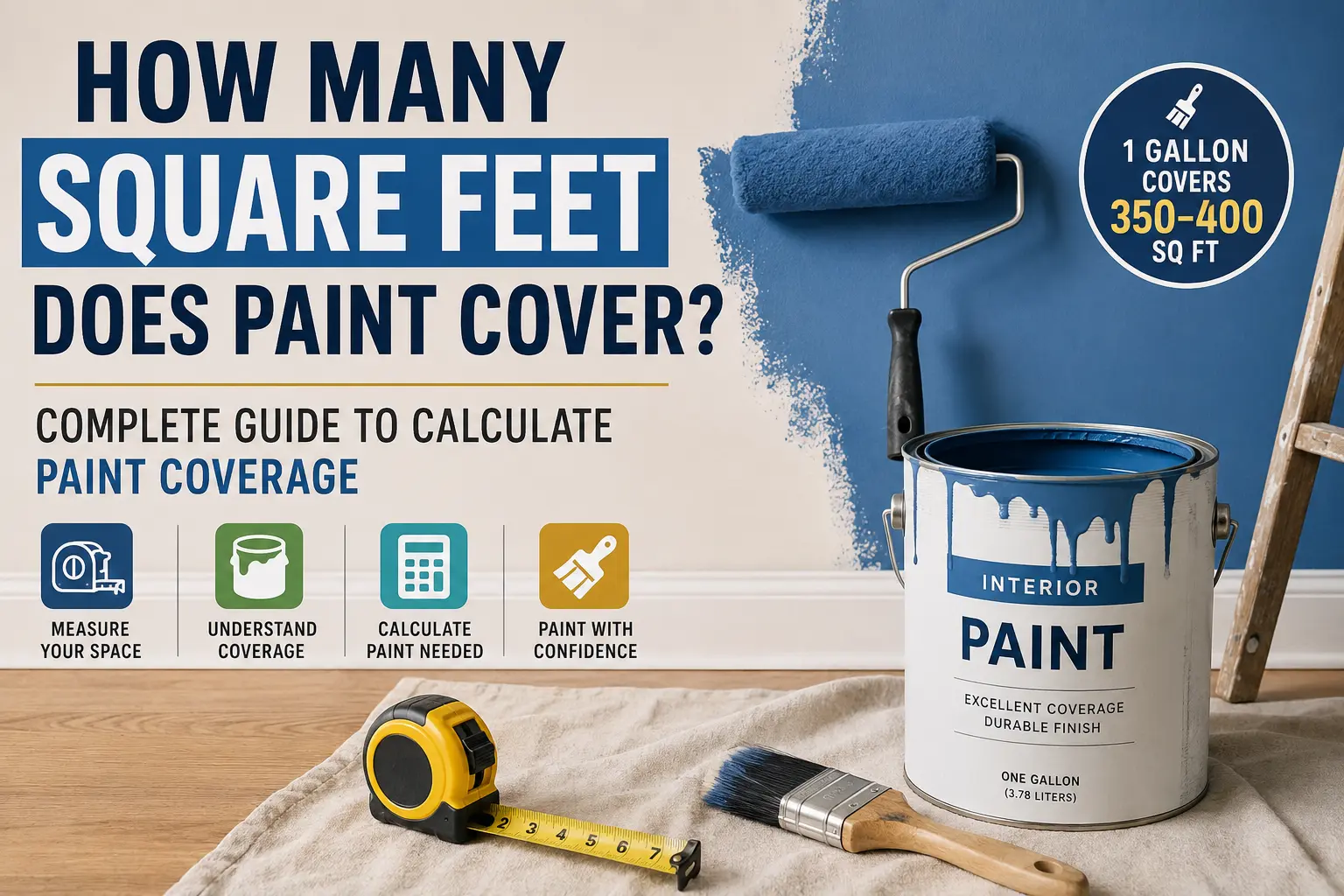
If you are planning a painting project, one of the first questions you may ask is: how many square feet does paint cover? Knowing the answer helps you avoid wasting money, running out of paint midway through the job, or buying far too much.
In most cases, one gallon of paint covers about 350 to 400 square feet with a single coat on a smooth surface. However, the actual coverage depends on several factors, including wall texture, paint quality, color changes, and whether primer is used.
Understanding paint coverage is important for both small DIY projects and large home renovations. Whether you are painting a bedroom, kitchen, office, or the exterior of your home, accurate calculations save time and money while helping you achieve a professional finish.
What Is Standard Paint Coverage?
Paint manufacturers usually provide an estimated coverage amount on the paint can label. This estimate tells you how many square feet one gallon of paint can cover under normal conditions.
Average Paint Coverage Per Gallon
Most standard paints cover:
| Paint Quantity | Approximate Coverage |
|---|---|
| 1 Quart | 80–100 square feet |
| 1 Gallon | 350–400 square feet |
| 5 Gallons | 1,750–2,000 square feet |
These numbers assume:
- Smooth walls
- One coat
- Proper wall preparation
- Standard roller application
Interior vs Exterior Paint Coverage
Interior paint usually covers slightly better because indoor walls are smoother and protected from weather damage. Exterior surfaces often absorb more paint because of rough textures and outdoor wear.
| Paint Type | Average Coverage |
|---|---|
| Interior Paint | 350–400 sq ft per gallon |
| Exterior Paint | 250–350 sq ft per gallon |
How Many Square Feet Does Paint Cover Per Gallon?
The simple answer is that one gallon of paint covers around 350 square feet on average. However, this can vary based on the project.
For example:
- Smooth drywall may reach 400 sq ft
- Textured walls may only cover 250–300 sq ft
- Dark color changes may require extra coats
Coverage Chart
| Surface Type | Coverage Per Gallon |
|---|---|
| Smooth Interior Wall | 350–400 sq ft |
| Textured Wall | 250–300 sq ft |
| Ceiling | 300–350 sq ft |
| Exterior Siding | 250–350 sq ft |
| Brick or Stucco | 200–300 sq ft |
Single Coat vs Double Coat
Most painting projects require two coats for full color depth and durability.
Here is a simple example:
- One gallon = 350 sq ft with one coat
- Two coats = only 175 sq ft effectively covered
This is why calculating coats correctly matters when buying paint.
Factors That Affect Paint Coverage
Several important factors determine how many square feet paint covers in real-world situations.
Surface Texture
Smooth walls require less paint. Rough surfaces absorb more paint and reduce coverage.
Examples of rough surfaces include:
- Stucco
- Brick
- Popcorn ceilings
- Textured drywall
- Wood grain siding
These surfaces have more area to coat, so they use more paint.
Paint Quality
Higher-quality paint often contains better pigments and binders. This improves hiding ability and coverage.
Cheap paint may:
- Require more coats
- Look uneven
- Absorb poorly
- Increase overall paint usage
Premium paint usually costs more upfront but often saves money because you need less paint overall.
Color Changes
Changing from a dark wall to a light color usually requires:
- Primer
- Extra coats
For example:
- Black to white paint may need 2–3 coats
- White to beige may need only 1–2 coats
Large color changes reduce total paint coverage.
Primer Usage
Primer helps paint stick properly and improves final coverage.
Using primer can:
- Reduce paint absorption
- Improve color consistency
- Lower the number of paint coats needed
Without primer, porous walls may soak up paint quickly.
Application Method
The method used to apply paint also affects coverage.
| Application Method | Paint Usage |
|---|---|
| Roller | Most efficient |
| Brush | Moderate usage |
| Paint Sprayer | Uses more paint |
Sprayers create overspray, which increases paint waste.
How to Calculate Paint Coverage
Learning how to estimate paint needs is simple once you understand the basic formula.
Step-by-Step Formula
Use this formula:
Paint Needed=Coverage Per GallonTotal Square Feet
Measuring Walls Correctly
Measure:
- Wall width
- Wall height
Then multiply:
Wall Area=Width×Height
Example:
- Wall width = 12 feet
- Wall height = 8 feet
Result:
12×8=96 square feet
Repeat this for every wall and add the totals together.
Subtracting Doors and Windows
You can subtract:
- Doors: about 20 square feet each
- Windows: about 15 square feet each
This gives a more accurate estimate.
Paint Coverage Examples
Real examples make paint calculations easier to understand.
Small Bedroom Example
Bedroom size:
- 10 ft × 12 ft
- Ceiling height = 8 ft
Wall area:
- Two walls: 10 × 8 = 80 sq ft each
- Two walls: 12 × 8 = 96 sq ft each
Total:
- 80 + 80 + 96 + 96 = 352 sq ft
After subtracting one door and one window:
- 352 − 20 − 15 = 317 sq ft
One gallon of paint is usually enough for one coat.
Two coats may require two gallons.
Living Room Example
Living room dimensions:
- 15 ft × 20 ft
- Height = 9 ft
Total wall area:
- 630 sq ft approximately
For two coats:
- 1,260 sq ft total coverage needed
This project may require:
- 3–4 gallons of paint
Exterior House Example
Exterior surfaces absorb more paint because of weathered textures.
A 1,500-square-foot exterior home may require:
- 10–15 gallons of paint
- More if stucco or brick is involved
Paint Coverage Chart by Room Size
| Room Size | Approximate Paint Needed |
|---|---|
| Small Bathroom | 1 gallon |
| Small Bedroom | 1–2 gallons |
| Medium Bedroom | 2 gallons |
| Living Room | 2–3 gallons |
| Large Open Space | 4–5 gallons |
These estimates assume:
- Standard ceiling height
- Two coats
- Smooth surfaces
How Many Coats of Paint Do You Need?
The number of coats directly impacts paint coverage.
One Coat Situations
One coat may work if:
- Walls are already similar in color
- High-quality paint is used
- Primer is applied first
- Touch-up painting is being done
When Two Coats Are Better
Two coats are recommended for:
- Dark-to-light color changes
- Fresh drywall
- High-traffic rooms
- Exterior painting
- Long-lasting durability
Professional painters almost always recommend two coats for best results.
Common Paint Coverage Mistakes
Many people underestimate how much paint they need.
Ignoring Primer
Skipping primer can cause:
- Uneven coverage
- More paint usage
- Poor durability
Forgetting Ceiling Paint
Ceilings require separate calculations. Many people forget to include them in paint estimates.
Underestimating Texture
Textured walls and ceilings use much more paint than flat drywall.
Always buy extra paint for textured surfaces.
Tips to Maximize Paint Coverage
If you want better results while using less paint, follow these expert tips.
Use Quality Paint
Premium paint usually:
- Covers better
- Lasts longer
- Requires fewer coats
This often reduces overall project cost.
Prepare Walls Properly
Clean and smooth walls improve paint adhesion.
Before painting:
- Remove dust
- Fill holes
- Sand rough areas
- Use primer when necessary
Choose the Right Tools
High-quality rollers and brushes distribute paint evenly and reduce waste.
Roller thickness matters too:
- Thin nap rollers for smooth walls
- Thick nap rollers for textured walls
Interior vs Exterior Paint Coverage Comparison
| Feature | Interior Paint | Exterior Paint |
|—|—|
| Average Coverage | 350–400 sq ft | 250–350 sq ft |
| Surface Texture | Smooth | Rough |
| Weather Exposure | Low | High |
| Durability Needs | Moderate | High |
| Paint Usage | Lower | Higher |
Exterior projects usually require more paint because surfaces are less uniform and more absorbent.
When to Use a Paint Coverage Calculator
Online paint calculators can save time for larger projects.
They are useful for:
- Whole-house painting
- Commercial spaces
- Exterior estimates
- Multi-room projects
Most calculators ask for:
- Room dimensions
- Ceiling height
- Number of doors/windows
- Number of coats
However, it is still smart to buy a little extra paint for touch-ups and future repairs.
9. FAQs
How many square feet does one gallon of paint cover?
One gallon of paint typically covers 350 to 400 square feet with one coat on smooth walls.
Does textured wall paint cover less area?
Yes. Textured walls absorb more paint, reducing coverage to around 250–300 square feet per gallon.
How much paint do I need for a 12×12 room?
Most 12×12 rooms need about 1–2 gallons of paint depending on ceiling height, wall texture, and number of coats.
Is primer included in paint coverage calculations?
Usually no. Primer has separate coverage estimates and should be calculated independently.
Should I buy extra paint?
Yes. Buying 10–15% extra paint is recommended for touch-ups, mistakes, and future repairs.
10. Conclusion
Understanding how many square feet does paint cover helps you plan painting projects more accurately and avoid unnecessary expenses. In general, one gallon of paint covers around 350 to 400 square feet with one coat on smooth surfaces. However, real-world coverage changes based on wall texture, paint quality, primer use, and the number of coats needed.
Before starting any project, measure carefully, calculate total wall area, and consider whether your surfaces are smooth or textured. Using high-quality paint, proper preparation, and accurate calculations will help you achieve a professional-looking finish while saving both time and money.
Discover more