
If you have ever wondered “how many feet are in 8 meters,” you are not alone. Many people need to convert meters into feet for school assignments, construction projects, sports measurements, travel, and daily life. Since meters and feet belong to different measurement systems, knowing how to convert them correctly is extremely useful.
Meters are part of the metric system, while feet belong to the imperial system. Countries around the world use these systems differently, which is why conversion skills matter. Whether you are measuring room dimensions, comparing heights, or understanding international specifications, converting meters to feet can help you avoid confusion.
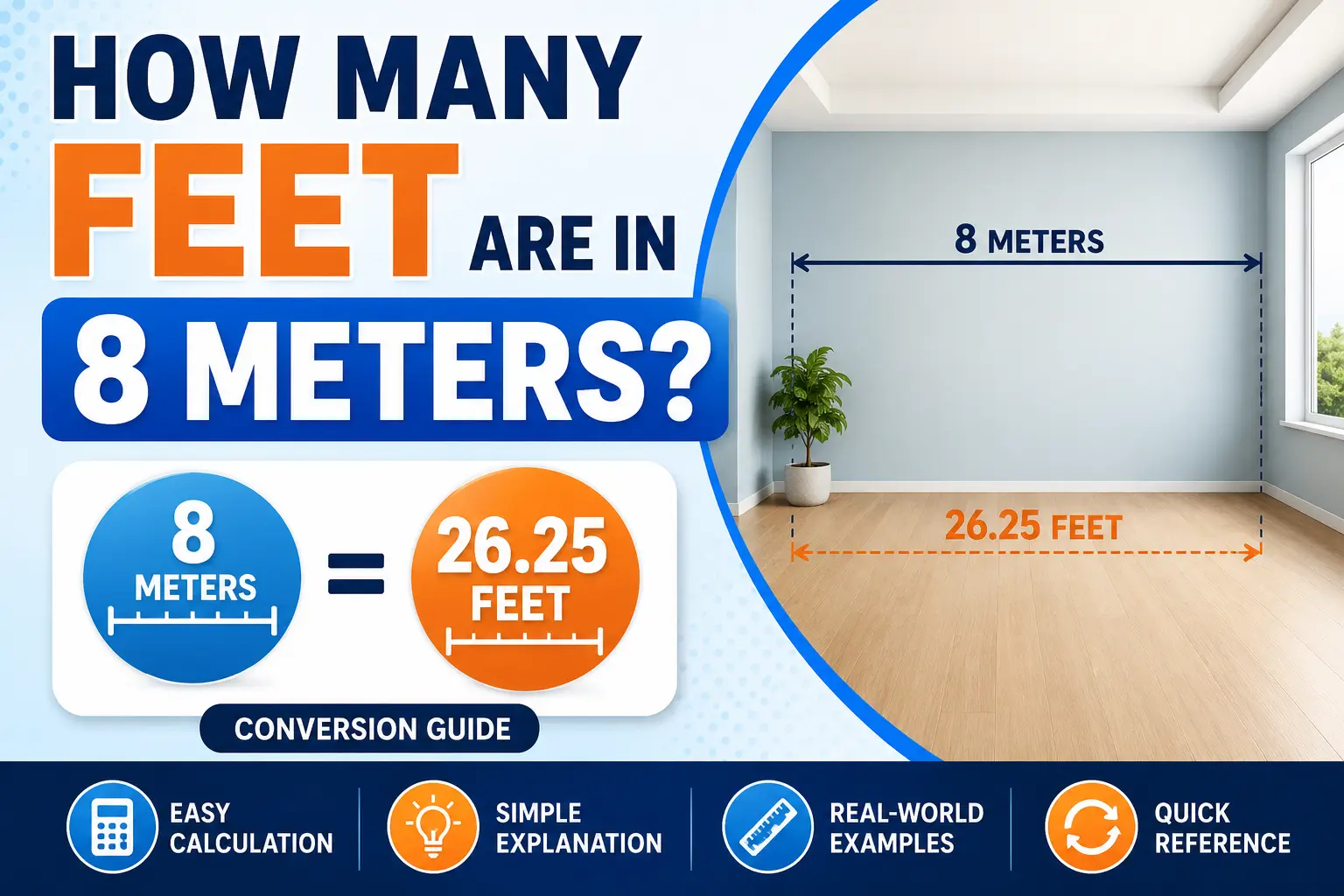
The quick answer is simple: 8 meters equals approximately 26.25 feet. However, there is much more to learn about the conversion process, practical examples, charts, and tips for accurate calculations. This complete guide explains everything in clear and easy language.
Understanding Meters and Feet
Before converting measurements, it helps to understand what meters and feet represent.
What Is a Meter?
A meter is the standard unit of length in the metric system. It is abbreviated as “m.” Most countries worldwide use meters for measuring distance and length.
Meters are commonly used for:
- Building dimensions
- Road measurements
- Sports fields
- Scientific calculations
- Height and length measurements
For example:
- A standard doorway is around 2 meters tall
- A swimming pool may be 25 meters long
- Running tracks use meters for race distances
What Is a Foot?
A foot is a unit of length in the imperial system. It is abbreviated as “ft.” One foot contains 12 inches.
Feet are commonly used in:
- Construction projects
- Real estate
- Interior design
- Human height measurements
- Aviation and engineering
For example:
- An average room ceiling is about 8 feet high
- Basketball hoops are 10 feet tall
- Many property measurements use feet
How Many Feet Are in 8 Meters Exactly?
The exact conversion from meters to feet uses a standard formula.
Standard Formula
1 meter=3.28084 feet
To convert meters into feet, multiply the number of meters by 3.28084.
Quick Answer
For 8 meters:
8×3.28084=26.24672 feet
So, 8 meters equals approximately 26.25 feet.
This is the most accurate standard conversion used worldwide.
How to Convert Meters to Feet
Converting meters into feet is simple once you understand the formula.
Conversion Formula
Use this formula:
Feet=Meters×3.28084
Simply multiply the number of meters by 3.28084.
Step-by-Step Calculation
Here is the process for converting 8 meters to feet.
Step 1: Write the Formula
Feet = Meters × 3.28084
Step 2: Insert the Value
Feet = 8 × 3.28084
Step 3: Multiply
8×3.28084=26.24672
Step 4: Round the Answer
26.24672 feet rounds to 26.25 feet.
This method works for any meter-to-feet conversion.
Meter to Feet Conversion Chart
A conversion chart makes calculations faster and easier.
| Meters | Feet |
|---|---|
| 1 meter | 3.28 feet |
| 2 meters | 6.56 feet |
| 3 meters | 9.84 feet |
| 5 meters | 16.40 feet |
| 8 meters | 26.25 feet |
| 10 meters | 32.81 feet |
| 15 meters | 49.21 feet |
| 20 meters | 65.62 feet |
| 50 meters | 164.04 feet |
This chart is useful for quick reference in everyday situations.
Real-Life Examples of 8 Meters
Understanding how 8 meters looks in real life makes the measurement easier to imagine.
Building Heights
An 8-meter height is similar to:
- A small two-story building
- A large indoor climbing wall
- A tall tree in a residential yard
Knowing the equivalent in feet helps people in countries using imperial measurements.
Sports Measurements
Many sports involve metric measurements.
For example:
- Pole vault standards can exceed 8 meters
- Certain diving platform structures approach this height
- Indoor sports facilities may use metric dimensions
Converting to feet helps athletes and coaches understand distances more clearly.
Home and Furniture Dimensions
An 8-meter room or hall equals about 26.25 feet long. This helps when buying furniture or planning layouts in countries using feet.
Common Meter to Feet Conversions
Some conversions are searched more often than others.
1 Meter to Feet
1×3.28084=3.28084 feet
1 meter equals approximately 3.28 feet.
5 Meters to Feet
5×3.28084=16.4042 feet
5 meters equals about 16.4 feet.
8 Meters to Feet
8×3.28084=26.24672 feet
8 meters equals approximately 26.25 feet.
10 Meters to Feet
10×3.28084=32.8084 feet
10 meters equals about 32.81 feet.
Why Meter to Feet Conversion Matters
Measurement conversion is important in many industries and activities.
Construction and Engineering
Builders often work with both metric and imperial systems. Accurate conversion prevents design errors and material waste.
International Travel
Travelers may encounter measurements in meters abroad but think naturally in feet.
Education
Students frequently solve conversion problems in math and science classes.
Sports and Fitness
Athletes compare international measurements during competitions and training.
Real Estate and Interior Design
Room sizes and ceiling heights may need conversion for better understanding.
Common Mistakes When Converting Meters to Feet
Many people make simple mistakes during conversion.
Using the Wrong Formula
Some people divide instead of multiply. Remember:
Feet=Meters×3.28084
Rounding Too Early
Avoid rounding numbers before finishing calculations. This improves accuracy.
Confusing Feet With Inches
Feet and inches are different units. One foot equals 12 inches.
Mixing Metric and Imperial Systems
Using meters and feet together without proper conversion can cause errors in measurements and planning.
Tips to Remember Meter to Feet Conversion
These simple tips can make conversion easier.
Remember the Key Number
The most important number is 3.28084.
One meter equals about 3.28 feet.
Use Quick Estimation
For rough calculations:
- Multiply meters by 3
- Add a little extra
For example:
- 8 × 3 = 24
- Add about 2.25
- Final estimate = 26.25 feet
Save a Conversion Chart
Professionals often keep charts nearby for fast reference.
Use Digital Calculators
Online conversion tools can provide quick and accurate answers.
Feet vs Meters Comparison Table
Here is a simple comparison between the two units.
| Feature | Meter | Foot |
|---|---|---|
| Symbol | m | ft |
| Measurement System | Metric | Imperial |
| Common Use | International standard | US and UK measurements |
| Size | Larger unit | Smaller unit |
| Conversion | 1 m = 3.28 ft | 1 ft = 0.3048 m |
This comparison helps beginners understand when each unit is used.
Practical Everyday Scenarios
Conversions appear more often than most people realize.
Measuring a Swimming Pool
A pool measuring 8 meters long equals approximately 26.25 feet.
Comparing Heights
A wall measuring 8 meters tall sounds easier to visualize when converted into feet.
Planning Home Renovations
International building plans may list dimensions in meters while local workers use feet.
Understanding Sports Facilities
Olympic and international sports venues often use metric measurements.
Expert Advice for Accurate Conversions
Professionals recommend a few best practices.
- Always double-check calculations
- Keep a calculator nearby for precision
- Avoid guessing measurements
- Learn the core conversion factor
- Use charts for repeated calculations
These habits improve speed and reduce mistakes.
9. FAQs
How many feet are in 8 meters exactly?
8 meters equals approximately 26.25 feet.
What formula converts meters to feet?
Multiply meters by 3.28084 to convert into feet.
Is 8 meters longer than 25 feet?
Yes, 8 meters equals about 26.25 feet, which is longer than 25 feet.
How many feet are in 1 meter?
One meter equals approximately 3.28 feet.
Why do some countries use meters and others use feet?
Most countries use the metric system, while the United States mainly uses the imperial system.
10. Conclusion
Understanding how many feet are in 8 meters is useful for school, construction, travel, sports, and everyday measurements. The exact answer is 26.25 feet, calculated using the standard conversion factor where one meter equals 3.28084 feet.
Once you learn the formula, converting meters into feet becomes quick and easy. With the charts, examples, and practical tips in this guide, you can confidently handle meter-to-feet conversions in real-life situations without confusion.
Discover more