
Painting a room, furniture piece, or small wall project sounds simple until you start asking an important question: how many square feet quart of paint can actually cover?
Buying too little paint can leave your project unfinished. Buying too much wastes money. That is why understanding paint coverage matters before starting any painting job.
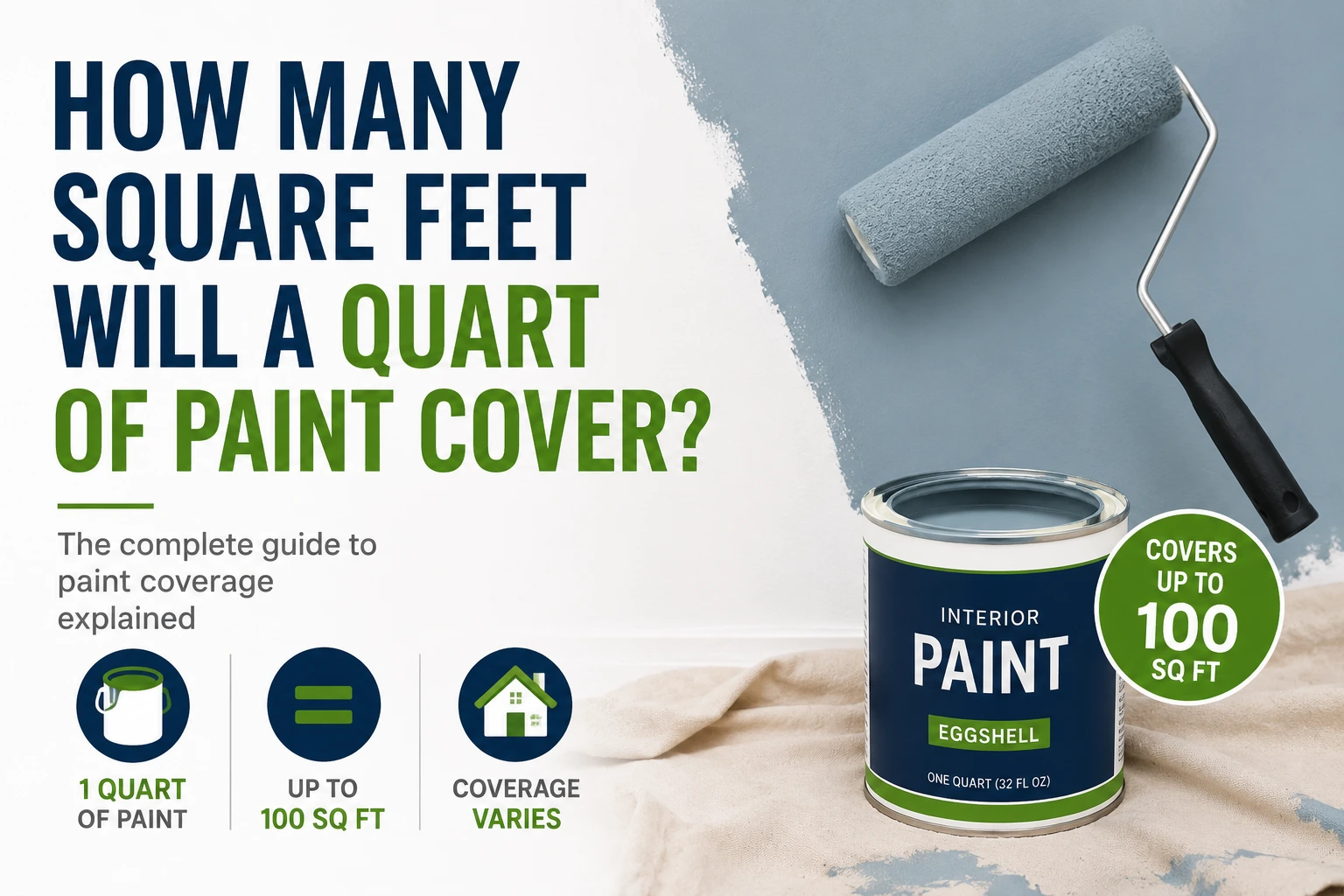
In most cases, a quart of paint covers around 90 to 100 square feet with one coat. However, the actual coverage depends on several factors such as wall texture, paint type, color changes, and application method.
This guide explains everything you need to know about quart paint coverage, including calculations, examples, charts, expert tips, and common mistakes to avoid.
Understanding Paint Coverage
Before calculating paint needs, it helps to understand how paint measurements work.
What Is a Quart of Paint?
A quart is a unit of liquid measurement commonly used for paint products.
Here is a simple breakdown:
| Paint Size | Equivalent |
|---|---|
| 1 Quart | 32 fluid ounces |
| 2 Quarts | Half gallon |
| 4 Quarts | 1 Gallon |
A quart is usually used for:
- Accent walls
- Small rooms
- Furniture projects
- Cabinets
- Touch-ups
- DIY crafts
Standard Paint Coverage Per Quart
Most paint manufacturers state that:
| Paint Amount | Approximate Coverage |
|---|---|
| 1 Quart | 90–100 sq ft |
| 1 Gallon | 350–400 sq ft |
This estimate applies to:
- Smooth surfaces
- One coat
- Proper application
- Average wall condition
Rough or porous surfaces may reduce coverage significantly.
How Many Square Feet Quart of Paint Covers on Average
The average quart of paint covers around 90 to 100 square feet for one coat.
That means:
- A small bathroom wall may only need one quart
- A large bedroom usually requires more than one quart
- Two coats will cut the coverage area in half
Coverage for One Coat
For a single coat:
1 quart of paint≈90–100 square feet
This works best when:
- Painting over similar colors
- Using high-quality paint
- Painting smooth walls
Coverage for Two Coats
Most professional painters recommend two coats for better durability and color consistency.
With two coats:
2 coats100 square feet≈50 square feet per coat set
So, one quart may only fully cover around 45 to 50 square feet with two coats.
Interior vs Exterior Paint Coverage
Exterior surfaces often absorb more paint because of rough textures and weather-resistant materials.
| Paint Type | Coverage Per Quart |
|---|---|
| Interior Paint | 90–100 sq ft |
| Exterior Paint | 75–90 sq ft |
Exterior projects usually require:
- More paint
- Primer
- Extra coats
Paint Coverage Chart
Using a chart makes paint planning easier.
Coverage by Paint Size
| Paint Size | Approximate Coverage |
|---|---|
| Sample Size | 20–30 sq ft |
| Quart | 90–100 sq ft |
| Half Gallon | 175–200 sq ft |
| Gallon | 350–400 sq ft |
| 5 Gallons | 1,750–2,000 sq ft |
Coverage by Surface Type
| Surface Type | Coverage Efficiency |
|---|---|
| Smooth drywall | Excellent |
| Textured wall | Moderate |
| Brick | Low |
| Concrete | Low |
| Wood furniture | Moderate |
| Cabinets | Good |
Textured surfaces absorb more paint because of uneven grooves and pores.
Factors That Affect Paint Coverage
Many people assume every quart covers exactly 100 square feet, but real projects vary.
Here are the biggest factors affecting paint coverage.
Surface Texture
Smooth walls need less paint than textured walls.
Examples of surfaces requiring more paint:
- Stucco
- Brick
- Concrete
- Popcorn ceilings
These materials absorb paint heavily.
Type of Paint
Different finishes spread differently.
| Paint Finish | Coverage Quality |
|---|---|
| Flat/Matte | High absorption |
| Eggshell | Balanced |
| Satin | Good coverage |
| Semi-gloss | Better spread |
| Gloss | Smooth finish |
Premium paints usually provide better coverage with fewer coats.
Number of Coats
The more coats you apply, the less area each quart covers.
You may need extra coats when:
- Painting dark over light
- Painting light over dark
- Covering stains
- Changing paint type
Paint Application Method
Application tools affect paint usage.
| Method | Paint Efficiency |
|---|---|
| Roller | Good |
| Brush | Moderate |
| Paint Sprayer | Lower efficiency |
Sprayers often use more paint because of overspray.
Primer Usage
Primer seals the surface and improves coverage.
Benefits of primer:
- Reduces paint absorption
- Improves color accuracy
- Lowers total paint usage
- Helps paint last longer
Skipping primer can increase paint consumption significantly.
How to Calculate Paint Coverage
You can estimate paint needs using a simple formula.
Measure Wall Area
Use this formula:
Wall Area=Width×Height
Example:
- Wall width = 10 feet
- Wall height = 8 feet
Calculation:
10×8=80 square feet
A single quart would likely cover this wall with one coat.
Subtract Doors and Windows
Do not include:
- Windows
- Doors
- Large openings
Typical estimates:
- Standard door = 20 sq ft
- Window = 15 sq ft
This improves accuracy.
Use Simple Formula
You can estimate paint needed with this formula:
Paint Needed=100Total Square Feet
If your wall area is 200 square feet:
100200=2 quarts
Real World Examples
Here are practical examples showing how many square feet quart of paint can cover.
Bedroom Accent Wall
Wall dimensions:
- Width = 12 ft
- Height = 8 ft
Calculation:
12×8=96 square feet
One quart may cover this wall with one coat.
For two coats, you may need:
- 2 quarts
- Or 1 gallon for better consistency
Furniture Painting
A dresser or small table often needs:
- Half quart to one quart
- Depending on detail work
Furniture absorbs paint differently because of wood grain and edges.
Bathroom Walls
Small bathrooms may only require:
- 1 to 2 quarts
- Especially for touch-ups or repainting similar colors
However, moisture-resistant paints may have different coverage rates.
Common Paint Coverage Mistakes
Many DIY painters miscalculate paint needs.
Here are common mistakes to avoid.
Buying Too Little Paint
Running out mid-project causes:
- Color inconsistency
- Extra store trips
- Batch matching problems
Always buy slightly extra paint.
Ignoring Surface Texture
Textured walls consume more paint than expected.
People often underestimate paint needed for:
- Brick
- Stucco
- Concrete
- Ceiling textures
Forgetting Extra Coats
One coat rarely delivers professional results.
Always plan for:
- Two coats
- Touch-ups
- Edge corrections
Expert Tips to Make Paint Last Longer
Professional painters use several techniques to improve coverage.
Use Primer First
Primer:
- Creates a smooth surface
- Reduces absorption
- Improves paint adhesion
This saves paint overall.
Choose High Quality Paint
Cheap paint often needs:
- More coats
- More touch-ups
- More maintenance
High-quality paint covers better and lasts longer.
Apply Even Coats
Do not overload the brush or roller.
Instead:
- Use thin even layers
- Maintain consistent strokes
- Allow drying time between coats
This improves finish quality and coverage efficiency.
Quart vs Gallon Paint Coverage Comparison
Many people wonder whether buying quarts or gallons is smarter.
| Paint Size | Best For | Coverage |
|—|—|
| Quart | Small projects | 90–100 sq ft |
| Gallon | Rooms/walls | 350–400 sq ft |
| 5 Gallons | Whole homes | 1,750–2,000 sq ft |
Buying gallons is usually more cost-effective for large projects.
Quarts are ideal for:
- Testing colors
- Accent walls
- Furniture
- Repairs
When a Quart of Paint Is Enough
A quart of paint is usually enough for:
- Small bathrooms
- Accent walls
- Closets
- Furniture
- Cabinets
- Trim work
- Touch-up projects
It may not be enough for:
- Large rooms
- Ceilings
- Multiple walls
- Two-coat dark color changes
Always calculate carefully before purchasing.
Frequently Asked Questions
How many square feet does a quart of paint cover with two coats?
A quart typically covers about 45 to 50 square feet when applying two coats.
Can one quart of paint cover a bedroom?
Usually no. Most bedrooms require at least one gallon of paint depending on wall size and number of coats.
Does textured wall use more paint?
Yes. Textured surfaces absorb more paint and reduce overall coverage.
How much paint do I need for a 10×10 room?
A standard 10×10 room often needs 1 to 2 gallons depending on ceiling height and coats.
Is primer necessary before painting?
Primer is highly recommended because it improves paint adhesion and reduces paint usage.
Conclusion
Understanding how many square feet quart of paint covers helps you save money, reduce waste, and complete your project smoothly.
In general, one quart of paint covers about 90 to 100 square feet with one coat on smooth surfaces. However, textured walls, dark colors, exterior projects, and multiple coats can reduce that coverage significantly.
Before buying paint:
- Measure your walls carefully
- Consider surface texture
- Plan for at least two coats
- Use primer when needed
Whether you are painting a small accent wall, furniture piece, or bathroom, accurate paint calculations ensure professional-looking results with fewer surprises.
Discover more