

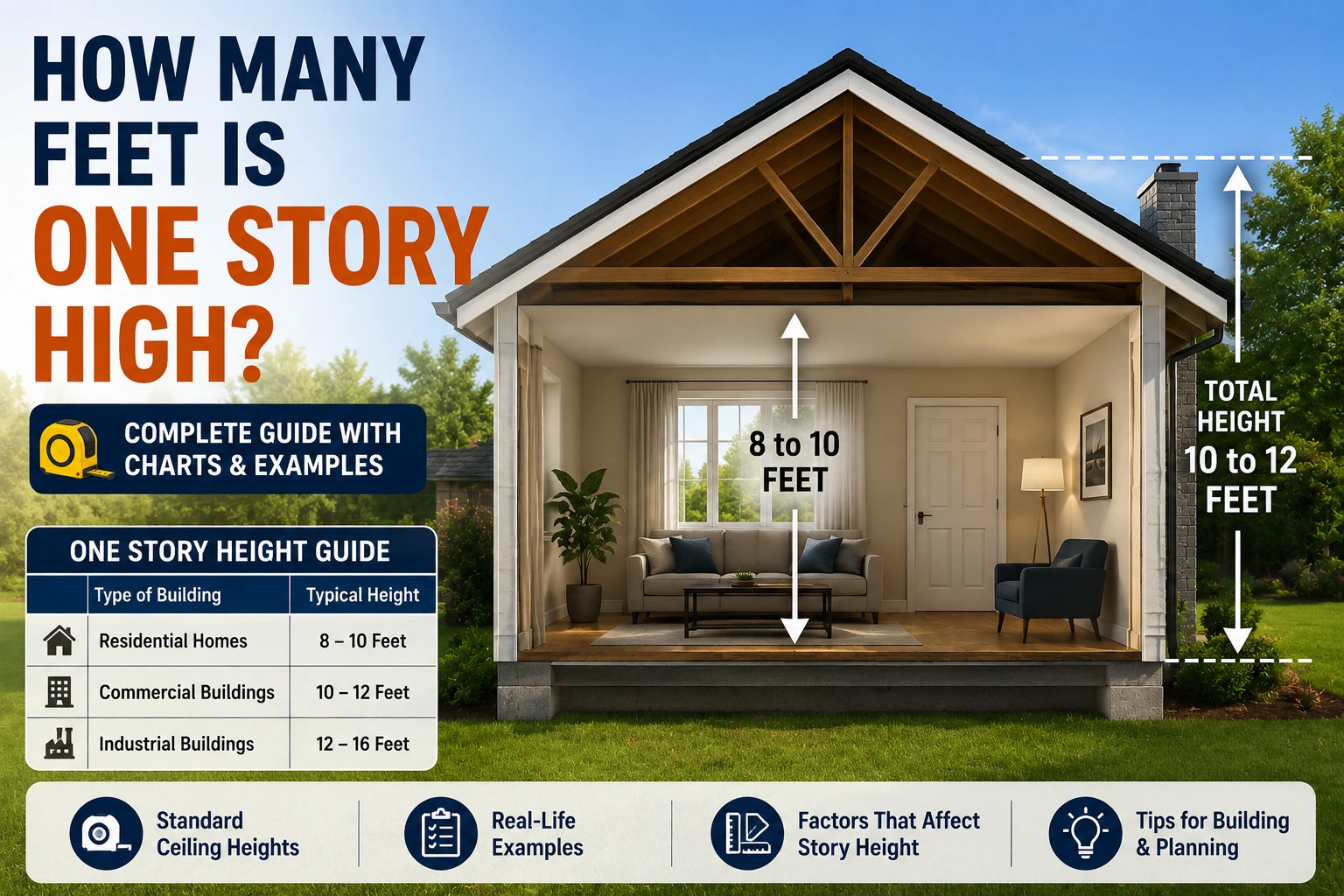
When people ask, “how many feet is one story high,” they usually want a simple answer. However, the actual height depends on the type of building, ceiling design, and construction style.
In most residential buildings, one story is usually between 8 and 10 feet high. Commercial buildings are often taller, ranging from 10 to 14 feet per story. Some luxury homes or office spaces can be even higher.
Understanding story height is useful for:
- Estimating building size
- Planning renovations
- Real estate comparisons
- Construction projects
- Architecture and design
In this guide, you’ll learn the average height of one story, what affects story height, and how to estimate the total height of a building accurately.
What Does “One Story” Mean?
A “story” refers to one complete level of a building. It includes:
- The floor
- The ceiling
- Structural materials between floors
People often confuse a story with just the ceiling height, but the total story height includes more than the visible room space.
For example:
- An 8-foot ceiling does not mean the story is only 8 feet tall.
- Builders must also include flooring thickness, support beams, insulation, ductwork, and wiring.
That’s why the total story height is usually taller than the room itself.
How Many Feet Is One Story High on Average?
The average height of one story depends on whether the building is residential or commercial.
Residential Buildings
Most homes have:
- 8-foot ceilings
- 9-foot ceilings in newer homes
- Extra space for flooring and utilities
Typical residential story height:
- 8 to 10 feet
y=8 to 10 feet
Older homes may have shorter ceilings, while modern luxury homes often use higher ceilings for a spacious look.
Commercial Buildings
Commercial structures need additional room for:
- HVAC systems
- Lighting
- Sprinklers
- Elevator systems
Typical commercial story height:
- 10 to 14 feet
y=10 to 14 feet
Office towers and shopping centers often exceed these measurements.
Typical One-Story Heights by Building Type
Different buildings have different average story heights.
| Building Type | Average Height Per Story |
|---|---|
| Small residential home | 8–10 feet |
| Modern house | 9–12 feet |
| Apartment building | 10–12 feet |
| Office building | 12–14 feet |
| Retail store | 14–20 feet |
| Warehouse | 20+ feet |
Single-Family Homes
Most one-story homes are about:
- 10 feet tall inside
- 12 to 15 feet tall externally with the roof included
Ranch-style homes usually have lower profiles, while modern homes may feature vaulted ceilings.
Apartments
Apartment buildings often include:
- Thicker flooring
- Fireproofing materials
- Sound insulation
This increases the story height slightly compared to standard homes.
Office Buildings
Office buildings require:
- Air ducts
- Drop ceilings
- Electrical systems
Because of this, each floor can easily exceed 12 feet.
Retail Buildings
Retail stores often use high ceilings for:
- Open layouts
- Large signage
- Better lighting
Some retail spaces reach 20 feet or more per story.
Ceiling Height vs Story Height
One of the most common misunderstandings is the difference between ceiling height and story height.
Ceiling Height
This is the visible distance between:
- The floor
- The ceiling inside the room
Common ceiling heights:
- 8 feet
- 9 feet
- 10 feet
Story Height
This includes:
- Ceiling height
- Floor thickness
- Structural beams
- Mechanical systems
For example:
| Ceiling Height | Approximate Story Height |
|---|---|
| 8 feet | 10 feet |
| 9 feet | 11 feet |
| 10 feet | 12 feet |
So, if someone asks how many feet is one story high, they usually mean the total floor-to-floor measurement.
Standard Story Height Chart
Here’s a quick reference chart for building story heights.
| Number of Stories | Estimated Height |
|---|---|
| 1 story | 10 feet |
| 2 stories | 20 feet |
| 3 stories | 30 feet |
| 4 stories | 40 feet |
| 5 stories | 50 feet |
y=10x
In this estimate:
- x = number of stories
- y = approximate building height in feet
This is a rough guideline commonly used in construction and real estate.
Factors That Affect Story Height
Several important factors determine how tall a story will be.
Roof Design
The roof can add significant height.
Examples:
- Flat roofs add minimal height
- Pitched roofs add several extra feet
- Vaulted ceilings increase interior height
A one-story house with a steep roof may look much taller than another single-story home.
Building Codes
Local building regulations may specify:
- Minimum ceiling heights
- Fire safety requirements
- Structural standards
These codes affect the final building dimensions.
Architectural Style
Modern homes often use:
- Open floor plans
- Tall windows
- High ceilings
Traditional homes usually have shorter story heights.
HVAC and Plumbing Systems
Buildings with large duct systems require more vertical space between floors.
Commercial buildings especially need extra room for:
- Air conditioning
- Electrical conduits
- Plumbing pipes
How to Estimate Building Height Using Stories
Estimating height from stories is simple.
Basic Formula
Multiply the number of stories by the average story height.
Building Height=Number of Stories×Story Height
Example 1: Residential Building
A 2-story house with 10-foot stories:
2×10=20 feet
Estimated height:
- Around 20 feet
- Plus roof height
Example 2: Office Building
A 5-story office building with 12-foot stories:
5×12=60 feet
Estimated height:
- Around 60 feet
This method gives a useful estimate, though exact measurements vary.
Examples of Story Heights in Real Life
Real-world buildings help show how story heights work.
One-Story House
Typical measurements:
- Ceiling: 8–9 feet
- Total height with roof: 12–15 feet
Two-Story House
Approximate height:
- 20–25 feet total
The roof style can greatly change the final height.
Apartment Building
A 3-story apartment complex may be:
- 33–40 feet tall
Office Tower
A 10-story office building may exceed:
- 120 feet
Commercial buildings almost always use taller floors than homes.
Common Mistakes When Measuring Story Height
People often make errors when estimating building height.
Ignoring Roof Height
Roof structures can add:
- 3 feet
- 5 feet
- Or even more
Never estimate using floor height alone.
Assuming Every Story Is Equal
Different floors can vary greatly.
For example:
- Lobby floors are often taller
- Penthouse floors may have higher ceilings
Confusing Ceiling Height With Total Height
An 8-foot ceiling does not equal an 8-foot story.
Structural materials always add extra height.
Forgetting Mechanical Space
Commercial buildings often hide:
- Air ducts
- Electrical systems
- Plumbing
These systems require extra vertical space.
Why Story Height Matters
Understanding story height is important in many industries.
Construction Planning
Builders use story height to:
- Estimate materials
- Plan structural loads
- Design staircases
Real Estate
Buyers often compare homes based on:
- Ceiling height
- Spaciousness
- Exterior dimensions
Higher ceilings usually feel more luxurious.
Architecture and Design
Architects balance:
- Visual appeal
- Energy efficiency
- Construction costs
Taller stories increase both building costs and heating expenses.
Safety and Regulations
Fire codes and accessibility standards often depend on building height.
For example:
- Elevator requirements
- Emergency staircases
- Fire sprinkler systems
Expert Tips for Understanding Story Height
Here are some useful tips professionals use.
- Most homes average around 10 feet per story.
- Always include roof height when estimating total building height.
- Commercial floors are usually taller than residential floors.
- Check local building codes for exact requirements.
- Older homes often have shorter ceilings than newer homes.
If accuracy matters, consult architectural plans or property records.
FAQs
How many feet is one story high in a house?
Most houses have stories between 8 and 10 feet high, though the total height including the roof is often taller.
Is one story always 10 feet?
No. One story can range from 8 to 14 feet depending on the building type and ceiling design.
How tall is a two-story house?
Most two-story homes are around 20 to 25 feet tall including the roof.
Why are commercial stories taller?
Commercial buildings need additional space for HVAC systems, lighting, plumbing, and structural support.
How do you calculate building height from stories?
Multiply the number of stories by the average story height. Residential buildings usually use 10 feet per story as a rough estimate.
Conclusion
So, how many feet is one story high? In most residential buildings, one story is typically between 8 and 10 feet tall. Commercial buildings are usually taller, averaging 10 to 14 feet per story.
The exact height depends on:
- Ceiling height
- Structural materials
- Roof design
- Building purpose
- Mechanical systems
Understanding story height helps with construction planning, real estate estimates, architecture, and property measurements. Whether you are designing a home, buying property, or simply curious, knowing the average story height gives you a better understanding of how buildings are measured.
Discover more