
Finding the perfect amount of living space can be challenging, especially if you’re living alone. Many people ask, how many square feet does one person need to live comfortably without paying for unnecessary space. The answer depends on several factors, including your lifestyle, budget, work habits, storage needs, and personal preferences.
Some people thrive in a compact studio apartment of just a few hundred square feet, while others prefer a spacious home with dedicated rooms for work, hobbies, or entertaining guests. Understanding how much space you actually need can help you save money, reduce maintenance, and improve your overall quality of life.
In this guide, you’ll learn recommended square footage for one person, compare different home sizes, discover practical examples, and find tips for choosing the right amount of living space.
Why Square Footage Matters
Square footage isn’t just a number on a property listing. It directly affects your daily comfort, monthly expenses, and lifestyle.
A home that is too small may feel crowded, while one that is too large can lead to higher costs and unnecessary maintenance.
Choosing the right size helps you:
- Lower housing costs
- Reduce utility bills
- Simplify cleaning
- Maximize usable space
- Improve organization
- Create a comfortable living environment
- Match your lifestyle needs
Instead of focusing only on the biggest home you can afford, think about how you actually use your space each day.
How Many Square Feet Does One Person Need?
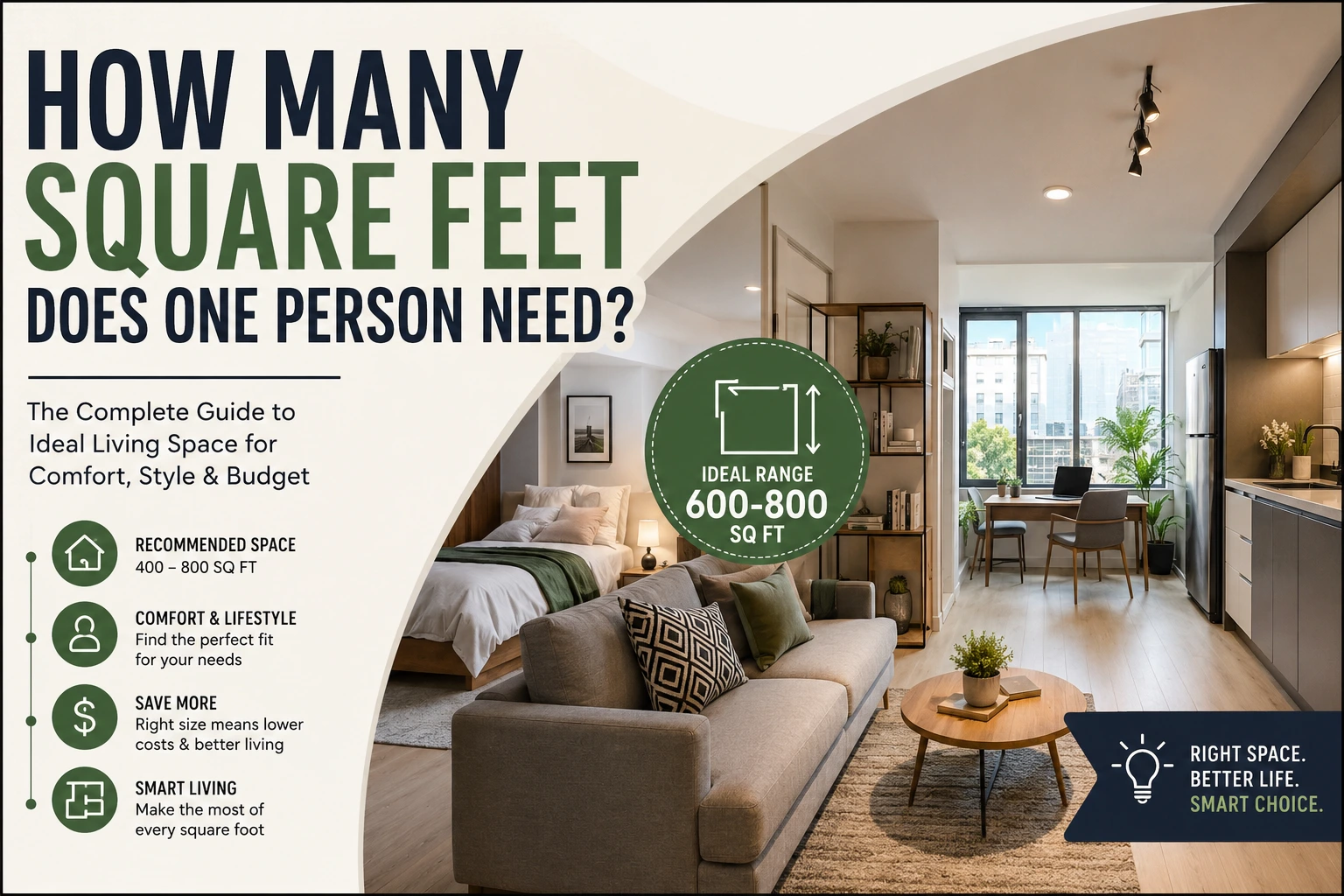
There is no universal answer, but housing experts generally recommend between 400 and 800 square feet for one adult.
Here’s a general guideline:
| Living Style | Recommended Square Feet |
|---|---|
| Tiny living | 200–400 sq ft |
| Basic apartment | 400–600 sq ft |
| Comfortable living | 600–800 sq ft |
| Spacious lifestyle | 800–1,200 sq ft |
| Luxury living | 1,200+ sq ft |
For most people, around 600 to 700 square feet offers an ideal balance between comfort, affordability, and functionality.
The right amount of space depends on how you spend your time at home.
Recommended Living Space by Lifestyle
Different lifestyles require different amounts of space.
Students
Students often prioritize affordability over extra room.
Ideal size:
- 250–500 sq ft
- Studio apartments
- Shared housing
- Dormitories
A compact layout is usually enough for studying, sleeping, and daily living.
Working Professionals
Professionals who spend most of their day outside can comfortably live in:
- 500–700 sq ft
This size typically includes:
- Bedroom
- Kitchen
- Bathroom
- Small living room
- Closet space
It offers a good balance between comfort and affordability.
Remote Workers
People working from home generally benefit from extra space.
Recommended size:
- 700–1,000 sq ft
Additional space allows room for:
- Home office
- Video meetings
- Better organization
- Separate work-life balance
A dedicated office can also improve productivity.
Seniors
Older adults often choose homes that are easier to maintain.
Recommended size:
- 500–800 sq ft
Single-story layouts with fewer stairs and efficient floor plans are often preferred.
Minimalists
Minimalists intentionally reduce clutter and own fewer possessions.
Many comfortably live in:
- 250–500 sq ft
Smart furniture and efficient storage make small homes feel surprisingly spacious.
Square Footage Comparison Chart
The table below provides a quick overview of how much living space suits different lifestyles. These recommendations are general guidelines, and your ideal home may vary depending on your needs.
| Lifestyle | Ideal Square Feet | Best Housing Option |
|---|---|---|
| Student | 250–500 sq ft | Dorm or studio apartment |
| Single professional | 500–700 sq ft | Studio or one-bedroom apartment |
| Remote worker | 700–1,000 sq ft | One-bedroom with office space |
| Minimalist | 200–500 sq ft | Tiny house or micro apartment |
| Senior living alone | 500–800 sq ft | Single-story apartment or condo |
| Luxury lifestyle | 1,000–1,500+ sq ft | Large apartment or house |
Remember that a well-designed 600-square-foot apartment can often feel more spacious than an inefficiently planned 900-square-foot home.
Minimum vs. Comfortable Living Space
There is a significant difference between the minimum space you can live in and the amount of space that feels comfortable over the long term.
| Living Standard | Approximate Size | Suitable For |
|---|---|---|
| Absolute minimum | 200–300 sq ft | Short-term or tiny home living |
| Basic comfort | 400–500 sq ft | One adult with minimal belongings |
| Comfortable | 600–800 sq ft | Most single adults |
| Spacious | 900–1,200 sq ft | Home office, hobbies, frequent guests |
If your budget allows, choosing a home with slightly more space than your minimum requirement can improve comfort and flexibility.
Factors That Affect Space Requirements
If you’re wondering how many square feet does one person need, consider these important factors before choosing a home.
Your Lifestyle
Think about how much time you spend at home.
If you’re frequently traveling or working outside, a smaller apartment may be enough. If you enjoy cooking, hosting friends, or relaxing at home, you’ll likely appreciate extra living space.
Work From Home
Remote work has changed how people use their homes.
Instead of only needing a bed and kitchen, many now require:
- A dedicated office
- Quiet meeting space
- Extra storage
- Ergonomic workspace
This often increases the ideal home size by 100–300 square feet.
Storage Needs
Your belongings take up more room than you might expect.
Consider whether you own:
- Seasonal clothing
- Sports equipment
- Musical instruments
- Bicycles
- Large furniture
- Collectibles
More possessions generally mean you’ll need additional storage and living space.
Pets
Living with pets often requires extra room for:
- Pet beds
- Food storage
- Toys
- Litter boxes or cages
- Indoor exercise
A larger apartment can make life more comfortable for both you and your pet.
Entertaining Guests
If you regularly invite family or friends over, a separate living area or dining space can make your home feel much more welcoming.
People who entertain often usually prefer at least 700–900 square feet.
Budget
One of the biggest factors is cost.
Larger homes usually mean higher:
- Rent or mortgage payments
- Utility bills
- Property taxes
- Furniture costs
- Cleaning expenses
- Maintenance costs
Finding the right balance between comfort and affordability is key.
Typical Apartment Sizes for One Person
Apartment sizes vary depending on the city, country, and building type. Here are common ranges.
| Apartment Type | Average Size |
|---|---|
| Micro apartment | 150–350 sq ft |
| Studio apartment | 300–600 sq ft |
| One-bedroom apartment | 550–900 sq ft |
| Large one-bedroom | 900–1,100 sq ft |
| Small two-bedroom | 900–1,300 sq ft |
For many single adults, a one-bedroom apartment provides enough space without feeling excessive.
How to Calculate Your Ideal Living Space
Choosing the right home becomes easier when you think about how you’ll use each area.
Step 1: List Essential Rooms
Decide which spaces you truly need, such as:
- Bedroom
- Bathroom
- Kitchen
- Living room
- Dining area
- Home office
Step 2: Estimate Space for Each Room
Here’s a simple example:
| Room | Approximate Size |
|---|---|
| Bedroom | 150 sq ft |
| Living room | 180 sq ft |
| Kitchen | 100 sq ft |
| Bathroom | 60 sq ft |
| Closet and storage | 60 sq ft |
| Hallways | 50 sq ft |
Total: Approximately 600 square feet
This layout is comfortable for many people living alone.
Step 3: Add Lifestyle Space
Ask yourself:
- Do you need a home office?
- Will you exercise at home?
- Do you have large hobbies?
- Do you need extra storage?
Adding these features may increase your ideal home size to 700–900 square feet.
Benefits of Choosing the Right Home Size
Selecting a home with the right amount of space offers more than just comfort. It can improve your finances, daily routine, and overall quality of life.
Some key benefits include:
- Lower rent or mortgage payments
- Reduced electricity and utility bills
- Easier cleaning and maintenance
- Better organization with less clutter
- More efficient use of every room
- Lower furniture and decorating costs
- A home that fits your lifestyle without wasted space
When your living space matches your needs, you’ll likely spend less money while enjoying a more functional home.
Common Mistakes When Choosing Home Size
Many people either overestimate or underestimate how much space they need. Avoid these common mistakes when selecting a home.
- Choosing the biggest home you can afford: Larger homes come with higher ongoing costs for utilities, maintenance, and furnishings.
- Ignoring your daily routine: If you work from home or have hobbies, you may need more space than someone who spends most of the day outside.
- Not considering storage: Limited closet space can make even a large apartment feel cramped.
- Focusing only on square footage: A smart floor plan is often more important than total size.
- Planning only for today: Think about future needs, such as a pet, remote work, or frequent visitors.
Choosing a home based on both your current and future lifestyle will help you avoid moving again too soon.
FAQs
How many square feet does one person need to live comfortably?
Most housing experts recommend 600 to 800 square feet for one person. This range provides enough room for sleeping, cooking, relaxing, storage, and, in many cases, a small home office.Is 500 square feet enough for one person?
Yes. A well-designed 500-square-foot apartment can comfortably accommodate one person, especially if it has an efficient layout and smart storage solutions.
What is the minimum square footage for one adult?
While building regulations vary by location, many tiny homes and micro-apartments range from 200 to 400 square feet. Although livable, most people find 400 square feet or more to be more comfortable for everyday living.
Is 700 square feet too much for one person?
Not at all. A 700-square-foot home is often considered an ideal size for a single adult. It offers enough space for a separate bedroom, living room, kitchen, bathroom, and even a small workspace.
Does working from home require more square footage?
Yes. If you work remotely, adding 100 to 300 extra square feet can provide room for a dedicated office, better organization, and improved work-life balance.
Conclusion
So, how many square feet does one person need? For most adults, 600 to 800 square feet strikes the perfect balance between comfort, affordability, and functionality. However, the ideal amount of space depends on your lifestyle, budget, storage needs, and whether you work from home or simply need a place to relax after a busy day.
Rather than focusing on the largest home available, think about how you use your living space. A thoughtfully designed apartment with an efficient layout can feel far more comfortable than a much larger home with wasted areas. By considering your daily habits, future plans, and financial goals, you can choose a home that supports your lifestyle without paying for unnecessary square footage.
Whether you’re renting your first apartment, buying a home, or downsizing, understanding how many square feet one person needs will help you make a smarter and more confident housing decision.
Discover more