

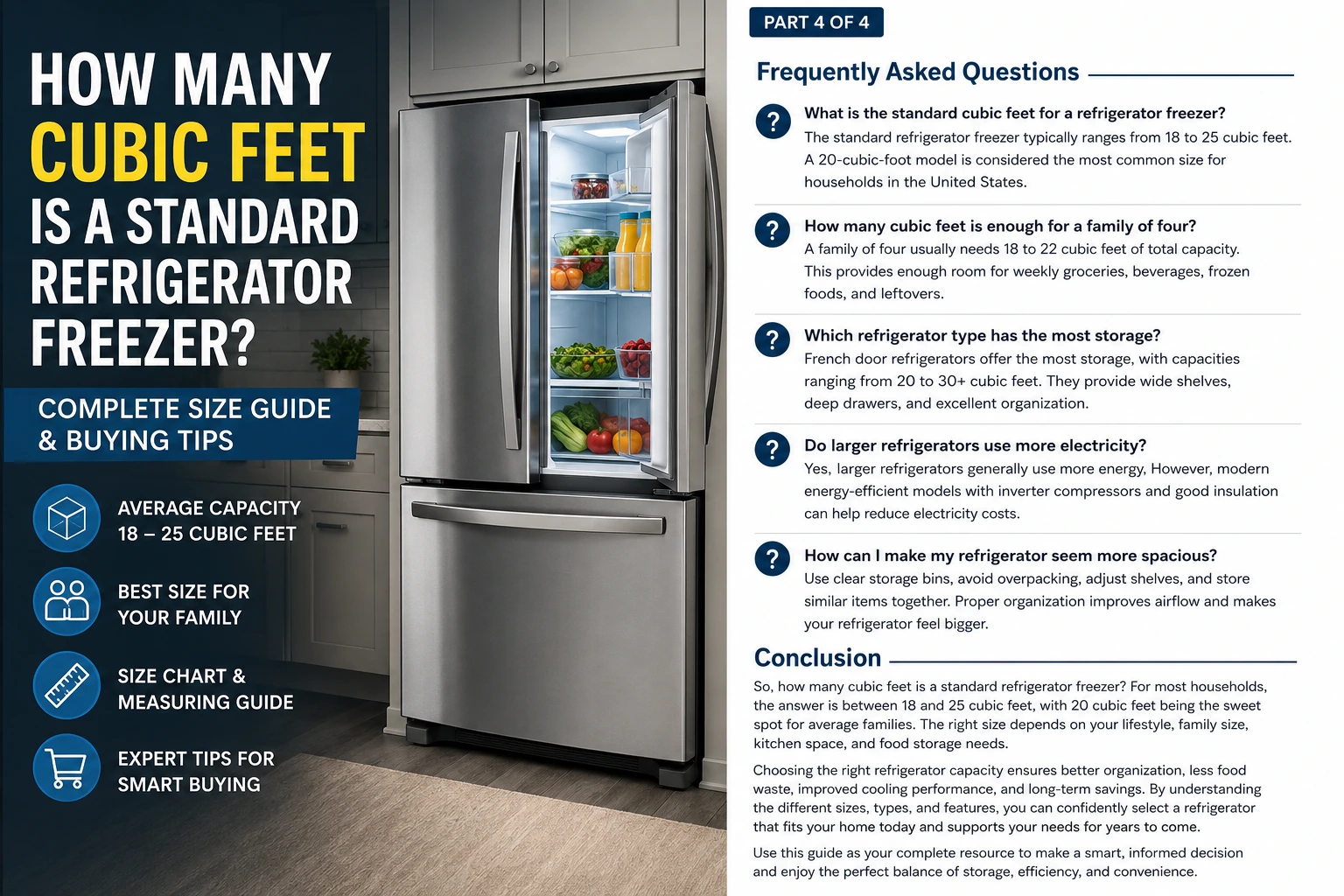
Buying a new refrigerator can feel overwhelming, especially when you see capacities listed in cubic feet instead of gallons or liters. If you’ve ever wondered how many cubic feet is a standard refrigerator freezer, you’re not alone. Understanding refrigerator capacity helps you choose a model that fits your family’s needs, kitchen space, and grocery shopping habits.
Most standard refrigerator freezers have a total capacity ranging from 18 to 25 cubic feet, making them suitable for the average household. However, the ideal size depends on several factors, including the number of people in your home, the refrigerator style, and how much fresh or frozen food you typically store.
In this guide, you’ll learn what refrigerator cubic feet means, average capacities for different refrigerator styles, how to calculate the right size, and practical tips to make an informed buying decision.
What Does Cubic Feet Mean in a Refrigerator?
When shopping for refrigerators, manufacturers use cubic feet to describe the appliance’s interior storage volume. Instead of measuring only height, width, or depth, cubic feet tells you how much usable storage space is available inside the refrigerator and freezer compartments.
For example:
- A refrigerator with 20 cubic feet offers approximately 20 cubic feet of internal storage.
- This includes both the refrigerator section and the freezer unless specified otherwise.
- Larger cubic-foot ratings generally mean more room for groceries.
Think of cubic feet as the refrigerator’s storage capacity rather than its outside dimensions.
Why Capacity Matters
Choosing the correct capacity helps you:
- Store groceries comfortably
- Reduce food waste
- Keep items organized
- Avoid overcrowding shelves
- Improve airflow for better cooling
- Meet your household’s long-term needs
A refrigerator that’s too small quickly becomes cluttered, while one that’s too large may consume more energy than necessary.
How Many Cubic Feet Is a Standard Refrigerator Freezer?
The average standard refrigerator freezer offers between 18 and 25 cubic feet of total storage capacity.
Here’s a quick overview:
| Household Size | Recommended Capacity |
|---|---|
| 1–2 people | 10–16 cubic feet |
| 2–4 people | 18–22 cubic feet |
| 4–6 people | 22–25 cubic feet |
| Large families | 25–30+ cubic feet |
For most households in the United States, an 18 to 22 cubic-foot refrigerator provides enough room for weekly groceries, beverages, leftovers, frozen meals, fruits, and vegetables.
If you frequently entertain guests or buy groceries in bulk, choosing a refrigerator with 23 to 28 cubic feet can provide extra convenience and flexibility.
Is 20 Cubic Feet Considered Standard?
Yes.
A 20-cubic-foot refrigerator freezer is often considered the benchmark for a standard full-size refrigerator. It offers a balanced combination of refrigerator and freezer storage while fitting comfortably into most kitchens.
Typical storage includes:
- Fresh produce
- Dairy products
- Meat
- Drinks
- Frozen foods
- Condiments
- Leftovers
- Meal prep containers
For many families of three or four people, this size provides an excellent balance between storage and energy efficiency.
Standard Refrigerator Capacity by Refrigerator Type
Not every refrigerator has the same storage capacity. Different styles are designed for different needs, kitchen layouts, and lifestyles.
Here’s how capacities typically compare:
| Refrigerator Type | Average Capacity |
|---|---|
| Compact Refrigerator | 2–6 cubic feet |
| Apartment Refrigerator | 7–12 cubic feet |
| Top Freezer Refrigerator | 14–22 cubic feet |
| Bottom Freezer Refrigerator | 18–25 cubic feet |
| Side-by-Side Refrigerator | 20–29 cubic feet |
| French Door Refrigerator | 20–30 cubic feet |
| Built-in Refrigerator | 24–30+ cubic feet |
Top Freezer Refrigerators
Top freezer models remain one of the most affordable and energy-efficient choices.
Typical capacity:
- 14–22 cubic feet
Best for:
- Small families
- Apartments
- Budget-conscious buyers
Advantages include:
- Lower purchase cost
- Efficient cooling
- Simple design
- Reliable storage
Bottom Freezer Refrigerators
Bottom freezer models place fresh food at eye level, making everyday items easier to reach.
Average capacity:
- 18–25 cubic feet
These models offer larger refrigerator compartments and are ideal for households that access fresh foods more frequently than frozen items.
Refrigerator Size Chart
While most people ask how many cubic feet is a standard refrigerator freezer, it also helps to compare the available capacities by household size. The chart below can guide you toward the best option.
| Refrigerator Capacity | Ideal Household Size | Typical Use |
|---|---|---|
| 2–6 cubic feet | Dorm room or office | Drinks and snacks |
| 7–12 cubic feet | 1 person | Studio apartment |
| 14–18 cubic feet | 1–2 people | Small home |
| 18–22 cubic feet | 2–4 people | Standard family use |
| 22–25 cubic feet | 4–5 people | Larger families |
| 25–30+ cubic feet | 5+ people | Bulk shopping and entertaining |
As a general rule, many appliance experts recommend allowing 4 to 6 cubic feet of refrigerator space per person. This estimate provides enough room for fresh produce, dairy products, beverages, leftovers, and frozen foods without overcrowding.
How Much Refrigerator Space Does Your Family Need?
Although 18 to 25 cubic feet is considered standard, your ideal refrigerator size depends on your lifestyle.
Single Person
Recommended capacity:
- 10–14 cubic feet
This size provides enough room for:
- Fresh groceries
- Drinks
- Frozen meals
- Weekly shopping
If you rarely cook or eat out frequently, even a compact refrigerator may be sufficient.
Couple
Recommended capacity:
- 14–18 cubic feet
A couple usually needs extra room for:
- Fruits and vegetables
- Dairy products
- Meat
- Leftovers
- Drinks
- Frozen foods
Choosing a slightly larger refrigerator leaves room for future needs.
Family of Four
Recommended capacity:
- 18–22 cubic feet
This is one of the most popular refrigerator sizes because it comfortably stores:
- Weekly groceries
- Milk and juice
- Fresh produce
- Frozen vegetables
- Snacks
- Lunch items
- Meal-prep containers
A 20-cubic-foot refrigerator is often the sweet spot for this household size.
Large Family
Recommended capacity:
- 22–30 cubic feet
Large households often benefit from extra refrigerator space because they tend to:
- Buy groceries in bulk
- Prepare meals ahead of time
- Store larger beverage containers
- Freeze leftovers
- Keep seasonal foods on hand
Many families choose French door refrigerators because they offer generous storage and flexible organization.
How to Measure Refrigerator Cubic Feet
If you’re comparing older refrigerators or buying a used appliance, you may need to estimate its capacity yourself.
Fortunately, the process is simple.
Step 1: Measure the Interior
Using a measuring tape, record the inside dimensions of the refrigerator compartment:
- Height
- Width
- Depth
Measure in inches.
Step 2: Multiply the Measurements
Use this formula:
Height × Width × Depth = Cubic Inches
For example:
- Height: 60 inches
- Width: 30 inches
- Depth: 24 inches
Calculation:
60 × 30 × 24 = 43,200 cubic inches
Step 3: Convert to Cubic Feet
Since 1 cubic foot = 1,728 cubic inches, divide your result by 1,728.
Example:
43,200 ÷ 1,728 = 25 cubic feet
This gives you the refrigerator’s approximate storage capacity.
Refrigerator Capacity vs. Exterior Size
One common misconception is that a larger refrigerator always provides more storage.
That’s not necessarily true.
Modern refrigerators use improved insulation, slimmer walls, and smarter shelf layouts. As a result, two refrigerators with nearly identical exterior dimensions can have noticeably different interior capacities.
For example:
| Exterior Width | Refrigerator A | Refrigerator B |
|---|---|---|
| 36 inches | 22 cubic feet | 26 cubic feet |
The second model offers more usable storage because of its efficient interior design.
When shopping, always compare the cubic-foot rating rather than relying solely on outside dimensions.
Factors That Affect Usable Refrigerator Space
The listed cubic-foot capacity represents the total interior volume, but the amount of usable storage can vary significantly.
Here are several factors that influence real-world storage space.
Shelf Design
Adjustable shelves make it easier to organize:
- Large bottles
- Cake boxes
- Pizza boxes
- Tall containers
Flexible shelving often makes a smaller refrigerator feel much larger.
Door Storage
Wide door bins can hold:
- Milk
- Juice
- Condiments
- Water bottles
This frees up shelf space for larger food items.
Freezer Layout
Some freezers include:
- Pull-out baskets
- Sliding drawers
- Adjustable shelves
These features improve organization and reduce wasted space.
Ice Maker
Built-in ice makers are convenient, but they occupy valuable freezer capacity.
If you rarely use ice, a model without an ice maker may provide more storage.
Water Dispenser
Internal water filtration systems can slightly reduce refrigerator storage space.
While the difference isn’t huge, it may matter if you’re comparing similarly sized models.
Which Refrigerator Style Offers the Most Storage?
Each refrigerator design has unique strengths.
Top Freezer
Pros
- Affordable
- Energy efficient
- Good storage capacity
- Reliable cooling
Best for:
Budget-conscious families.
Bottom Freezer
Pros
- Easier access to fresh food
- Spacious refrigerator section
- Comfortable everyday use
Best for:
Families that cook frequently.
Side-by-Side
Pros
- Easy freezer access
- Narrow door swing
- Plenty of freezer shelves
Cons
- Narrow refrigerator shelves
- Less room for wide platters
Best for:
Homes with limited kitchen clearance.
French Door
Pros
- Largest overall capacity
- Wide shelves
- Flexible storage
- Modern appearance
- Excellent organization
Cons
- Higher price
- Larger footprint
Best for:
Growing families and bulk shoppers.
Practical Examples of Refrigerator Capacity
Still wondering what different capacities actually look like?
Here are some everyday examples.
18 Cubic Feet
Can typically hold:
- One week’s groceries for two to three people
- Several gallons of milk
- Fruits and vegetables
- Frozen dinners
- Drinks
- Leftovers
22 Cubic Feet
Usually accommodates:
- Weekly groceries for a family of four
- Multiple beverage containers
- Large produce drawers
- Frozen meats
- Meal prep containers
- Party platters
28 Cubic Feet
Ideal for:
- Large households
- Holiday cooking
- Bulk warehouse shopping
- Entertaining guests
- Extra frozen storage
A refrigerator of this size provides excellent flexibility but requires more kitchen space.
End of Part 2
Next: Part 3 will cover:
- Energy efficiency and refrigerator size
- Benefits and drawbacks of larger refrigerators
- Common mistakes when choosing capacity
- Expert buying tips
- Capacity comparison table
- Storage optimization tips
- Buying checklist before purchasing a refrigerator
Does a Larger Refrigerator Use More Electricity?
One question buyers often ask after learning how many cubic feet is a standard refrigerator freezer is whether a larger model will increase electricity costs.
In general, larger refrigerators consume more energy because they cool a greater interior volume. However, modern appliances have become far more efficient than older models.
Many refrigerators now feature:
- Inverter compressors
- Improved insulation
- Smart temperature controls
- LED lighting
- ENERGY STAR® certification
- Eco cooling modes
As a result, a newer 22-cubic-foot refrigerator may actually use less electricity than an older 18-cubic-foot model.
Typical Annual Energy Usage
| Refrigerator Size | Estimated Annual Electricity Use |
|---|---|
| 10–16 cubic feet | 250–450 kWh |
| 18–22 cubic feet | 400–600 kWh |
| 22–28 cubic feet | 550–750 kWh |
| 28–30+ cubic feet | 700–900 kWh |
Actual energy consumption depends on:
- Room temperature
- Door opening frequency
- Compressor efficiency
- Ice maker usage
- Temperature settings
- Appliance age
Choosing an energy-efficient refrigerator can help reduce long-term utility bills.
Benefits of Choosing the Right Refrigerator Capacity
Selecting the correct refrigerator size offers more advantages than simply having enough room for groceries.
Better Food Organization
When shelves aren’t overcrowded, it’s easier to:
- Find ingredients
- Store leftovers
- Organize beverages
- Separate fresh and frozen foods
Better organization also reduces food waste because items are less likely to be forgotten.
Improved Cooling Performance
Refrigerators need proper airflow to maintain consistent temperatures.
An overcrowded refrigerator can:
- Block air circulation
- Create warm spots
- Cause uneven cooling
- Shorten food freshness
Choosing the right capacity helps the cooling system work more efficiently.
Lower Grocery Waste
Adequate storage means you can organize food by category.
You’ll quickly see:
- Expiring dairy products
- Fresh produce
- Leftovers
- Frozen meals
This reduces spoilage and unnecessary grocery purchases.
Greater Convenience
A properly sized refrigerator accommodates:
- Holiday meals
- Family gatherings
- Weekly shopping trips
- Meal preparation
- Large beverage containers
Instead of constantly rearranging shelves, you’ll have room for everything.
Drawbacks of Buying a Refrigerator That’s Too Large
Bigger isn’t always better.
Purchasing a refrigerator that exceeds your needs may have several disadvantages.
Higher Purchase Cost
Larger refrigerators generally cost more upfront.
Premium French door models with capacities above 25 cubic feet often include advanced features such as:
- Smart connectivity
- Touchscreen displays
- Dual ice makers
- Adjustable temperature zones
These extras can significantly increase the purchase price.
Increased Energy Consumption
Although efficient models help reduce electricity use, larger refrigerators typically consume more power than smaller units.
Over many years, this can increase operating costs.
Requires More Kitchen Space
Large refrigerators need adequate clearance for:
- Door opening
- Air circulation
- Installation
- Ventilation
Always measure your kitchen before purchasing.
Unused Storage
If you rarely fill the refrigerator, much of its storage capacity goes unused.
For smaller households, an oversized refrigerator may simply waste space and energy.
Common Mistakes When Choosing Refrigerator Capacity
Many buyers focus only on appearance or price and overlook practical considerations.
Avoid these common mistakes.
Buying Based Only on Exterior Dimensions
A refrigerator may appear large on the outside but have less usable interior space due to thick insulation or bulky ice makers.
Always compare the cubic-foot rating.
Ignoring Future Needs
Think beyond today’s household size.
Ask yourself:
- Will your family grow?
- Do you host holiday dinners?
- Do you buy groceries in bulk?
- Will children need more food storage in the future?
Choosing a slightly larger capacity can prevent needing an upgrade later.
Forgetting Door Clearance
Measure not only the refrigerator space but also:
- Entry doors
- Hallways
- Staircases
- Kitchen islands
A refrigerator that fits the kitchen may still be difficult to move into the house.
Overlooking Freezer Space
Some refrigerators prioritize fresh food storage over freezer capacity.
If you frequently freeze:
- Meat
- Vegetables
- Prepared meals
- Ice cream
Make sure the freezer section is large enough for your needs.
Focusing Only on Price
A cheaper refrigerator isn’t always the better value.
Consider:
- Energy efficiency
- Storage flexibility
- Warranty
- Reliability
- Repair costs
A quality refrigerator often saves money over its lifetime.
Expert Tips for Buying the Right Refrigerator
Before making your purchase, keep these expert recommendations in mind.
1. Choose Capacity Based on Household Size
Use the guideline of 4–6 cubic feet per person.
This ensures enough room without paying for unnecessary storage.
2. Measure Your Kitchen Carefully
Record:
- Width
- Height
- Depth
- Door clearance
- Ventilation space
Double-check all measurements before ordering.
3. Consider Your Shopping Habits
Ask yourself:
- Do you shop weekly or monthly?
- Do you buy frozen foods in bulk?
- Do you prepare meals ahead of time?
Frequent bulk shoppers usually benefit from larger capacities.
4. Look for Adjustable Shelves
Flexible shelving allows you to store:
- Large beverage bottles
- Cake boxes
- Holiday platters
- Tall containers
This makes everyday organization much easier.
5. Compare Usable Storage
Don’t compare only the advertised cubic feet.
Also evaluate:
- Shelf layout
- Drawer size
- Door bins
- Freezer organization
- Ice maker placement
Sometimes a well-designed 21-cubic-foot refrigerator feels more spacious than a poorly organized 24-cubic-foot model.
Refrigerator Capacity Comparison
| Capacity | Suitable For | Advantages | Considerations |
|---|---|---|---|
| 10–14 cu. ft. | Singles | Compact, energy efficient | Limited storage |
| 14–18 cu. ft. | Couples | Affordable and practical | Less freezer space |
| 18–22 cu. ft. | Average families | Balanced storage and efficiency | Most popular choice |
| 22–25 cu. ft. | Larger families | Extra flexibility | Higher cost |
| 25–30+ cu. ft. | Bulk shoppers | Maximum storage | Requires more kitchen space |
Storage Tips to Make the Most of Your Refrigerator
Even a standard refrigerator freezer can feel surprisingly spacious with proper organization.
Here are a few simple ways to maximize every cubic foot:
- Store similar foods together for easy access.
- Use clear storage bins to group smaller items.
- Avoid overpacking shelves to maintain proper airflow.
- Keep frequently used items at eye level.
- Label leftovers with dates to reduce food waste.
- Adjust shelf heights to fit tall bottles and containers.
- Freeze foods in stackable, flat containers to save freezer space.
- Clean out expired items regularly to free up valuable room.
By organizing your refrigerator efficiently, you can make even an 18–20 cubic-foot model meet the needs of a busy household.
Refrigerator Buying Checklist
Before you purchase a new refrigerator, review this quick checklist:
- Confirm the cubic-foot capacity suits your household.
- Measure your kitchen and doorways.
- Decide which refrigerator style fits your lifestyle.
- Compare energy efficiency ratings.
- Check freezer-to-refrigerator space ratios.
- Evaluate shelf flexibility and drawer design.
- Consider future family needs.
- Review warranty coverage and customer reviews.
- Compare annual operating costs.
- Ensure the finish and dimensions match your kitchen design.
Taking a few extra minutes to compare these factors can help you choose a refrigerator that provides reliable performance and enough storage for years to come.
FAQs
What is the standard cubic feet for a refrigerator freezer?
A standard refrigerator freezer typically has a capacity of 18 to 25 cubic feet. For most households, a 20-cubic-foot model provides enough space for fresh and frozen food while remaining energy efficient.
How many cubic feet does a family of four need?
A family of four usually needs 18 to 22 cubic feet of refrigerator capacity. Larger families or those who buy groceries in bulk may prefer 22 to 25 cubic feet.
How do I calculate my refrigerator’s cubic feet?
Measure the interior height, width, and depth in inches, multiply them together, then divide by 1,728 to convert cubic inches into cubic feet.
Which refrigerator style offers the most storage?
French door refrigerators generally provide the largest capacity, ranging from 20 to 30+ cubic feet, along with flexible shelves and spacious freezer drawers.
Does a larger refrigerator use more electricity?
Generally, yes. However, newer energy-efficient models often use less electricity than older, smaller refrigerators thanks to improved compressor technology and insulation.
Conclusion
If you’re wondering how many cubic feet is a standard refrigerator freezer, the answer is typically 18 to 25 cubic feet, with 20 cubic feet being the most common size for an average household. The right capacity depends on your family size, shopping habits, and available kitchen space.
Before buying a refrigerator, compare storage capacity, dimensions, energy efficiency, and interior layout instead of focusing only on appearance. Choosing the right size ensures better organization, reduces food waste, and provides enough room for your everyday needs. With the tips in this guide, you can confidently select a refrigerator freezer that offers the perfect balance of space, performance, and long-term value.
discover more