
If you’ve ever wondered how many feet is 65 cm, you’re not alone. Whether you’re measuring furniture, comparing product dimensions, helping with schoolwork, or converting between metric and imperial units, knowing the correct conversion can save time and prevent mistakes.
The short answer is simple:
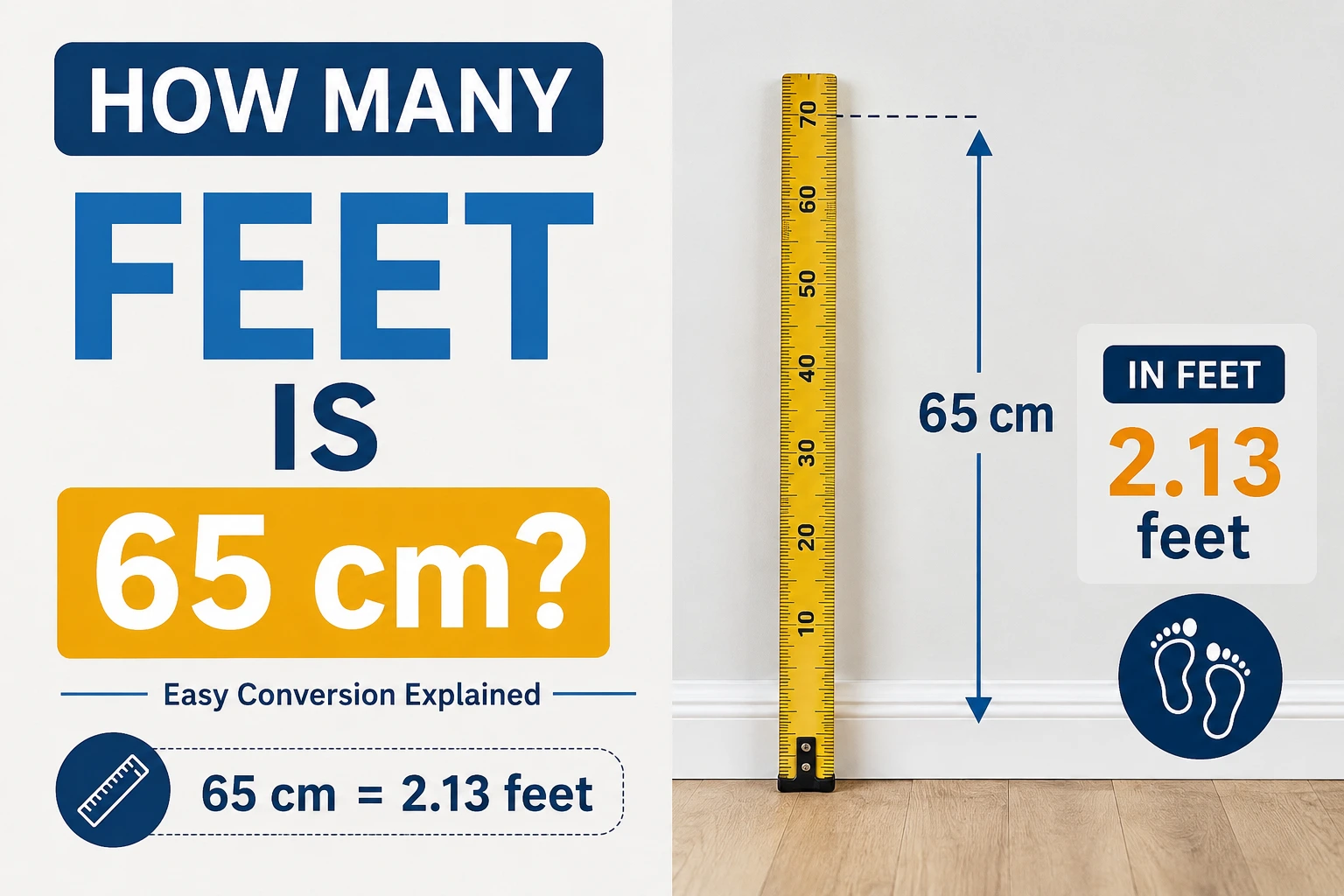
65 cm = approximately 2.13 feet
In everyday situations, you may also express this measurement as 2 feet 1.6 inches.
This guide explains the conversion process, shows practical examples, includes a helpful conversion table, and provides expert tips for accurate measurement conversions.
How Many Feet Is 65 cm? (Quick Answer)
The exact conversion is:
65 centimeters = 2.1325 feet
Rounded:
- 2.13 feet
- 2 feet 1.6 inches
This is the most accurate value for everyday use.
Understanding Centimeters and Feet
What Is a Centimeter?
A centimeter (cm) is a unit of length in the metric system.
One centimeter equals:
- 10 millimeters
- 0.01 meters
Most countries use centimeters for measuring height, furniture, clothing, and household items.
What Is a Foot?
A foot (ft) is part of the imperial measurement system.
One foot equals:
- 12 inches
- 30.48 centimeters
Feet are commonly used in the United States and a few other countries.
How to Convert 65 cm to Feet
Conversion Formula
Use this formula:
Feet = Centimeters ÷ 30.48
Step-by-Step Calculation
65 ÷ 30.48 = 2.1325 feet
Rounded:
65 cm = 2.13 feet
This method works for any centimeter measurement.
65 cm in Feet and Inches
Many people prefer measurements in feet and inches.
Here’s how:
- Whole feet = 2
- Remaining decimal = 0.1325
- 0.1325 × 12 = 1.59 inches
Final answer:
65 cm = 2 feet 1.6 inches
Centimeters to Feet Conversion Chart
| Centimeters | Feet | Feet & Inches |
|---|---|---|
| 50 cm | 1.64 ft | 1 ft 7.7 in |
| 55 cm | 1.80 ft | 1 ft 9.7 in |
| 60 cm | 1.97 ft | 1 ft 11.6 in |
| 65 cm | 2.13 ft | 2 ft 1.6 in |
| 70 cm | 2.30 ft | 2 ft 3.6 in |
| 75 cm | 2.46 ft | 2 ft 5.5 in |
| 80 cm | 2.62 ft | 2 ft 7.5 in |
Where You Might Use This Conversion
Home Improvement
Furniture dimensions often use centimeters while room measurements may use feet.
Furniture Measurements
Buying furniture internationally often requires converting metric dimensions.
Children’s Height
Parents sometimes compare children’s height using different measurement systems.
Shopping Online
Many online retailers display dimensions in centimeters, while buyers may prefer feet.
Common Mistakes When Converting cm to Feet
Avoid these common errors:
- Forgetting to divide by 30.48
- Confusing inches with feet
- Rounding too early
- Mixing metric and imperial units
- Ignoring decimal precision
Always verify your calculations for important projects.
Expert Tips for Accurate Measurement Conversion
Use the Correct Formula
Always divide centimeters by 30.48.
Round Carefully
Use two decimal places unless greater precision is needed.
Know When Inches Matter
Furniture and construction often require feet and inches.
Double-Check Important Measurements
Recheck measurements before making purchases.
Use Digital Tools for Precision
Online calculators reduce calculation errors.
Understand Metric vs. Imperial Units
Knowing both systems improves communication.
Keep a Small Conversion Chart Handy
A chart saves time during repeated conversions.
Measure Twice Before Buying
Accurate measurements help avoid returns.
Learn Common Conversion Benchmarks
Remember that 30.48 cm equals exactly one foot.
Practice Manual Calculations
Knowing the formula helps when calculators aren’t available.
Check Unit Labels
Always confirm whether dimensions are listed in centimeters or inches.
Save Frequently Used Conversions
Keep common conversions for quick reference.
Avoid Mixing Units
Use one measurement system throughout a project whenever possible.
Why Knowing Measurement Conversions Is Useful
Measurement conversions play an important role in daily life.
They help when:
- Studying mathematics
- Building furniture
- Reading product specifications
- Shopping internationally
- Designing rooms
- Planning renovations
- Measuring children’s growth
- Working on DIY projects
- Traveling abroad
- Comparing product sizes
- Packaging items for shipping
- Understanding engineering drawings
- Completing school assignments
- Following craft tutorials
- Gardening layouts
- Sewing clothing
- Woodworking projects
- Installing appliances
- Organizing storage
- Setting up offices
- Buying fitness equipment
- Planning landscaping
- Selecting baby furniture
- Purchasing pet accessories
- Arranging exhibition displays
- Reading international manuals
- Designing digital layouts
- Creating architectural plans
- Packing luggage efficiently
- Comparing sports equipment dimensions
- Medical measurements
- Manufacturing products
- Scientific experiments
- Photography setups
- Event planning
- Retail merchandising
- Aquarium installations
- Home décor projects
- Camping equipment selection
- Electronics installation
- Global business communication
- Product reviews
- Everyday household tasks
Understanding conversions saves time, improves accuracy, and prevents costly mistakes.
Frequently Asked Questions
1. How many feet is 65 cm exactly?
65 cm equals 2.1325 feet.
2. What is 65 cm in feet and inches?
It equals approximately 2 feet 1.6 inches.
3. How do I convert centimeters to feet?
Divide the number of centimeters by 30.48.
4. Is 65 cm more than 2 feet?
Yes. It is slightly more than 2 feet.
5. Why are centimeters and feet both used?
Centimeters belong to the metric system, while feet are part of the imperial system. Different countries use different measurement standards.
Final Thoughts About How Many Feet Is 65 cm
If you were searching for how many feet is 65 cm, the answer is straightforward: 65 centimeters equals approximately 2.13 feet or 2 feet 1.6 inches.
Understanding this conversion makes everyday tasks easier, whether you’re shopping online, measuring furniture, planning a home project, or completing school assignments. By learning the simple formula—dividing centimeters by 30.48—you can confidently convert almost any length from metric to imperial units. Keeping a conversion chart or using a reliable calculator can also help ensure accuracy whenever precise measurements matter.
Discover more