

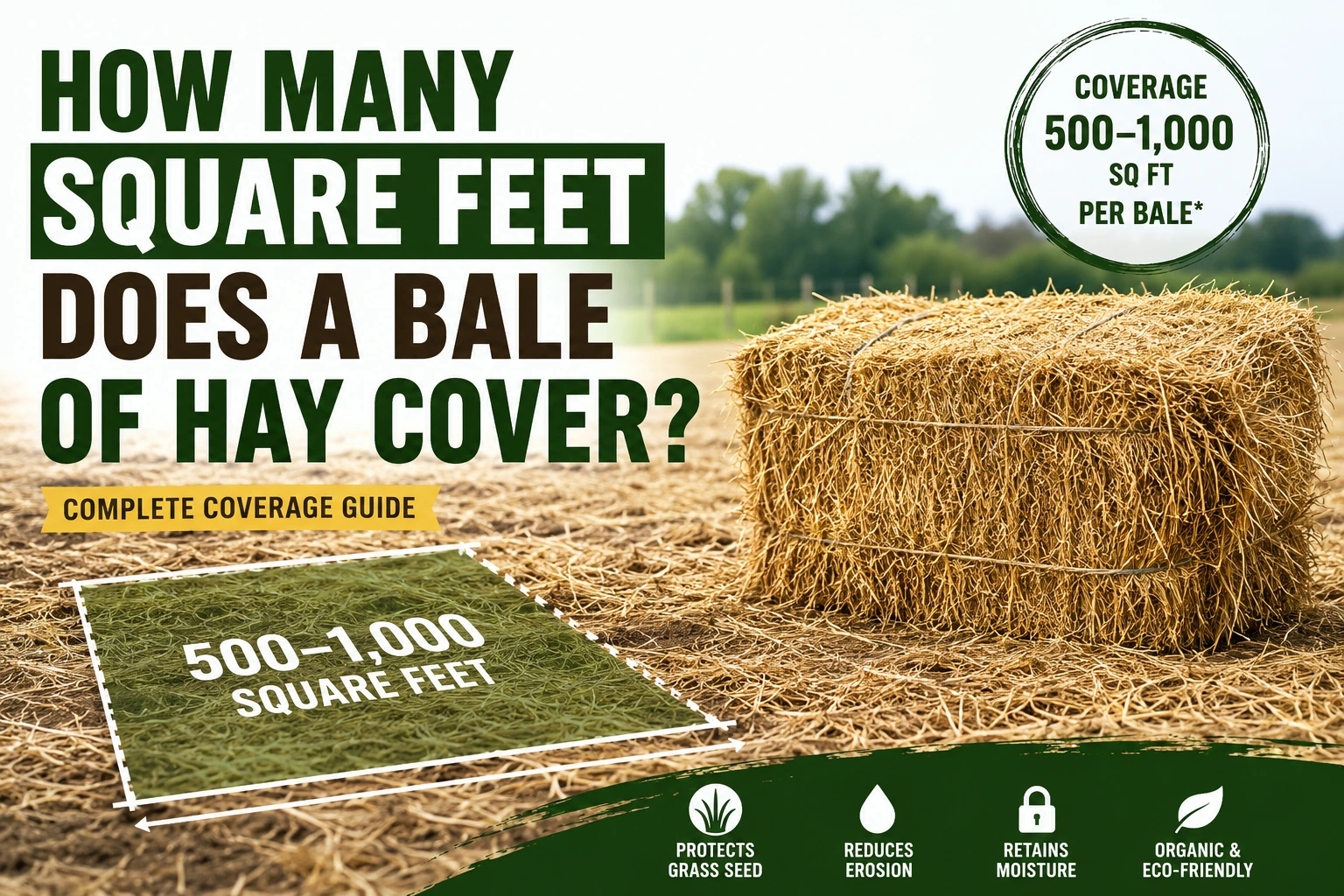
If you are planning a landscaping, gardening, or erosion control project, one of the first questions you may ask is: how many square feet does a bale of hay cover?
The answer depends on several factors, including the type of bale, how thick you spread the material, and whether you are using hay or straw. In most cases, a standard small square bale covers between 500 and 1,000 square feet when spread lightly for grass seed protection. Thicker applications for mulch or erosion control will cover much less area.
Understanding hay bale coverage helps you avoid overspending, underbuying, or applying too much material. Whether you are protecting new grass seed, covering muddy ground, or using hay as mulch, this guide explains everything in simple terms.
What Determines Hay Bale Coverage?
Several things affect how much ground a bale can cover.
1. Bale Size
Not all hay bales are the same size. Small square bales are the most common for home projects, while large round bales are mostly used on farms.
Common bale types include:
| Bale Type | Average Weight | Typical Use |
|---|---|---|
| Small square bale | 40–60 lbs | Landscaping and gardening |
| Large round bale | 500–1,500 lbs | Farming and erosion control |
| Large square bale | 800–1,200 lbs | Commercial agricultural use |
A larger bale naturally covers more square feet.
2. Application Thickness
The thicker you spread the hay, the less area it covers.
For example:
| Thickness | Approximate Coverage |
|---|---|
| Light layer | 800–1,000 sq ft |
| Medium layer | 500–700 sq ft |
| Heavy mulch layer | 200–400 sq ft |
A thin layer is usually enough for grass seed protection, while erosion control often needs thicker coverage.
3. Type of Material
Many people use the terms hay and straw interchangeably, but they are different.
- Hay contains grasses and seeds.
- Straw is made from dried grain stalks.
Straw is often preferred for landscaping because it contains fewer weed seeds.
Average Coverage of a Bale of Hay
A standard small square bale usually covers:
- 500–1,000 square feet for light seeding applications
- 300–500 square feet for medium mulch coverage
- 200–300 square feet for heavy erosion control
These numbers are estimates because spreading methods vary from person to person.
If you spread the hay too thickly, it may smother grass seed or prevent sunlight from reaching the soil.
Hay vs Straw Coverage Differences
Although both materials provide ground coverage, straw generally spreads farther because it is lighter and less compact.
| Material | Average Coverage | Best Use |
|---|---|---|
| Hay | 300–800 sq ft | Animal feed and temporary cover |
| Straw | 500–1,000 sq ft | Grass seed and mulch |
Why Straw Is Often Better
Straw offers several advantages:
- Fewer weed seeds
- Better airflow
- Easier spreading
- Cleaner appearance
- Lower risk of mold
However, hay may still work well for temporary coverage or composting.
Coverage Based on Bale Size
Different bale sizes provide very different coverage amounts.
Small Square Bale
This is the most common option for homeowners.
Typical coverage:
- 500–1,000 sq ft
Best for:
- Lawn seeding
- Garden mulch
- Small erosion projects
Round Bale
Large round bales can cover massive areas.
Typical coverage:
- 5,000–10,000+ sq ft
Best for:
- Farms
- Construction sites
- Large slopes
Large Square Bale
These commercial bales provide dense coverage.
Typical coverage:
- 4,000–8,000 sq ft
Best for:
- Large landscaping jobs
- Commercial erosion control
Coverage Depth and Why It Matters
One of the biggest mistakes people make is applying hay too thickly.
A proper layer should allow some sunlight and airflow.
Recommended Thickness
| Project Type | Suggested Depth |
|---|---|
| Grass seed protection | 1/4 to 1/2 inch |
| Garden mulch | 1–2 inches |
| Erosion control | 2–4 inches |
A light layer stretches the bale farther while still protecting the soil.
Hay Coverage Chart by Thickness
Here is a simple hay coverage chart for a standard 50-pound small square bale.
| Spread Thickness | Estimated Coverage |
|---|---|
| Very light | 1,000 sq ft |
| Light | 800 sq ft |
| Medium | 500 sq ft |
| Heavy | 300 sq ft |
| Very heavy | 200 sq ft |
This chart gives a practical estimate for most residential projects.
Using Hay for Grass Seed Protection
One of the most common uses for hay or straw is covering newly planted grass seed.
The material helps by:
- Retaining soil moisture
- Reducing wind movement
- Preventing erosion
- Protecting seeds from birds
- Improving germination rates
How Much Hay Do You Need?
For new lawns, a standard bale usually covers:
- Around 800–1,000 square feet with a light application
You should still be able to see about 50% of the soil beneath the hay.
Hay Coverage for Landscaping Projects
Hay can also work as temporary mulch in landscaping.
Common landscaping uses include:
- Covering muddy pathways
- Protecting slopes
- Garden weed control
- Winter plant insulation
- Temporary event ground cover
Example Landscaping Calculation
Imagine you need to cover a 2,000-square-foot garden area.
If one bale covers about 500 square feet with medium coverage:
5002000=4
You would need approximately 4 bales.
How to Calculate Hay Bale Coverage
Calculating coverage is simple when you know your project size.
Step 1: Measure the Area
Use this formula:
Area=Length×Width
Example:
A lawn that is 40 feet long and 25 feet wide equals:
40×25=1000
Total area = 1,000 square feet
Step 2: Determine Coverage Thickness
Choose whether you want:
- Light coverage
- Medium coverage
- Heavy coverage
Step 3: Divide Total Area by Bale Coverage
If one bale covers 800 square feet:
8001000=1.25
You would need about 2 bales.
Common Mistakes When Spreading Hay
Avoiding common mistakes can save money and improve results.
Applying Too Much Hay
A thick layer may:
- Block sunlight
- Trap too much moisture
- Cause mold growth
- Slow grass germination
Using Hay Instead of Straw
Hay often contains seeds that can grow into weeds.
For lawns and landscaping, straw is usually safer.
Uneven Spreading
Piles of hay create patchy growth and inconsistent protection.
Always spread material evenly by hand or with a mulch blower.
Ignoring Weather Conditions
Windy conditions can move hay around before it settles.
Light watering after spreading helps keep material in place.
Expert Tips for Better Coverage
Professionals often use these techniques for efficient hay coverage.
Spread Thinly
A thinner layer covers more area and improves airflow.
Break Up Clumps
Loose material spreads more evenly than large chunks.
Water After Application
A gentle spray helps:
- Hold hay in place
- Improve moisture retention
- Reduce wind movement
Buy Extra Material
Coverage estimates are not always exact. Having one extra bale prevents project delays.
Hay Bale Coverage Comparison Table
Here is a quick comparison table for different project types.
| Project | Typical Coverage per Bale |
|---|---|
| New grass seed | 800–1,000 sq ft |
| Garden mulch | 400–600 sq ft |
| Heavy erosion control | 200–400 sq ft |
| Temporary mud control | 500–700 sq ft |
| Compost material | Varies greatly |
This table provides realistic estimates for most residential and landscaping projects.
Environmental Benefits of Using Hay or Straw
Using hay or straw as mulch can benefit the environment.
Moisture Conservation
The material helps soil retain water longer.
Erosion Reduction
Hay slows water runoff during heavy rain.
Soil Temperature Control
Mulch protects plant roots from extreme temperatures.
Organic Matter Improvement
Over time, decomposing hay adds nutrients to the soil.
When You Should Not Use Hay
Hay is not ideal for every project.
Avoid using hay when:
- Weed prevention is critical
- You need a clean decorative look
- Mold is a concern
- The area stays constantly wet
In those cases, wood mulch or straw may work better.
FAQs
How many square feet does a bale of hay cover for grass seed?
A standard small square bale usually covers between 800 and 1,000 square feet when spread lightly over grass seed.
Is straw better than hay for lawn seeding?
Yes. Straw is usually better because it contains fewer weed seeds and spreads more evenly.
How thick should hay be spread?
For grass seed, spread hay about 1/4 to 1/2 inch thick so sunlight can still reach the soil.
Can hay prevent soil erosion?
Yes. Hay helps reduce water runoff and protects soil from wind erosion, especially on slopes.
How many bales do I need for 2,000 square feet?
If each bale covers 500 square feet, you would need about 4 bales.
Conclusion
So, how many square feet does a bale of hay cover? In most residential projects, a standard small square bale covers between 500 and 1,000 square feet, depending on how thickly you spread it and the type of project you are working on.
Light coverage for grass seed stretches farther, while heavy mulch or erosion control requires more material. Understanding bale size, spread thickness, and project goals helps you estimate coverage accurately and avoid wasting money.
Whether you are protecting new grass seed, controlling erosion, or adding temporary mulch, choosing the right amount of hay or straw makes your project easier, cleaner, and more effective.
Discover more
how many feet does chicken have