
If you’re preparing a gardening project, one of the most common questions is how many quarts in 1.5 cubic feet of potting soil. Understanding this conversion can help you buy the correct amount of soil for containers, raised beds, hanging baskets, and flower pots without overspending or running short.
The quick answer is:
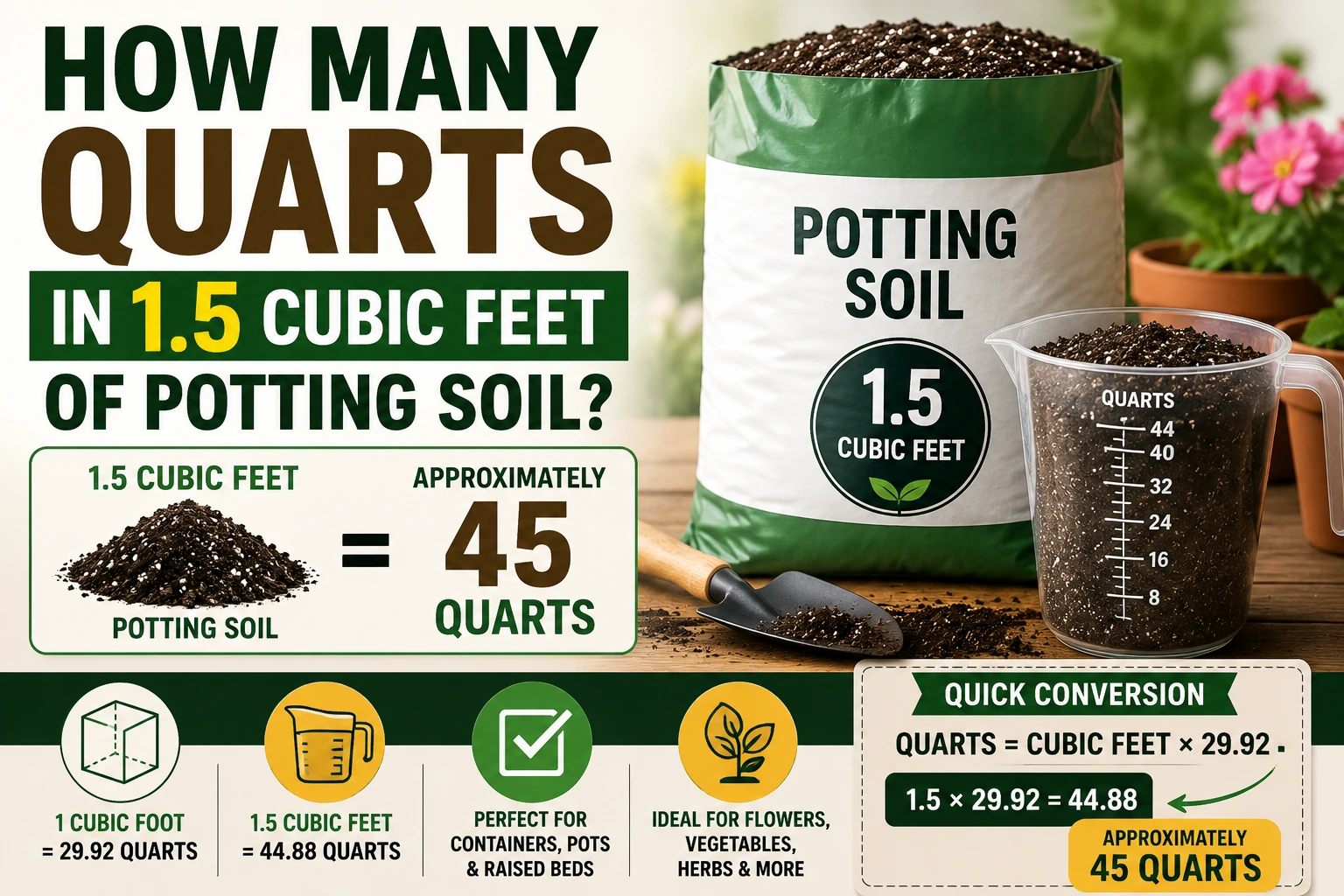
1.5 cubic feet of potting soil equals approximately 44.9 quarts.
Most gardeners round this number to:
45 quarts of potting soil.
Knowing this conversion is useful because some potting soils are sold in cubic feet while many planters and containers list their capacity in quarts. This guide explains the conversion, provides charts, real-world examples, and expert tips to help you estimate soil needs accurately.
Quick Answer
Exact Conversion
The standard conversion is:
1 cubic foot = 29.922 quarts
Therefore:
1.5 cubic feet × 29.922 = 44.883 quarts
Rounded:
1.5 cubic feet = approximately 45 quarts
Simple Formula
Use this formula:
Quarts = Cubic Feet × 29.922
For 1.5 cubic feet:
1.5 × 29.922 = 44.883 quarts
Result:
≈ 45 quarts
Understanding Cubic Feet and Quarts
Before converting soil measurements, it’s helpful to understand these units.
What Is a Cubic Foot?
A cubic foot is a measurement of volume.
Imagine a box that is:
- 1 foot long
- 1 foot wide
- 1 foot high
The space inside equals:
1 cubic foot
Garden soil, mulch, compost, and landscaping materials are commonly sold by cubic feet.
What Is a Quart?
A quart is a smaller volume measurement commonly used in the United States.
1 quart equals:
- 2 pints
- 4 cups
- 32 fluid ounces
In gardening, many containers and nursery pots list capacity in quarts.
How Many Quarts in 1.5 Cubic Feet of Potting Soil?
Let’s break down the calculation step by step.
Step 1: Know the Conversion Rate
1 cubic foot = 29.922 quarts
Step 2: Multiply by 1.5
29.922 × 1.5 = 44.883
Step 3: Round for Practical Use
44.883 ≈ 45 quarts
Final Answer
1.5 cubic feet of potting soil contains approximately 45 quarts.
This conversion remains consistent regardless of soil type.
Cubic Feet to Quarts Conversion Chart
The following chart helps convert common soil bag sizes.
| Cubic Feet | Quarts |
|---|---|
| 0.25 | 7.5 |
| 0.5 | 15 |
| 0.75 | 22.4 |
| 1.0 | 29.9 |
| 1.5 | 44.9 |
| 2.0 | 59.8 |
| 2.5 | 74.8 |
| 3.0 | 89.8 |
| 4.0 | 119.7 |
| 5.0 | 149.6 |
This chart is especially useful when comparing soil products sold in different units.
Why Soil Is Sold in Cubic Feet and Quarts
Different gardening products use different packaging sizes.
Cubic Feet
Typically used for:
- Large bags of potting mix
- Raised bed soil
- Compost
- Garden soil
- Mulch
Quarts
Commonly used for:
- Small potting mixes
- Specialty soils
- Nursery containers
- Indoor plant products
Because both measurements represent volume, conversion helps gardeners compare products accurately.
Practical Examples of 1.5 Cubic Feet of Potting Soil
Understanding 45 quarts becomes easier when applied to real gardening situations.
Container Gardening
Suppose you have:
- Five 9-quart containers
Calculation:
5 × 9 = 45 quarts
A 1.5-cubic-foot bag would fill all five containers.
Raised Garden Beds
Small raised bed dimensions:
- 3 feet long
- 2 feet wide
- 4 inches deep
Volume required is close to:
1.5 cubic feet
One bag may adequately fill the bed.
Flower Pots
Common flower pots:
| Pot Size | Approximate Soil Capacity |
|---|---|
| 10-inch pot | 3–4 quarts |
| 12-inch pot | 5–7 quarts |
| 14-inch pot | 8–10 quarts |
| 16-inch pot | 12–15 quarts |
A 45-quart bag could fill:
- 4 large 12-quart containers
- 7 medium containers
- Multiple smaller pots
How Much Can 1.5 Cubic Feet of Potting Soil Fill?
Many gardeners struggle to visualize soil volume.
Examples of What 45 Quarts Can Fill
- Several patio planters
- A small raised garden bed
- A collection of vegetable containers
- Multiple hanging baskets
- Window boxes
- Indoor plant pots
The actual number depends on container dimensions.
Common Gardening Applications
A 1.5-cubic-foot bag is one of the most versatile soil sizes available.
Vegetable Gardening
Suitable for:
- Tomatoes
- Peppers
- Cucumbers
- Herbs
Flower Gardening
Works well for:
- Petunias
- Marigolds
- Geraniums
- Begonias
Indoor Plants
Useful for:
- Snake plants
- Pothos
- Peace lilies
- Monstera plants
Seed Starting
Provides enough growing medium for numerous seed trays.
Potting Soil vs Garden Soil
Many gardeners confuse these products.
Potting Soil
Designed for containers.
Benefits:
- Lightweight
- Good drainage
- Better aeration
- Easy root growth
Garden Soil
Designed for in-ground planting.
Benefits:
- Higher mineral content
- Suitable for landscape beds
Potting soil is generally recommended for containers and planters.
Benefits of Buying Potting Soil by Cubic Feet
Understanding cubic-foot packaging offers several advantages.
Easier Bulk Purchasing
Larger bags often cost less per quart.
Better Project Planning
You can estimate soil needs more accurately.
Reduced Waste
Buying the correct amount prevents leftovers.
Simplified Comparisons
Comparing cubic-foot prices helps identify better value.
Potential Drawbacks
There are a few considerations.
Larger Bags Are Heavier
A 1.5-cubic-foot bag can be difficult to lift.
Storage Space Required
Unused soil requires dry storage.
Confusing Measurements
Many gardeners struggle with converting cubic feet to quarts.
Fortunately, understanding that:
1.5 cubic feet ≈ 45 quarts
makes shopping much easier.
Common Mistakes When Estimating Potting Soil
Avoid these frequent errors.
Ignoring Container Shape
Round containers often require more soil than expected.
Forgetting Soil Settling
Potting soil settles after watering.
Leave extra room for topping off containers.
Not Measuring Containers
Guessing frequently results in buying too little soil.
Confusing Weight and Volume
A bag’s weight does not indicate its volume.
Always check cubic feet or quart measurements.
Expert Tips for Accurate Soil Calculations
Professional gardeners follow several best practices.
Measure Before Buying
Know your container dimensions before shopping.
Purchase Slightly More Than Needed
A little extra soil is useful for future planting.
Save Leftovers Properly
Store unused potting soil in a sealed container.
Use a Soil Calculator
Online calculators can help estimate large projects.
Account for Settling
Add 5–10% extra soil to compensate for settling after watering.
Quick Reference Conversion Formula
Use these formulas anytime.
Cubic Feet to Quarts
Quarts = Cubic Feet × 29.922
Quarts to Cubic Feet
Cubic Feet = Quarts ÷ 29.922
Example:
45 quarts ÷ 29.922 = 1.5 cubic feet
Frequently Asked Questions
1. How many quarts in 1.5 cubic feet of potting soil?
There are approximately 44.9 quarts, commonly rounded to 45 quarts, in 1.5 cubic feet of potting soil.
2. Is 1.5 cubic feet enough for a raised bed?
It depends on the size and depth of the raised bed. A small bed may require only one bag, while larger beds often need several bags.
3. How many pots can 1.5 cubic feet of soil fill?
A 1.5-cubic-foot bag can fill several medium-sized containers or approximately four large 12-quart pots.
4. Does soil type affect the quart conversion?
No. The volume conversion remains the same regardless of soil type, compost, or potting mix.
5. Why do soil bags use cubic feet instead of quarts?
Cubic feet are more practical for larger quantities, while quarts are often used for smaller containers and specialty products.
Conclusion
If you’re wondering how many quarts in 1.5 cubic feet of potting soil, the answer is approximately 44.9 quarts, which gardeners typically round to 45 quarts. This simple conversion helps when matching soil bags to containers, raised beds, hanging baskets, and other gardening projects.
Understanding how many quarts in 1.5 cubic feet of potting soil allows you to estimate soil needs more accurately, avoid purchasing mistakes, and plan your gardening projects with confidence. Whether you’re growing vegetables, flowers, herbs, or houseplants, knowing this conversion ensures you buy the right amount of potting soil every time.
Discover more