
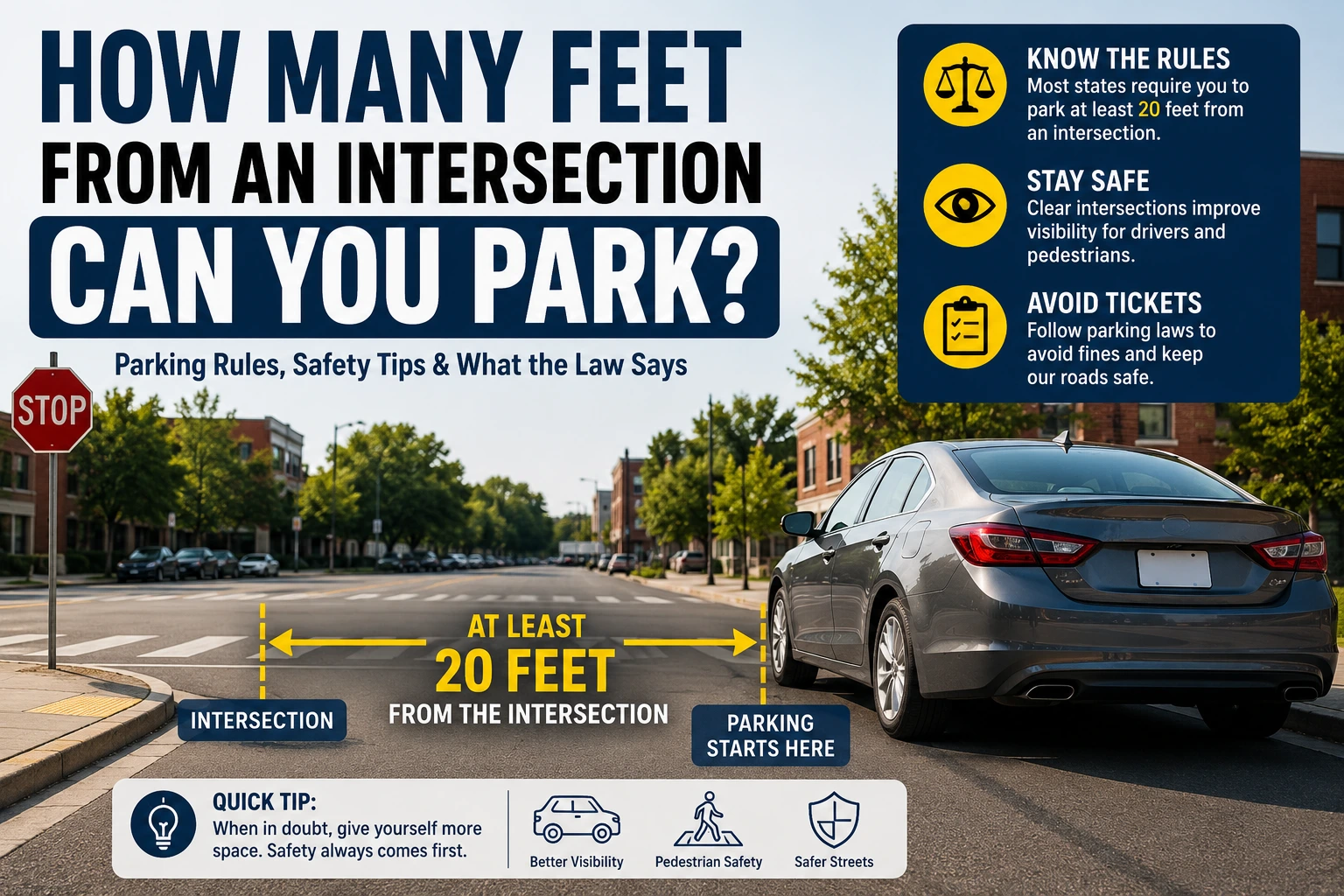
If you drive regularly, you have probably wondered: how many feet from an intersection can you park? Parking too close to an intersection is one of the most common reasons drivers receive tickets, especially in busy cities and residential neighborhoods.
In most states across the United States, you must park at least 20 feet away from an intersection or crosswalk. However, the exact distance can vary depending on local traffic laws and city regulations.
Understanding these parking rules is important because they help:
- Improve driver visibility
- Protect pedestrians
- Reduce accidents
- Keep traffic moving safely
Whether you are preparing for a driving test or simply want to avoid parking fines, learning the correct parking distance from an intersection can save you time, money, and stress.
Understanding Parking Laws Near Intersections
Parking laws exist to improve road safety and reduce confusion for drivers and pedestrians.
Why Intersection Parking Rules Exist
Intersections are busy traffic areas where:
- Cars turn
- Pedestrians cross
- Cyclists travel
- Emergency vehicles pass
Parking too close to these areas creates blind spots and increases the risk of accidents.
Traffic Visibility and Safety
When vehicles park near intersections, they can block:
- Traffic signs
- Stop signs
- Crosswalk visibility
- Views of approaching cars
This makes it harder for drivers to react safely.
Common Driving Regulations
Although laws vary slightly by location, most traffic regulations focus on:
- Visibility
- Pedestrian safety
- Traffic flow
- Emergency access
These rules are enforced through parking tickets and towing in some areas.
How Many Feet From an Intersection Can You Park?
The standard parking rule in many places is simple.
Standard Distance Rule
In most US states, drivers must park:
20 feet minimum from an intersection or crosswalk
This distance helps ensure drivers can clearly see:
- Oncoming traffic
- Pedestrians
- Traffic signals
State-to-State Variations
Parking laws are not exactly the same everywhere.
Some states may require:
- 15 feet
- 20 feet
- 30 feet near traffic signals
Cities may also create additional parking restrictions.
Always check:
- Local driving manuals
- City parking signs
- Road markings
Urban vs Residential Streets
Busy downtown streets often have stricter parking rules than suburban neighborhoods.
Urban intersections may include:
- Painted curbs
- No parking signs
- Meter restrictions
- Bus lane zones
Residential streets may appear less strict, but the law still applies.
Why Parking Too Close to an Intersection Is Dangerous
Parking near intersections may seem harmless, but it creates serious safety problems.
Blocking Driver Visibility
Drivers approaching intersections need clear views of:
- Cars
- Cyclists
- Pedestrians
A parked vehicle can hide important traffic movement.
Risks for Pedestrians
Pedestrians crossing the street become harder to see when cars park too close to crosswalks.
This is especially dangerous for:
- Children
- Elderly pedestrians
- Wheelchair users
Increased Accident Risk
Poor visibility increases:
- Side-impact crashes
- Pedestrian accidents
- Sudden braking
- Traffic congestion
Even a few feet can make a major safety difference.
Parking Rules Near Stop Signs and Crosswalks
Intersections often include additional parking restrictions.
Stop Sign Parking Restrictions
Most states prohibit parking close to stop signs because parked vehicles can block visibility.
Drivers must clearly see:
- The stop sign
- Intersecting traffic
- Pedestrian crossings
Crosswalk Distance Rules
Parking too close to crosswalks is illegal in many areas.
The common rule is:
20 feet from marked or unmarked crosswalks
Fire Hydrant and Curb Rules
Drivers must also avoid parking near:
- Fire hydrants
- Red curbs
- Bus stops
- Emergency entrances
For example, many states require:
15 feet from fire hydrants
These rules improve emergency response access.
Common Places Where Parking Is Illegal
Many drivers accidentally park in restricted areas.
Near Driveways
Blocking driveways can:
- Prevent access
- Create traffic hazards
- Result in towing
Bus Stops
Parking near bus stops interferes with public transportation and passenger safety.
Railroad Crossings
Parking near railroad tracks is extremely dangerous and illegal.
Typical restrictions include:
50 feet minimum from railroad crossings in many areas
Emergency Zones
Never park near:
- Ambulance zones
- Fire lanes
- Police access points
Violations often result in immediate towing.
Real-Life Parking Examples
Understanding real-world situations makes these rules easier to remember.
Downtown Streets
Busy downtown intersections often have:
- Heavy pedestrian traffic
- Delivery vehicles
- Narrow roads
Parking enforcement is usually stricter.
Residential Areas
Even quiet neighborhoods follow parking laws.
A parked SUV near an intersection can block visibility for:
- Children on bicycles
- Drivers backing out
- Pedestrians crossing
School Zones
School intersections require extra caution because children may suddenly cross streets.
Parking too close creates serious risks during pickup and drop-off times.
Commercial Parking Areas
Shopping centers and business districts may use painted curbs and signs to show legal parking boundaries.
Always read signs carefully.
How to Measure Parking Distance From an Intersection
Many drivers struggle to estimate distances correctly.
Visual Estimation Tips
One easy method is using:
- Sidewalk sections
- Utility poles
- Road markings
These provide rough visual guides.
Using Car Lengths
A standard car is approximately 15–16 feet long.
So:
- 20 feet equals slightly more than one car length
This trick helps estimate safe parking distances quickly.
Reading Street Signs
Signs often indicate:
- No parking zones
- Loading zones
- Temporary restrictions
Never ignore posted instructions.
Common Parking Mistakes Drivers Make
Even experienced drivers make parking errors.
Ignoring Curbs and Markings
Colored curbs usually indicate restrictions:
- Red = no parking
- Yellow = loading zone
- Blue = accessible parking
Misjudging Distance
Drivers often believe they are far enough away when they are not.
Always leave extra space if unsure.
Parking Too Close at Night
Low visibility makes intersections more dangerous after dark.
Night parking requires extra caution.
Expert Tips to Avoid Parking Tickets
Parking tickets can be expensive and frustrating.
Check Local Laws
Traffic laws differ by:
- State
- City
- Municipality
Always review local parking regulations.
Look for Signs and Paint
Road signs and curb markings provide important parking information.
Pay attention before leaving your vehicle.
Leave Extra Space
If the minimum distance is 20 feet, parking 25 feet away adds extra safety and reduces ticket risk.
Benefits of Following Intersection Parking Rules
Obeying parking laws provides several advantages.
Improved Road Safety
Clear intersections reduce crashes and confusion.
Better Traffic Flow
Cars move more smoothly when intersections remain open and visible.
Reduced Ticket Risk
Legal parking saves money on:
- Tickets
- Towing fees
- Court costs
Safer Pedestrian Crossings
Pedestrians can cross streets more safely when visibility improves.
Parking Distance Comparison Table
| Location | Common Minimum Distance |
|---|---|
| Intersection | 20 feet |
| Crosswalk | 20 feet |
| Fire hydrant | 15 feet |
| Railroad crossing | 50 feet |
| Stop sign | Varies by state |
This table offers a quick reference for common parking restrictions.
Why Drivers Should Learn Parking Rules
Understanding parking laws is essential for:
- Driving tests
- Daily commuting
- Urban driving
- Defensive driving
Many parking tickets happen because drivers simply do not know the rules.
Learning proper parking distances improves:
- Safety
- Awareness
- Confidence behind the wheel
FAQs
1. How many feet from an intersection can you park legally?
In most areas, drivers must park at least 20 feet away from an intersection or crosswalk.
2. Can you park near a stop sign?
Parking near stop signs is usually restricted because it blocks visibility for drivers and pedestrians.
3. Why is parking near intersections dangerous?
It reduces visibility, increases accident risks, and makes pedestrian crossings less safe.
4. How can I estimate 20 feet while parking?
A standard car length is about 15–16 feet, so 20 feet is slightly longer than one parked car.
5. Do parking laws vary by state?
Yes. Some states and cities have different parking distance requirements, so always check local laws.
Conclusion
Understanding how many feet from an intersection can you park is essential for every driver. In most states, the standard rule is to park at least 20 feet away from intersections and crosswalks to improve visibility and reduce accidents.
Parking too close to intersections can block traffic views, create hazards for pedestrians, and lead to expensive tickets or towing. By learning local parking laws, reading street signs carefully, and leaving extra space whenever possible, drivers can avoid common mistakes and improve road safety.
Whether you are a new driver preparing for a road test or an experienced commuter navigating city streets, following proper parking distance rules helps create safer roads for everyone.
Discover more