

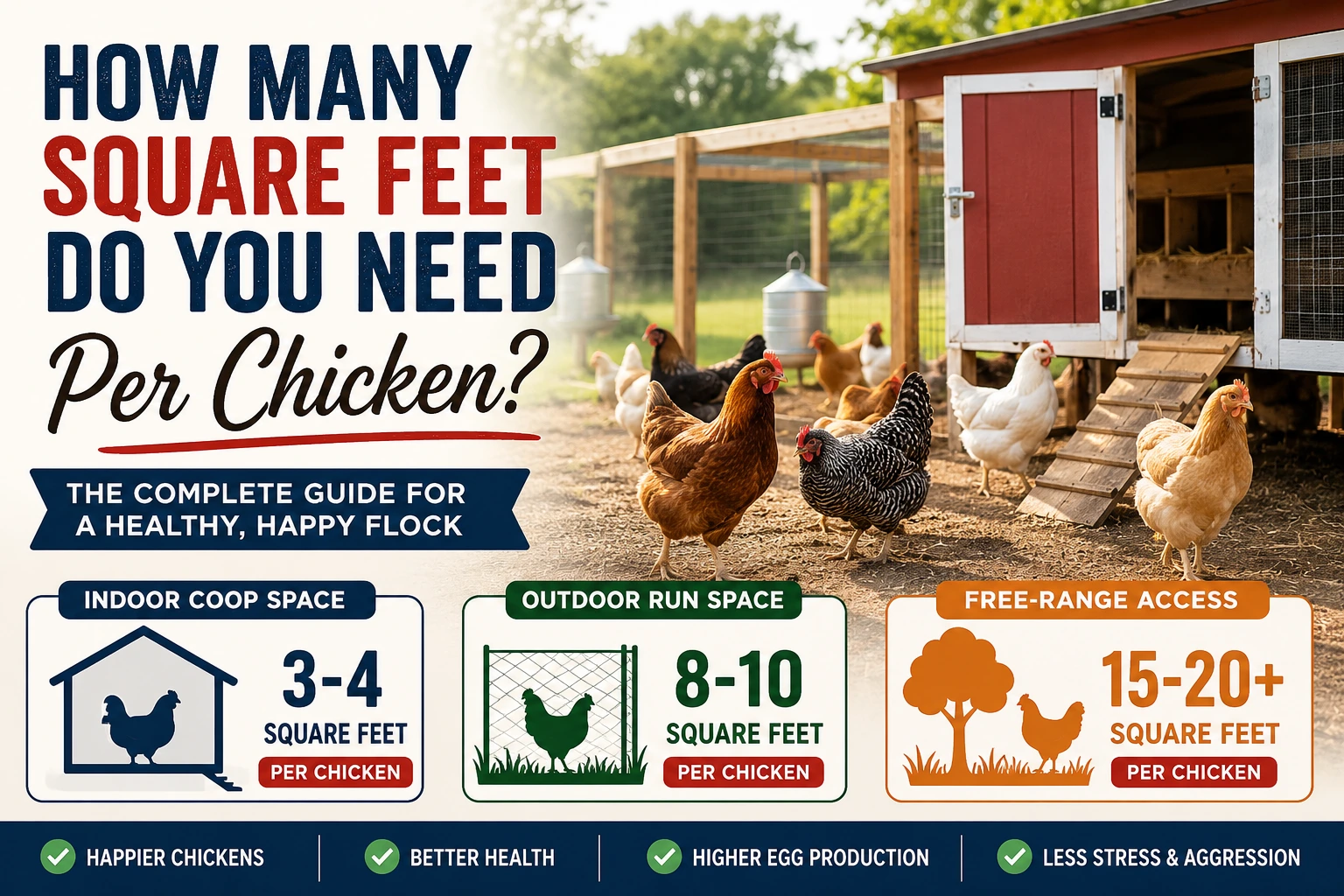
Planning a backyard flock is exciting, but one of the first questions every chicken keeper asks is how many square feet do you need per chicken? The answer is more important than many beginners realize. Giving chickens enough space helps prevent stress, reduces disease, limits aggressive behavior, and improves egg production.
Whether you’re raising a few hens for fresh eggs or managing a larger backyard flock, understanding proper space requirements will help you build a healthier environment. Chickens that are overcrowded often develop behavioral issues like feather pecking, bullying, and even cannibalism. On the other hand, providing adequate room encourages natural behaviors such as scratching, dust bathing, and foraging.
In this guide, you’ll learn exactly how much indoor and outdoor space chickens need, how different breeds affect space requirements, common mistakes to avoid, and practical examples to help you choose the right coop size.
Why Chicken Space Requirements Matter
Many new chicken owners focus on buying the perfect coop but overlook how much living space their birds actually require.
Adequate space directly impacts:
- Egg production
- Feather condition
- Disease prevention
- Air quality
- Flock harmony
- Growth and weight
- Stress levels
When chickens have enough room, they spend less time competing for food, water, nesting boxes, and resting spots. This creates a healthier and happier flock.
How Many Square Feet Do You Need Per Chicken?
The recommended amount depends on whether you’re talking about indoor coop space or outdoor run space.
General Recommendation
| Area | Space Per Chicken |
|---|---|
| Inside Coop | 3–4 square feet |
| Outdoor Run | 8–10 square feet |
| Free-Range Access | 15–20+ square feet preferred |
These numbers represent healthy minimum recommendations for most standard laying hens.
If your chickens spend most of the day outside, the indoor coop can remain closer to 3 square feet per bird. If they stay indoors for long periods due to weather or predators, provide closer to 4 square feet or more.
Indoor Coop Space Requirements
The coop is where chickens sleep, lay eggs, and stay protected during bad weather.
Experts generally recommend:
- 3 square feet per chicken for free-ranging birds
- 4 square feet per chicken for confined flocks
- 5 square feet or more for large breeds
Example
If you own:
- 4 chickens → 16 square feet
- 6 chickens → 24 square feet
- 10 chickens → 40 square feet
A coop measuring 4 feet × 6 feet provides 24 square feet, making it suitable for approximately six standard hens.
Outdoor Run Space Requirements
While chickens sleep indoors, they spend much of the day exploring outside.
Outdoor runs should provide:
- 8–10 square feet per chicken
- More space whenever possible
Extra outdoor room encourages:
- Natural foraging
- Dust baths
- Exercise
- Lower stress
- Cleaner coop conditions
Example Run Sizes
| Number of Chickens | Recommended Run Size |
|---|---|
| 4 | 32–40 sq ft |
| 6 | 48–60 sq ft |
| 8 | 64–80 sq ft |
| 10 | 80–100 sq ft |
| 12 | 96–120 sq ft |
Bigger is always better. Chickens naturally roam and enjoy exploring different areas.
Space Requirements by Chicken Breed
Not every breed requires the same amount of room.
Small Breeds (Bantams)
Examples include:
- Sebright
- Dutch Bantam
- Japanese Bantam
Recommended space:
- 2–3 sq ft inside
- 6–8 sq ft outside
Standard Laying Breeds
Examples include:
- Rhode Island Red
- Australorp
- Leghorn
- Plymouth Rock
Recommended space:
- 3–4 sq ft inside
- 8–10 sq ft outside
Large Breeds
Examples include:
- Brahma
- Jersey Giant
- Cochin
Recommended space:
- 5 square feet or more inside
- 10–15 square feet outside
Larger birds require more room simply because of their body size and slower movement.
Free-Range Chickens Need Less Coop Space
If your chickens spend most of the day roaming your yard or pasture, they naturally require less indoor housing.
Many free-range keepers provide:
- 3 square feet inside
- Unlimited outdoor access
Even with free-ranging, chickens still need a secure coop every night for protection against predators.
How to Calculate the Right Coop Size
Calculating chicken housing is simple.
Step 1
Count the number of chickens.
Example:
8 hens
Step 2
Multiply by indoor requirement.
8 × 4 = 32 square feet
Step 3
Multiply by outdoor requirement.
8 × 10 = 80 square feet
Result
You’ll need approximately:
- 32-square-foot coop
- 80-square-foot run
This calculation works for nearly every backyard flock.
Space Requirements for Different Flock Sizes
The following chart makes planning easier.
| Chickens | Coop Size | Run Size |
|---|---|---|
| 2 | 8 sq ft | 20 sq ft |
| 4 | 16 sq ft | 40 sq ft |
| 6 | 24 sq ft | 60 sq ft |
| 8 | 32 sq ft | 80 sq ft |
| 10 | 40 sq ft | 100 sq ft |
| 12 | 48 sq ft | 120 sq ft |
| 15 | 60 sq ft | 150 sq ft |
These figures assume standard-sized laying hens.
Signs Your Chickens Need More Space
Sometimes your chickens will tell you when they’re overcrowded.
Watch for these warning signs:
- Feather pecking
- Constant fighting
- Bald patches
- Dirty eggs
- Poor egg production
- Increased disease
- Strong ammonia smell
- Birds refusing to leave nesting boxes
- Stress-related behaviors
If you notice several of these signs, increasing available space is often one of the quickest solutions.
Other Space Considerations Beyond Square Footage
Floor space isn’t the only factor that matters. A well-designed coop includes room for several essential features.
Roosting Space
Each chicken needs around:
- 8–12 inches of perch space
Roost bars should be placed above nesting boxes and allow birds to sleep comfortably without crowding.
Nesting Boxes
A common guideline is:
- One nesting box for every 3–4 hens
Providing too few nesting boxes can lead to broken eggs and competition.
Feeders and Waterers
Make sure every chicken can access food and water without being pushed away by dominant birds. Place multiple feeding stations in larger flocks to reduce bullying.
Benefits of Giving Chickens More Space
While meeting the minimum requirements is acceptable, offering additional room provides several advantages.
More space can lead to:
- Healthier feathers
- Cleaner coops
- Better air circulation
- Reduced parasite buildup
- Higher egg production
- Happier birds
- Less aggressive behavior
- Easier coop maintenance
Many experienced poultry keepers intentionally exceed the minimum recommendations because the long-term benefits outweigh the extra construction costs.
Common Mistakes When Planning Chicken Space
Even well-built coops can become problematic if they don’t provide enough usable space. Avoid these common mistakes when planning your flock’s home.
Only Calculating the Coop
Many beginners focus on the indoor coop and forget the outdoor run. Chickens spend most of their active hours outside, so the run should be spacious enough for scratching, dust bathing, and exploring.
Buying a Coop That’s Too Small
Manufacturers sometimes advertise coops as suitable for more chickens than they can comfortably house. Always calculate the square footage yourself instead of relying solely on product labels.
Forgetting Future Flock Growth
It’s common to start with four hens and add more later. Building a slightly larger coop from the beginning saves time and money while preventing overcrowding.
Ignoring Breed Size
A coop designed for lightweight breeds may not provide enough room for larger chickens like Brahmas or Jersey Giants. Always plan according to the size of the birds you intend to keep.
Overlooking Ventilation
More chickens produce more heat, moisture, and waste. Even a spacious coop can become unhealthy if it lacks proper airflow. Good ventilation helps control humidity, reduce ammonia buildup, and keep the flock comfortable.
Seasonal Space Considerations
The amount of space your chickens need can change depending on the season.
Winter
During cold weather, chickens often spend more time inside the coop.
Provide:
- Extra bedding
- More feeder space
- Better ventilation
- Additional indoor room if prolonged confinement is expected
Avoid overcrowding simply to keep birds warm. Chickens generate body heat naturally, but they still need enough room to move comfortably.
Summer
Hot weather increases the need for airflow and shade.
Ensure your chickens have:
- Fresh drinking water
- Shaded areas in the run
- Excellent coop ventilation
- Space to spread out and stay cool
Crowded conditions during summer can increase heat stress and reduce egg production.
How Free-Range Systems Affect Space Needs
Free-ranging gives chickens the opportunity to express natural behaviors while reducing pressure on the coop.
Benefits include:
- More exercise
- Better muscle development
- Reduced boredom
- Healthier feather condition
- Access to insects and fresh vegetation
Even if your flock free-ranges during the day, they still require a properly sized coop for sleeping and protection from predators.
Sample Coop Size Calculations
The examples below can help you estimate the right coop dimensions for different flock sizes.
| Number of Chickens | Minimum Coop Size | Recommended Run Size |
|---|---|---|
| 3 | 12 sq ft | 30 sq ft |
| 5 | 20 sq ft | 50 sq ft |
| 7 | 28 sq ft | 70 sq ft |
| 9 | 36 sq ft | 90 sq ft |
| 15 | 60 sq ft | 150 sq ft |
| 20 | 80 sq ft | 200 sq ft |
These recommendations are based on standard-sized laying hens that spend part of each day outdoors.
Indoor vs. Outdoor Space Comparison
| Feature | Indoor Coop | Outdoor Run |
|---|---|---|
| Purpose | Sleeping, laying eggs, shelter | Exercise, foraging, dust bathing |
| Minimum Space | 3–4 sq ft per chicken | 8–10 sq ft per chicken |
| Better Recommendation | 4–5 sq ft | 10–15 sq ft |
| Can Be Larger? | Yes | Absolutely |
Providing extra space in both areas promotes healthier birds and makes daily management easier.
Expert Tips for Designing the Perfect Chicken Coop
A well-planned coop does more than meet minimum square footage requirements.
Keep these expert tips in mind:
- Build larger than your current flock size.
- Use predator-proof fencing around the run.
- Install sturdy roosting bars with adequate perch space.
- Position nesting boxes in quiet, shaded areas.
- Keep feed and water easily accessible.
- Maintain dry bedding to reduce odor and disease.
- Clean the coop regularly to improve hygiene.
- Include windows or vents for year-round airflow.
- Allow enough headroom for easy cleaning and maintenance.
- Leave room for future additions such as extra nesting boxes or feeders.
Does More Space Improve Egg Production?
Indirectly, yes.
Space itself doesn’t make hens lay more eggs, but it creates conditions that support healthy laying.
A spacious environment can:
- Lower stress levels
- Reduce aggressive behavior
- Improve access to food and water
- Minimize disease outbreaks
- Keep feathers in better condition
- Encourage natural daily activity
Healthy, comfortable hens are more likely to maintain consistent egg production throughout the year.
How Much Space Do Chickens Need at Different Ages?
Young chicks require much less room than adult birds.
Chicks (0–6 Weeks)
- Around 0.5–1 square foot per chick in a brooder
Growing Pullets
- About 2–3 square feet per bird
Adult Chickens
- 3–4 square feet inside the coop
- 8–10 square feet in the outdoor run
As birds grow, increase their available space to avoid overcrowding.
FAQs
How many square feet do you need per chicken inside a coop?
Most standard laying hens need at least 3–4 square feet of indoor coop space. Larger breeds should have around 5 square feet or more for maximum comfort.
How much outdoor run space should each chicken have?
A minimum of 8–10 square feet per chicken is recommended. If possible, provide even more outdoor space to encourage natural behaviors and reduce stress.
Can chickens live comfortably in a small backyard?
Yes. Chickens can thrive in a small backyard if the coop and run meet recommended space requirements, provide good ventilation, and include proper feeding and nesting areas.
What happens if chickens don’t have enough space?
Overcrowded chickens may become aggressive, peck each other, produce fewer eggs, develop health problems, and create unsanitary living conditions due to increased waste buildup.
Is it better to build a larger chicken coop than needed?
Yes. Building a slightly larger coop allows room for future flock expansion, improves air circulation, reduces maintenance issues, and keeps chickens healthier over the long term.
Conclusion
Understanding how many square feet do you need per chicken is one of the most important steps in creating a healthy backyard flock. While the general recommendation is 3–4 square feet per chicken inside the coop and 8–10 square feet per bird in the outdoor run, providing additional space whenever possible leads to happier, healthier chickens.
A well-sized coop helps reduce stress, prevent disease, minimize aggressive behavior, and support consistent egg production. It’s also important to consider breed size, seasonal conditions, ventilation, roosting space, and future flock expansion when designing your chicken housing.
If you’re building a new coop, think beyond the minimum requirements. Giving your chickens a little extra room today can save you problems tomorrow while creating a cleaner, safer, and more enjoyable environment for both you and your flock.
Discover more
how many square feet is 18 x 24