

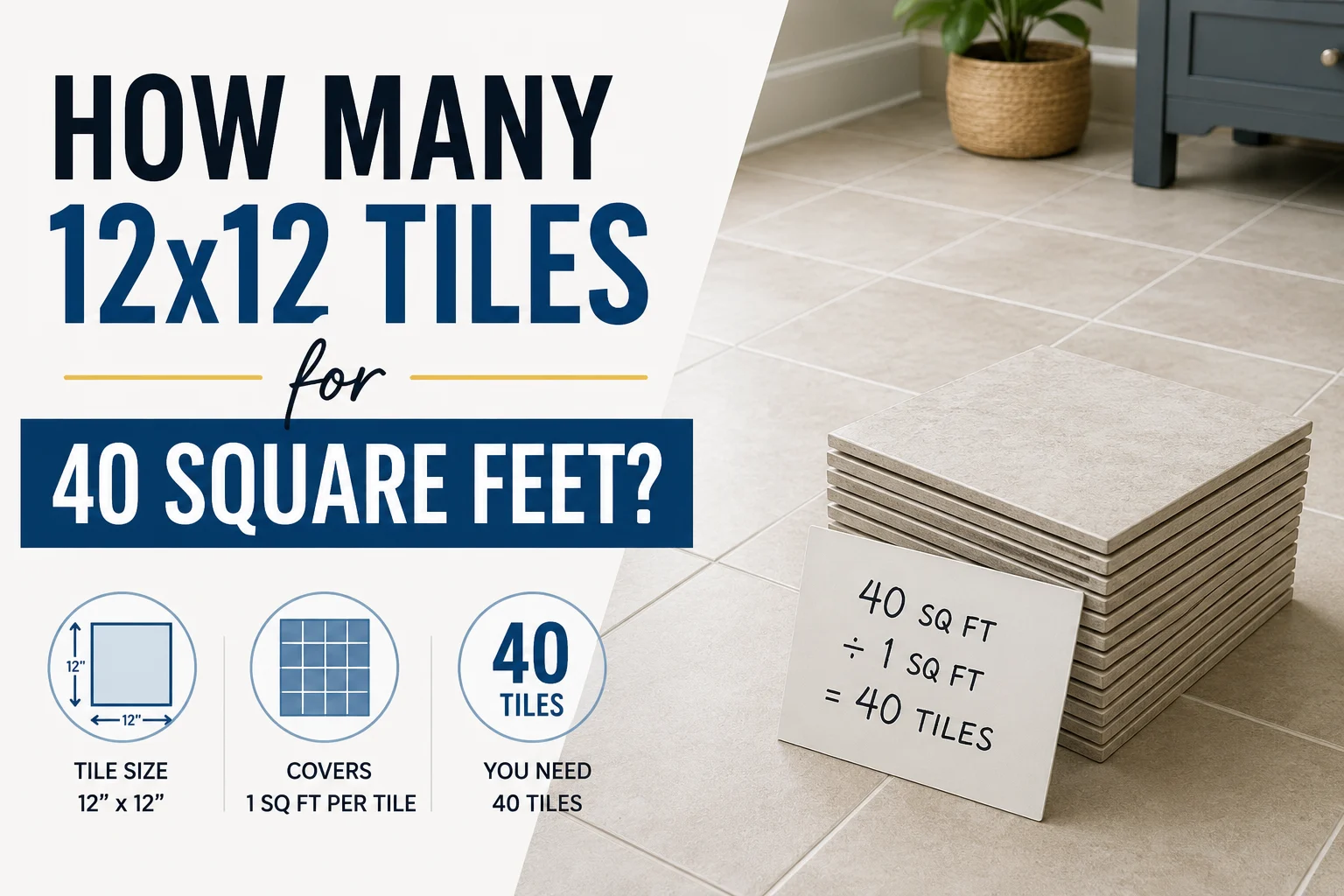
If you are planning a flooring or wall tiling project, one of the first questions you may ask is: how many 12×12 tiles for 40 square feet?
The good news is the calculation is simple once you understand tile measurements and room dimensions. A standard 12×12 tile covers exactly 1 square foot, so for a 40-square-foot area, you need about 40 tiles. However, most professionals recommend buying extra tiles to account for cuts, breakage, and future repairs.
In this complete guide, you will learn:
- The exact tile calculation formula
- How much extra tile to buy
- Common tile estimating mistakes
- Tile coverage charts
- Practical installation tips
- Real-world examples
By the end, you will know exactly how many tiles you need for your project without overspending or running short.
Understanding Tile Measurements
Before calculating tile quantity, it helps to understand how tile sizing works.
What Does 12×12 Tile Mean?
A 12×12 tile measures:
- 12 inches wide
- 12 inches long
Since there are 12 inches in a foot, a 12×12 tile equals:
12 in×12 in=1 square foot
That means each tile covers exactly 1 square foot of space.
This size is extremely popular for:
- Bathroom floors
- Kitchens
- Laundry rooms
- Small commercial spaces
- Entryways
How Much Area One Tile Covers
Because each tile covers 1 square foot:
| Tile Size | Coverage Per Tile |
|---|---|
| 12×12 | 1 sq ft |
| 12×24 | 2 sq ft |
| 24×24 | 4 sq ft |
| 6×6 | 0.25 sq ft |
This makes 12×12 tiles one of the easiest sizes to estimate.
How to Calculate How Many 12×12 Tiles for 40 Square Feet
The formula is simple.
Step-by-Step Formula
Use this basic formula:
Number of Tiles=Tile Coverage Per TileTotal Square Feet
For 12×12 tiles:
- Tile coverage = 1 square foot
So:
1 sq ft per tile40 sq ft=40 tiles
Simple Tile Calculation Example
Imagine your bathroom floor measures:
- Length = 8 feet
- Width = 5 feet
Room size:
8×5=40 square feet
Since each 12×12 tile covers 1 square foot:
- Total tiles needed = 40
However, you should never buy the exact amount only.
Exact Answer for 40 Square Feet
So, exactly how many 12×12 tiles for 40 square feet do you need?
Tile Quantity Without Waste
You need:
- 40 tiles
This assumes:
- Perfect installation
- No cuts
- No breakage
- No mistakes
In real projects, that rarely happens.
Recommended Quantity With Waste Allowance
Professionals usually recommend:
| Installation Type | Extra Tile Recommended |
|---|---|
| Straight layout | 10% extra |
| Diagonal layout | 15% extra |
| Complex patterns | 15–20% extra |
For a standard installation:
40×1.10=44 tiles
Recommended purchase:
- 44 tiles for standard layouts
- 46–48 tiles for diagonal or complex layouts
Tile Coverage Chart for Common Room Sizes
Here is a quick reference chart for 12×12 tile coverage.
| Room Size | Tiles Needed | Tiles With 10% Waste |
|---|---|---|
| 20 sq ft | 20 | 22 |
| 30 sq ft | 30 | 33 |
| 40 sq ft | 40 | 44 |
| 50 sq ft | 50 | 55 |
| 60 sq ft | 60 | 66 |
| 100 sq ft | 100 | 110 |
This chart helps during quick remodeling estimates.
Small Bathroom
A typical small bathroom floor may range between:
- 35–50 square feet
For these spaces:
- 40–55 tiles are usually enough
Kitchen Floor
Small kitchen sections often require:
- 60–120 tiles
depending on layout.
Entryway
Entryways commonly use:
- 20–40 tiles
especially in apartments or condos.
Why Waste Allowance Matters
Many beginners forget to account for waste.
That mistake can delay the project and increase costs later.
Cutting Errors
Tiles near walls often need trimming.
Even experienced installers lose some tiles during cutting.
Broken Tiles
Tiles can crack during:
- Transportation
- Cutting
- Installation
- Future repairs
Extra tiles provide a safety backup.
Pattern Layouts
Diagonal or decorative layouts create more waste because tiles need angled cuts.
Examples include:
- Herringbone patterns
- Chevron layouts
- Diagonal flooring
These designs often require 15–20% extra material.
Common Mistakes When Estimating Tile Quantity
Understanding common mistakes helps avoid expensive problems.
Forgetting Grout Lines
Grout spacing slightly changes tile placement.
Although grout lines are small, they can affect exact layouts.
Most grout joints are:
- 1/8 inch
- 3/16 inch
- 1/4 inch
Professional installers include these gaps in planning.
Ignoring Obstacles
Rooms often contain:
- Cabinets
- Toilets
- Islands
- Bathtubs
- Closets
Some people subtract these areas from calculations. Others keep them included for extra safety.
For small rooms, it is usually smarter to keep the full square footage.
Buying Exact Quantities Only
Buying exactly 40 tiles for 40 square feet is risky.
Reasons include:
- Color batch differences
- Discontinued styles
- Breakage
- Future repairs
Always buy extra.
Best Practices Before Buying Tiles
Good preparation saves money and time.
Measure the Room Correctly
Measure:
- Length
- Width
Multiply them together:
Length×Width=Square Feet
Double-check all measurements before ordering materials.
Buy Extra Tiles
Experts recommend:
- Minimum 10% extra
Store leftover tiles safely for future repairs.
Match Tile Batches
Tiles may vary slightly between manufacturing batches.
Always check:
- Shade number
- Dye lot
- Batch code
This prevents color inconsistencies.
12×12 Tiles vs Other Tile Sizes
Different tile sizes affect installation style and appearance.
12×24 Tiles
Pros:
- Modern appearance
- Fewer grout lines
- Larger visual effect
Cons:
- More cutting waste
- Harder installation
24×24 Tiles
Best for:
- Large open areas
- Luxury designs
However:
- They require very level floors
- Cutting can be difficult
Mosaic Tiles
Mosaic tiles are great for:
- Showers
- Accent walls
- Decorative flooring
But they require:
- More grout
- Longer installation time
Real-World Examples of 40 Square Foot Spaces
Understanding actual room sizes makes planning easier.
Small Bathroom
Example dimensions:
- 5 ft × 8 ft
Square footage:
5×8=40 square feet
Tiles needed:
- 40 minimum
- 44 recommended
Laundry Area
Example:
- 4 ft × 10 ft
Also equals:
- 40 square feet
A simple straight tile pattern works well here.
Kitchen Corner
Breakfast nooks or small kitchen zones often measure around 40 square feet too.
Popular options include:
- Porcelain tile
- Ceramic tile
- Stone-look flooring
Expert Tips for Accurate Tile Planning
Professional installers use several strategies to improve accuracy.
Measure Twice
Even a few inches can affect tile counts significantly.
Use a Tile Calculator
Digital calculators help verify manual measurements.
Plan the Tile Layout First
A layout plan helps reduce awkward cuts.
Order All Tiles Together
This ensures consistent color and finish.
Keep Spare Tiles
Extra tiles help with:
- Future damage
- Repairs
- Remodeling adjustments
Consider Tile Direction
Tile orientation can visually enlarge a room.
For example:
- Horizontal layouts make rooms appear wider
- Vertical layouts create a longer appearance
FAQs
How many 12×12 tiles cover 40 square feet?
You need 40 standard 12×12 tiles to cover 40 square feet because each tile covers 1 square foot.
Should I buy extra tiles?
Yes. Most professionals recommend buying at least 10% extra for waste, cuts, and breakage.
How many tiles should I buy with waste included?
For 40 square feet, you should buy approximately 44 tiles for a standard installation.
Does grout spacing affect tile quantity?
Slightly. Grout lines change spacing and layout, but usually do not drastically alter total tile counts.
Are 12×12 tiles good for small rooms?
Yes. 12×12 tiles are popular for bathrooms, kitchens, laundry rooms, and entryways because they are easy to install and calculate.
Conclusion
If you were wondering how many 12×12 tiles for 40 square feet, the simple answer is:
- 40 tiles minimum
- 44 tiles recommended with waste allowance
Since each 12×12 tile covers exactly 1 square foot, the math is straightforward. However, smart planning matters just as much as basic calculations.
Always remember to:
- Measure accurately
- Add extra tiles for waste
- Plan your layout carefully
- Buy matching tile batches
- Keep spare tiles for repairs
Whether you are tiling a bathroom, laundry room, kitchen area, or entryway, proper tile estimation helps you save money, avoid delays, and achieve a professional-looking result
Discover more
how many feet is 75 square feet