
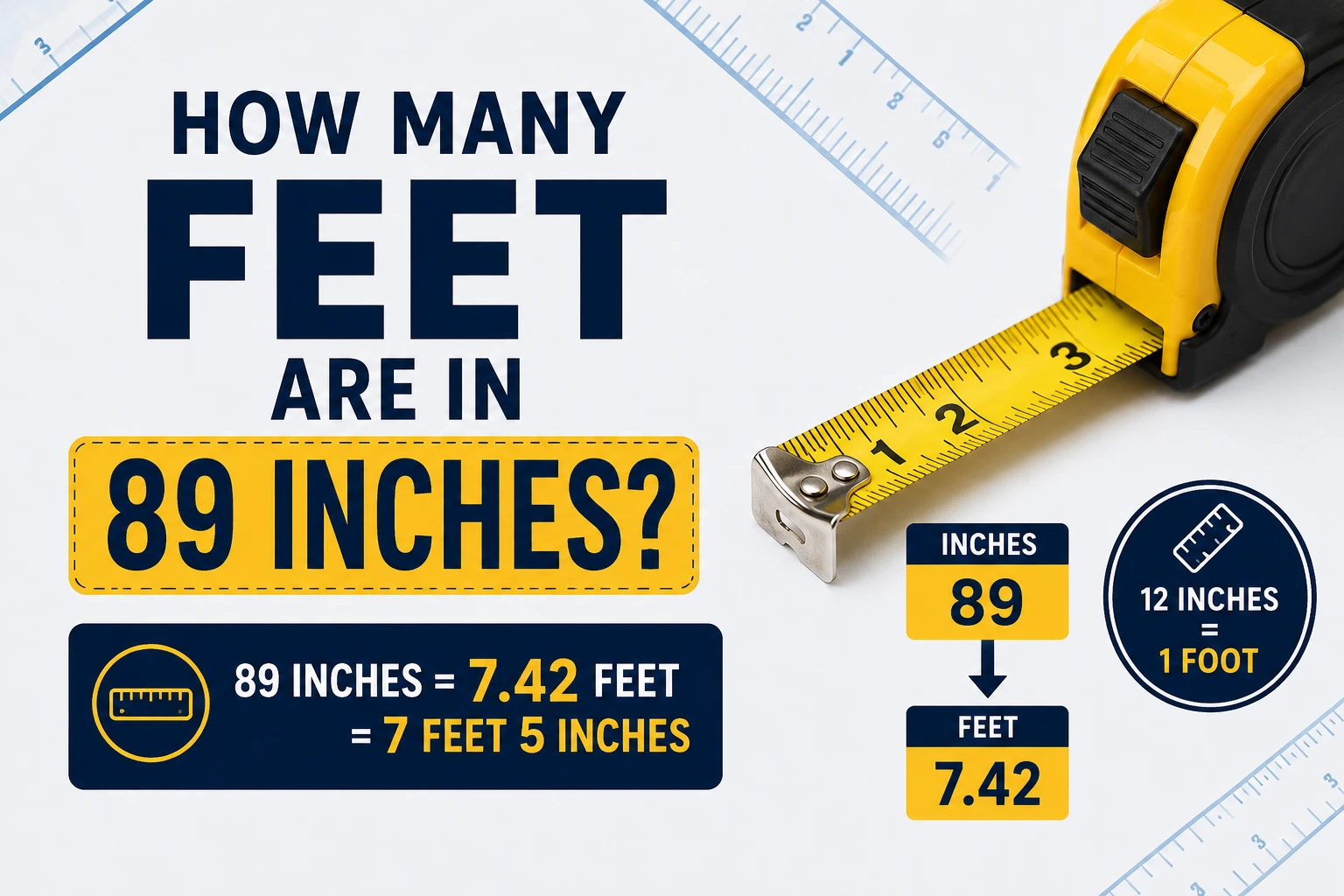
If you are wondering how many feet are in 89 inches, the quick answer is:
So, 89 inches equals approximately 7.42 feet.
You can also say that 89 inches is 7 feet and 5 inches because 84 inches make exactly 7 feet, with 5 inches left over.
Understanding inch-to-feet conversions is useful in daily life. Whether you are measuring furniture, checking TV sizes, calculating room dimensions, or comparing heights, knowing how to convert inches into feet makes measurements easier to understand.
In this detailed guide, you will learn:
- The exact conversion of 89 inches into feet
- A simple conversion formula
- Real-world examples
- Common mistakes to avoid
- Helpful charts and tips
Let’s break it down step by step.
Quick Answer for 89 Inches to Feet
The exact conversion is:
Rounded to two decimal places:
- 89 inches = 7.42 feet
In feet and inches format:
- 89 inches = 7 feet 5 inches
This conversion is based on the standard rule that:
Understanding Inches and Feet
Before converting measurements, it helps to understand the difference between inches and feet.
What Is an Inch?
An inch is a unit of length used mainly in the United States and a few other countries using the imperial measurement system.
People commonly use inches to measure:
- TV screens
- Furniture
- Height
- Small construction materials
- Electronic devices
For example:
- A laptop screen may be 15 inches
- A ruler is usually 12 inches long
What Is a Foot?
A foot is another unit of length in the imperial system.
One foot contains:
- 12 inches
Feet are often used for:
- Human height
- Room dimensions
- Building measurements
- Large objects
Examples include:
- A ceiling height of 8 feet
- A door height of 7 feet
Because feet represent larger distances, converting inches into feet helps simplify measurements.
How to Convert 89 Inches Into Feet
Learning the formula is very easy.
The Conversion Formula
To convert inches into feet, divide the number of inches by 12.
Step-by-Step Calculation
Now let’s calculate 89 inches.
This means:
- 89 inches equals 7.4167 feet
- Rounded value = 7.42 feet
To express it in feet and inches:
- 7 feet = 84 inches
- 89 − 84 = 5 inches remaining
So:
- 89 inches = 7 feet 5 inches
This is the easiest way to understand the measurement in everyday use.
89 Inches in Feet and Inches
Many people prefer measurements in feet and inches instead of decimals.
Here is the breakdown:
| Measurement | Value |
|---|---|
| Inches | 89 inches |
| Feet (decimal) | 7.42 feet |
| Feet and inches | 7 feet 5 inches |
This format is commonly used when discussing:
- Human height
- Door sizes
- Furniture dimensions
- Sports measurements
Real-Life Examples of 89 Inches
Understanding what 89 inches looks like in real life can make the measurement easier to imagine.
Height Comparison
A height of 89 inches equals:
- 7 feet 5 inches
That is extremely tall for a person. Most professional basketball players are shorter than this.
For comparison:
- Average male height: about 5 feet 9 inches
- Average NBA player: about 6 feet 6 inches
Someone who is 89 inches tall would stand out almost anywhere.
Furniture and TVs
An 89-inch measurement is common in:
- Large TV sizes
- Sofas
- Dining tables
- Curtains
- Wall dimensions
For example:
- An 89-inch couch is about 7.4 feet long
- An 89-inch TV screen is considered very large and cinematic
When shopping online, converting inches to feet helps visualize the size better.
Construction and DIY Uses
Builders and DIY workers often convert inches into feet while:
- Measuring walls
- Installing flooring
- Cutting wood
- Planning renovations
For example:
- A wooden board measuring 89 inches is easier to understand as 7 feet 5 inches.
Using feet instead of inches reduces confusion during projects.
Inches to Feet Conversion Chart
Here is a quick conversion chart for nearby measurements.
| Inches | Feet |
| 72 inches | 6 feet |
| 78 inches | 6.5 feet |
| 84 inches | 7 feet |
| 85 inches | 7.08 feet |
| 86 inches | 7.17 feet |
| 87 inches | 7.25 feet |
| 88 inches | 7.33 feet |
| 89 inches | 7.42 feet |
| 90 inches | 7.5 feet |
| 96 inches | 8 feet |
Charts like this are useful for:
- Home improvement
- Interior design
- School projects
- Quick reference
Why Understanding Measurement Conversion Matters
Converting inches into feet is an important everyday skill.
Easier Visualization
Most people understand feet more quickly than large inch values.
For example:
- 89 inches sounds complicated
- 7 feet 5 inches is easier to picture
Helpful for Shopping
Furniture, TVs, and mattresses are often listed in inches online. Converting them to feet helps determine if they fit your space.
Useful in Construction
Workers regularly convert measurements while:
- Reading blueprints
- Measuring rooms
- Installing fixtures
Important for Education
Students frequently use measurement conversions in:
- Math
- Science
- Engineering
Understanding the formula improves problem-solving skills.
Common Mistakes When Converting Inches to Feet
Many people make small errors during measurement conversions.
Here are the most common mistakes.
Forgetting to Divide by 12
Some people accidentally multiply instead of divide.
Correct formula:
- Inches ÷ 12
Rounding Too Early
Avoid rounding before finishing the calculation.
Correct:
- 89 ÷ 12 = 7.4167
Then round if needed.
Confusing Decimal Feet With Inches
A decimal like 7.42 feet does not mean:
- 7 feet 42 inches
It actually means:
- 7 feet plus part of another foot
Ignoring Remaining Inches
People sometimes forget the leftover inches.
Remember:
- 7 feet = 84 inches
- 5 inches remain
Final answer:
- 7 feet 5 inches
Easy Tips to Remember the Formula
Measurement conversions become simple with practice.
Remember the Number 12
Always keep this rule in mind:
That single fact helps solve most conversions.
Use a Calculator
For fast answers:
- Enter inches
- Divide by 12
- Round if needed
Memorize Common Conversions
Knowing common measurements helps save time:
- 24 inches = 2 feet
- 36 inches = 3 feet
- 72 inches = 6 feet
Practical Uses of Inch-to-Feet Conversion
This conversion is useful in many industries and activities.
Interior Design
Designers use measurements to:
- Plan furniture placement
- Measure wall art
- Choose curtains
Sports
Athlete heights are often measured in feet and inches.
Real Estate
Room dimensions usually use feet instead of inches.
Manufacturing
Factories measure materials precisely to reduce waste.
Online Shopping
Converting dimensions helps buyers avoid purchasing items that are too large or too small.
Decimal Feet vs Feet and Inches
There are two common ways to express measurements.
| Format | Example |
| Decimal feet | 7.42 feet |
| Feet and inches | 7 feet 5 inches |
Decimal Format
Used mostly in:
- Engineering
- Construction
- Technical drawings
Feet and Inches Format
Used mostly in:
- Daily conversation
- Height measurements
- Furniture sizing
Both are correct. The best choice depends on the situation.
How Tall Is 89 Inches Compared to Everyday Objects?
To better visualize 89 inches, compare it with familiar items.
89 inches is about:
- The height of a basketball hoop support section
- A very tall refrigerator
- A large sectional sofa length
- A small room wall width
- A king-size bed length plus extra space
These comparisons make the measurement easier to imagine.
Frequently Asked Questions
1. How many feet are in 89 inches exactly?
89 inches equals exactly 7.4167 feet.
2. What is 89 inches in feet and inches?
89 inches equals 7 feet 5 inches.
3. How do you convert inches into feet?
Divide the number of inches by 12.
4. Is 89 inches taller than 7 feet?
Yes. Since 7 feet equals 84 inches, 89 inches is 5 inches taller.
5. Why do people convert inches to feet?
Feet are easier to understand for larger measurements like height, furniture, and room dimensions.
Conclusion
Now you know exactly how many feet are in 89 inches.
The correct conversion is:
This simple conversion is useful in everyday life, from measuring furniture to understanding height and construction dimensions.
To quickly convert inches into feet:
- Divide inches by 12
- Use the decimal result
- Or convert the remainder into inches
Understanding these conversions can save time, improve accuracy, and make measurements easier to visualize in real-world situations.
Discover more
how many feet is pitcher’s mound in little league