

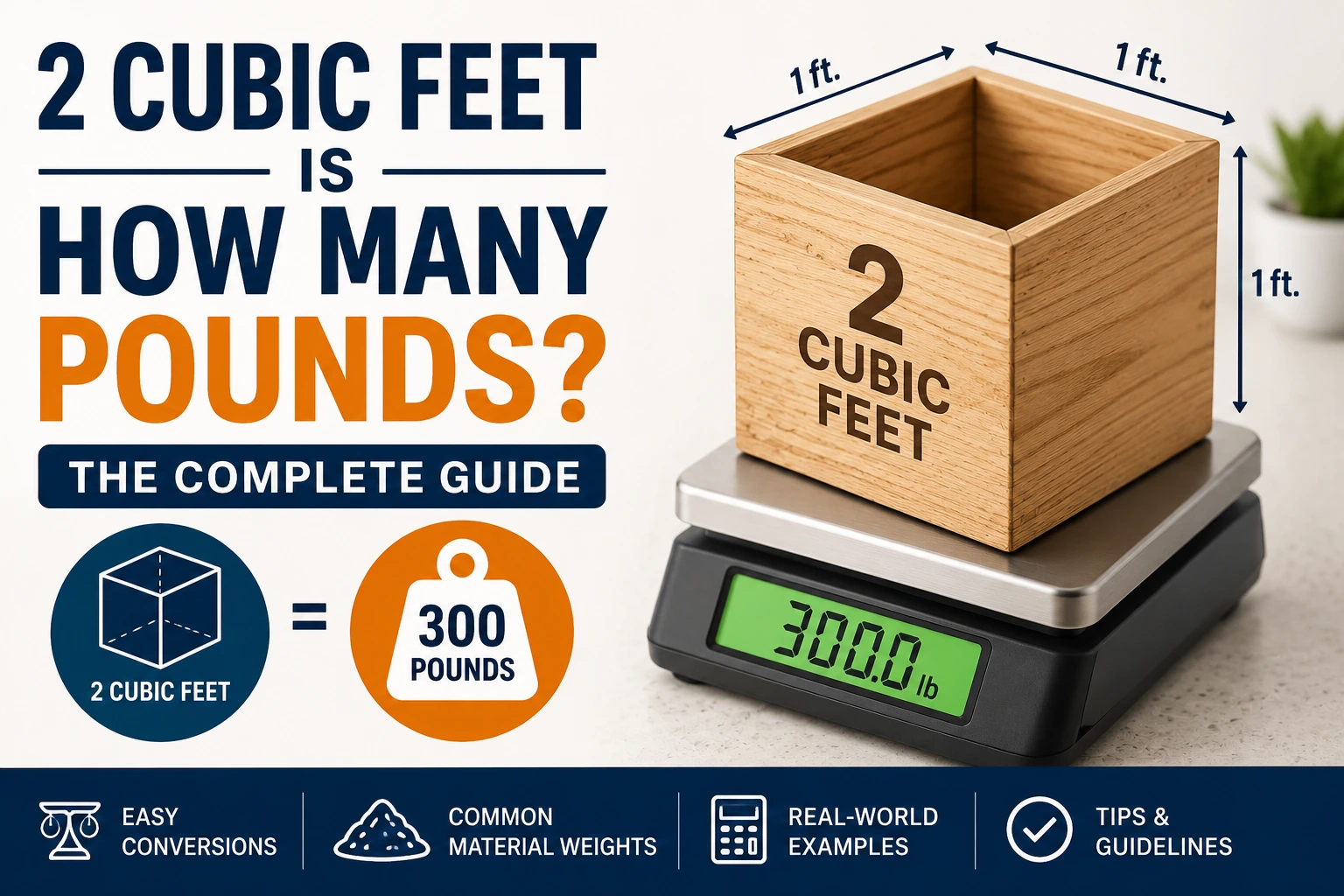
When people ask, “2 cubic feet is how many pounds?” the answer depends entirely on the material being measured. Cubic feet measure volume, while pounds measure weight. Since every material has a different density, the weight of 2 cubic feet can vary greatly.
For example:
- 2 cubic feet of soil may weigh around 150 pounds
- 2 cubic feet of mulch may weigh only 40 pounds
- 2 cubic feet of gravel can weigh over 200 pounds
That is why understanding density is important when converting cubic feet to pounds.
In this guide, you will learn how cubic feet and pounds relate, how to calculate weight accurately, and how much common materials weigh in 2 cubic feet.
Understanding Cubic Feet and Pounds
What Is a Cubic Foot?
A cubic foot is a unit of volume. It measures the amount of space something occupies.
A space measuring:
- 1 foot wide
- 1 foot long
- 1 foot high
equals 1 cubic foot.
So, 2 cubic feet simply means double that volume.
What Is a Pound?
A pound is a unit of weight used mainly in the United States.
It tells you how heavy something is.
For example:
- A bag of sugar may weigh 5 pounds
- A dumbbell may weigh 20 pounds
- A bag of concrete may weigh 80 pounds
Why Volume and Weight Are Different
Volume and weight are not the same thing.
Two materials can occupy the same amount of space but weigh very differently.
For example:
- 2 cubic feet of feathers are light
- 2 cubic feet of concrete are extremely heavy
The difference comes from density.
Why 2 Cubic Feet Does Not Always Equal the Same Weight
Density refers to how much mass is packed into a certain space.
Materials with high density weigh more.
Materials with low density weigh less.
Here are simple examples:
| Material | Approximate Weight for 2 Cubic Feet |
|---|---|
| Mulch | 20–40 pounds |
| Potting Soil | 80–120 pounds |
| Sand | 180–220 pounds |
| Gravel | 200–300 pounds |
| Concrete | 300 pounds or more |
| Water | About 125 pounds |
As you can see, there is no single answer to “2 cubic feet is how many pounds.”
Everything depends on the material.
Formula to Convert Cubic Feet to Pounds
Simple Conversion Formula
The standard formula is:
\text{Weight (lbs)} = \text{Cubic Feet} \times \text{Density (lbs/ft^3)}
You need to know the density of the material in pounds per cubic foot.
Example Calculation
Suppose gravel weighs 110 pounds per cubic foot.
For 2 cubic feet:
2×110=220 pounds
So, 2 cubic feet of gravel weighs about 220 pounds.
2 Cubic Feet Is How Many Pounds for Common Materials
Here are common materials people search for when converting cubic feet to pounds.
1. Soil
Soil weight depends on moisture content and soil type.
- Dry soil is lighter
- Wet soil is much heavier
Average weight:
| Soil Type | Weight for 2 Cubic Feet |
|---|---|
| Dry Topsoil | 140–160 pounds |
| Moist Garden Soil | 160–200 pounds |
| Potting Soil | 80–120 pounds |
Gardeners often buy soil in cubic feet, so knowing the weight helps with transportation and lifting.
2. Mulch
Mulch is one of the lightest landscaping materials.
Typical weights:
| Mulch Type | Weight for 2 Cubic Feet |
|---|---|
| Wood Mulch | 20–30 pounds |
| Rubber Mulch | 40–50 pounds |
| Wet Mulch | 50–70 pounds |
Mulch weight changes significantly when wet.
3. Gravel
Gravel is dense and heavy.
Average weights:
| Gravel Type | Weight for 2 Cubic Feet |
|---|---|
| Pea Gravel | 180–220 pounds |
| Crushed Stone | 200–260 pounds |
| River Rock | 220–300 pounds |
This is why gravel delivery costs are usually based on weight.
4. Sand
Sand is another heavy material used in construction and landscaping.
Typical weights:
| Sand Type | Weight for 2 Cubic Feet |
|---|---|
| Dry Sand | 180–200 pounds |
| Wet Sand | 200–240 pounds |
Wet sand is heavier because water fills the spaces between particles.
5. Concrete
Concrete is extremely dense.
Fresh or dry concrete can weigh:
| Concrete Type | Weight for 2 Cubic Feet |
|---|---|
| Dry Concrete Mix | 240–300 pounds |
| Cured Concrete | 300+ pounds |
If your keyword reference mentions “[300 pounds],” it likely refers to heavy materials like concrete or gravel.
6. Water
Water has a predictable density.
One cubic foot of water weighs about 62.4 pounds.
For 2 cubic feet:
2×62.4=124.8 pounds
So, 2 cubic feet of water weighs about 125 pounds.
Cubic Feet to Pounds Conversion Chart
This quick chart helps estimate weights.
| Material | Pounds Per Cubic Foot | Weight of 2 Cubic Feet |
|---|---|---|
| Water | 62.4 lbs | 125 lbs |
| Potting Soil | 50 lbs | 100 lbs |
| Topsoil | 75 lbs | 150 lbs |
| Sand | 100 lbs | 200 lbs |
| Gravel | 110 lbs | 220 lbs |
| Concrete | 150 lbs | 300 lbs |
This chart gives approximate averages only.
Actual weights can vary.
Real World Examples
Gardening Projects
Suppose you buy 2 cubic feet of garden soil.
If the soil weighs 75 pounds per cubic foot:
2×75=150 pounds
That means you may need help lifting the bag into your car.
Moving Materials
If you transport gravel in a truck, knowing the weight prevents overloading.
For example:
- 2 cubic feet of gravel ≈ 220 pounds
- 10 cubic feet ≈ 1,100 pounds
This becomes important for trailers and pickup trucks.
Construction Jobs
Contractors often calculate concrete weight before pouring foundations.
If concrete weighs 150 pounds per cubic foot:
2×150=300 pounds
That is why concrete handling requires proper equipment.
Common Mistakes When Converting Cubic Feet to Pounds
Many people make errors during conversion.
Here are the most common mistakes.
1. Ignoring Density
Density changes everything.
Without density, cubic feet cannot be converted accurately into pounds.
2. Assuming All Materials Weigh the Same
Two cubic feet of mulch and two cubic feet of gravel are completely different in weight.
Always check material type.
3. Forgetting Moisture Content
Wet materials weigh more.
This is especially true for:
- Soil
- Sand
- Mulch
- Wood chips
Rain can dramatically increase weight.
4. Using Incorrect Measurements
Always measure volume correctly before calculating weight.
Even small mistakes can produce large errors.
Expert Tips for Accurate Weight Estimates
Here are professional tips to improve accuracy.
Check Manufacturer Labels
Many bagged materials list weight directly on the package.
This is often more accurate than online estimates.
Use Average Density Values
If exact density is unavailable, use industry averages.
This gives a reasonable estimate.
Consider Moisture Conditions
Outdoor materials are often heavier after rain.
Plan transportation carefully.
Add a Safety Margin
When transporting heavy materials:
- Avoid maximum load limits
- Add extra capacity for safety
- Account for uneven distribution
Practical Uses of Cubic Feet to Pounds Conversions
Understanding these conversions helps with many everyday tasks.
Landscaping
You may need to estimate:
- Mulch weight
- Gravel loads
- Soil delivery
Home Improvement
Conversions help calculate:
- Concrete requirements
- Sand quantities
- Tile foundation materials
Shipping and Freight
Shipping companies often calculate charges based on volume and weight.
Knowing both measurements helps estimate costs.
Farming and Agriculture
Farmers regularly estimate feed, compost, and soil weights using cubic feet conversions.
FAQs
1. 2 cubic feet is how many pounds exactly?
There is no exact answer because weight depends on the material’s density. It can range from 20 pounds to over 300 pounds.
2. How many pounds is 2 cubic feet of soil?
Most topsoil weighs around 140–160 pounds for 2 cubic feet.
3. How heavy is 2 cubic feet of concrete?
Concrete typically weighs about 300 pounds for 2 cubic feet.
4. Can I convert cubic feet to pounds directly?
Only if you know the density of the material.
5. Why does wet material weigh more?
Water adds extra mass, increasing the total weight.
Conclusion
So, “2 cubic feet is how many pounds?” depends entirely on the material you are measuring.
Light materials like mulch may weigh only 20–40 pounds, while dense materials like gravel and concrete can weigh between 220 and 300 pounds or more.
The key to accurate conversion is understanding density. Once you know the pounds per cubic foot of a material, you can quickly calculate the total weight using a simple formula.
Whether you are planning a landscaping project, transporting materials, or working on construction tasks, knowing how to convert cubic feet into pounds helps you work safely, efficiently, and accurately.
Discover more
how many 12×12 tiles for 40 square feet