
How Many Feet Does the City Own of Your Property?
Many homeowners are surprised to learn that even though they maintain the grass, landscaping, or sidewalk in front of their home, they may not fully control that portion of land. This leads to a common question: how many feet does the city own of your property?
The answer depends on several factors, including your property’s location, local zoning laws, road classifications, easements, and public rights-of-way. In many cases, the city doesn’t technically “own” part of your property, but it may have legal rights to use certain portions for roads, sidewalks, utilities, drainage systems, and public infrastructure.
Understanding where your property rights end and municipal rights begin can help prevent costly mistakes when installing fences, planting trees, building driveways, or constructing additions.
This guide explains how city ownership, easements, and rights-of-way work and how you can determine exactly how many feet of your property may be subject to city control.
Quick Answer: Does the City Own Part of Your Property?
In most situations, the city does not own your entire front yard, but it may control a portion through:
- Public rights-of-way
- Utility easements
- Drainage easements
- Sidewalk easements
- Road setback requirements
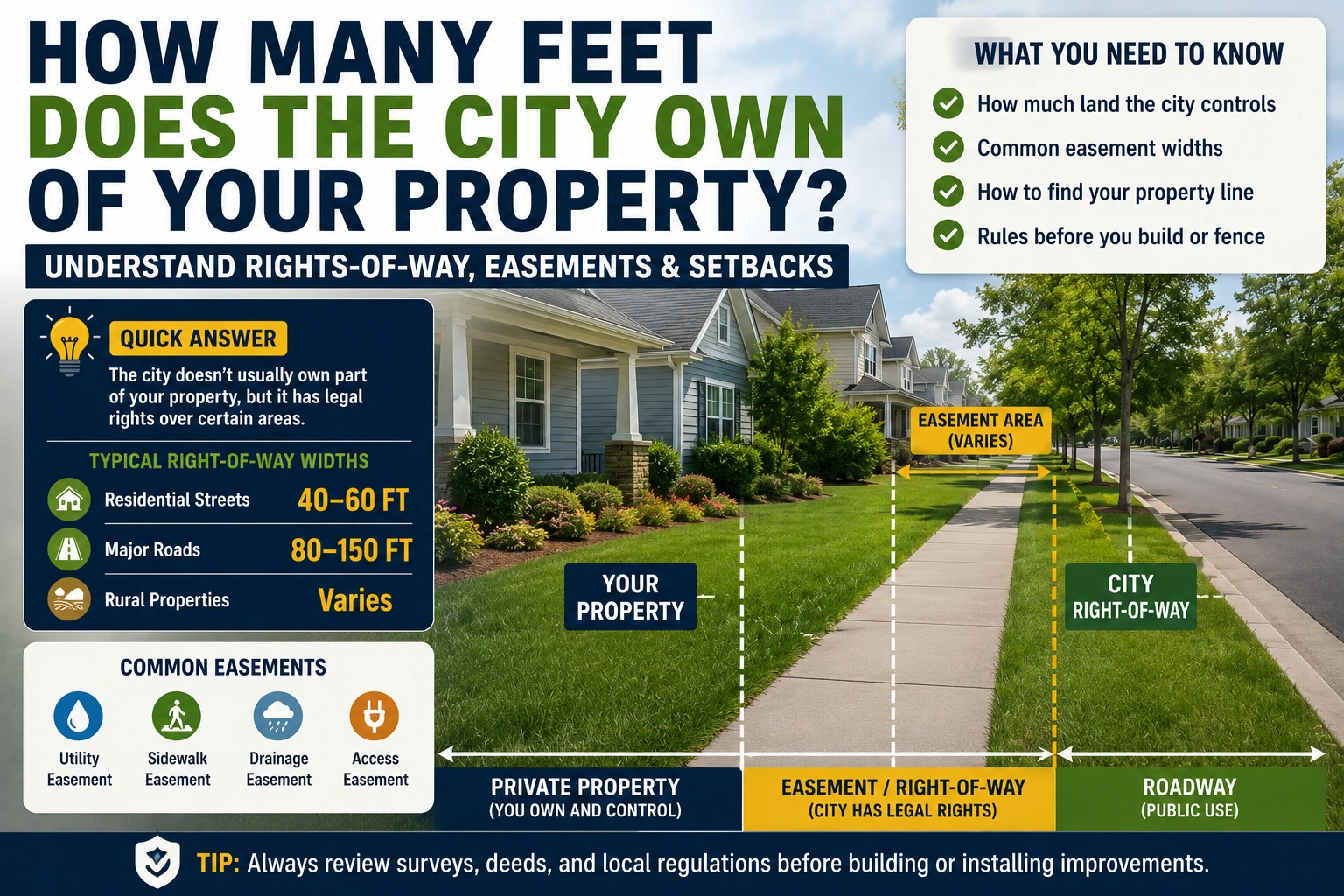
A common residential street right-of-way ranges from:
| Feature | Typical Width |
|---|---|
| Utility Easement | 5–15 feet |
| Front Setback Area | 10–50 feet |
| Residential Right-of-Way | 40–60 feet |
| Major Road Right-of-Way | 80–150 feet |
Because every municipality is different, there is no universal number of feet the city controls on every property.
Understanding Property Ownership vs Public Rights
Many property owners assume that ownership means complete control. In reality, legal rights can be shared.
What Is a Property Line?
A property line defines the legal boundary of land ownership.
Property lines are established through:
- Surveys
- Deeds
- Plat maps
- County records
Everything inside those boundaries generally belongs to the property owner.
However, ownership doesn’t always eliminate public rights.
What Is a Right-of-Way?
A right-of-way is a legal area reserved for public use.
The city may use this space for:
- Roads
- Sidewalks
- Utilities
- Drainage systems
- Street improvements
Even if you maintain the area, the city may retain legal authority over it.
How Many Feet Does the City Own of Your Property Near the Street?
This is where confusion often occurs.
Many homeowners assume the curb marks their property line.
In reality, the city’s right-of-way frequently extends beyond the pavement.
Typical Example
A residential street may have:
- 30-foot-wide roadway
- 10-foot utility area
- Sidewalk corridor
- Drainage area
As a result, the public right-of-way may extend 10–20 feet or more beyond the curb.
Typical Front Yard Scenario
| Area | Approximate Width |
| Road Surface | 30 feet |
| Public Right-of-Way Extension | 10–20 feet |
| Homeowner-Controlled Yard | Remaining Lot Area |
Many property owners mow and landscape areas that remain subject to city access rights.
Common Right-of-Way Widths and Easements
Right-of-way sizes vary depending on road type.
Residential Streets
Typical widths:
- 40–60 feet total
This usually includes:
- Pavement
- Sidewalks
- Utility corridors
Major Roads
Arterial roads often require:
- 80–150 feet of right-of-way
These accommodate:
- Wider lanes
- Utility infrastructure
- Future road expansion
Rural Properties
Rural roads often contain:
- Large drainage ditches
- Utility easements
- Expanded setback requirements
The city’s control may extend farther than expected.
What Is a Utility Easement?
Utility easements are among the most common reasons homeowners discover restrictions on their land.
Utility companies may need access to:
- Water lines
- Sewer systems
- Gas lines
- Power lines
- Telecommunications equipment
Common Utility Easement Widths
| Easement Type | Typical Width |
| Side Easement | 5–10 feet |
| Rear Easement | 10–20 feet |
| Utility Corridor | 10–30 feet |
You may still own the land, but utility providers retain access rights.
How to Find Out Exactly How Many Feet the City Controls
The only way to know for certain is to review official records.
Review Your Property Survey
A professional survey often shows:
- Property boundaries
- Easements
- Setbacks
- Utility corridors
Look for labels such as:
- R.O.W. (Right-of-Way)
- Utility Easement
- Drainage Easement
Check County Records
Many counties provide online access to:
- Parcel maps
- Plat maps
- Deed information
These records often identify easements affecting your property.
Contact the Local Planning Department
Planning departments can provide information regarding:
- Setback requirements
- Zoning regulations
- Right-of-way maps
- Future infrastructure projects
This is often the fastest way to get accurate answers.
Common Areas the City May Control
Several portions of residential property commonly fall under municipal authority.
Sidewalk Areas
Cities typically regulate:
- Construction
- Repairs
- Accessibility standards
Drainage Easements
These help manage stormwater runoff.
Building within these areas may be restricted.
Utility Corridors
Cities and utility providers require access for maintenance and repairs.
Street Expansion Areas
Some right-of-way corridors are reserved for future road improvements.
Homeowners may face restrictions on permanent structures in these zones.
Real-World Examples
Understanding actual scenarios helps clarify how municipal rights work.
Example 1: Suburban Neighborhood
Property width:
- 80 feet
Right-of-way:
- 10 feet beyond curb
Result:
The homeowner maintains the grass strip but cannot block utility access.
Example 2: Corner Lot
Corner lots often have:
- Larger visibility easements
- Additional setback restrictions
Certain fences or landscaping may be prohibited.
Example 3: Rural Acreage
A rural property may include:
- Utility easement
- Drainage ditch
- Road easement
Even with several acres of land, portions remain subject to public access rights.
Common Mistakes Property Owners Make
Assuming the Curb Marks Ownership
Property boundaries frequently extend beyond or behind the curb line.
Building Without Reviewing Easements
Common structures that create issues include:
- Fences
- Sheds
- Retaining walls
- Driveway extensions
Ignoring Setback Requirements
Cities often regulate how close structures can be built to roads or property lines.
Relying on Neighbor Information
Neighbors may have different lot layouts and easement conditions.
Always verify through official records.
Expert Tips Before Building Near Property Lines
Obtain a Current Survey
A professional survey is one of the best investments before construction.
Verify Easements First
Review:
- Utility easements
- Drainage easements
- Access easements
Contact Local Authorities
Planning departments can identify restrictions before permits are submitted.
Consider Future Projects
Road widening projects can affect property use years after purchase.
Understanding right-of-way limits early helps avoid surprises.
Summary: How Many Feet Does the City Own of Your Property?
There is no single nationwide answer to how many feet does the city own of your property. In many cases, the city may not own the land outright but may possess legal rights through easements, setbacks, and public rights-of-way.
The area under municipal control often ranges from:
- 5–15 feet for utility easements
- 10–20 feet beyond curbs in some neighborhoods
- 40–150 feet total right-of-way depending on road type
The only reliable way to determine the exact dimensions affecting your property is by reviewing surveys, plat maps, deeds, and local government records.
9. FAQs
How many feet from the road does the city usually control?
Many residential rights-of-way extend 10–20 feet beyond the pavement, but the exact distance varies by municipality.
Does the city own the strip of grass between the sidewalk and road?
Not always. Homeowners often own the land but the city may have a right-of-way easement over it.
Can I build a fence inside a city easement?
Usually not without approval. Easements often restrict permanent structures.
How do I find my property’s right-of-way?
Review your survey, plat map, deed, or contact your local planning department.
What happens if I build inside a utility easement?
The city or utility company may require removal of the structure if access becomes necessary.
10. Conclusion
If you’ve ever wondered how many feet does the city own of your property, the answer depends on local laws, road classifications, easements, and zoning regulations. While cities often do not own large portions of residential lots, they frequently maintain legal rights to use certain areas for roads, utilities, drainage, and public infrastructure.
Before building, landscaping, or making major improvements near property boundaries, review your survey and consult local officials. Doing so can help protect your investment, avoid legal disputes, and ensure your property improvements remain compliant with municipal regulations.
Discover more