

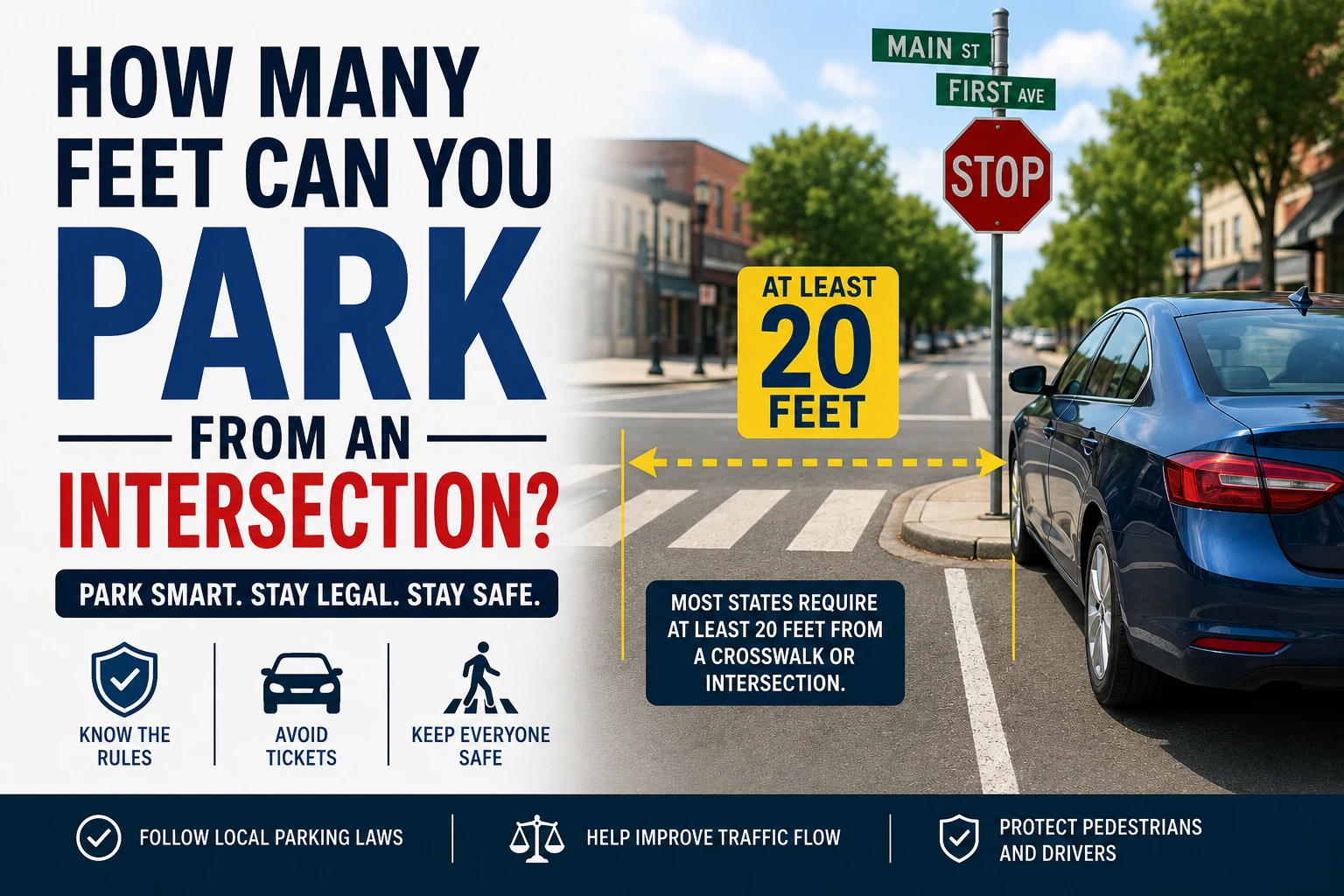
Parking may seem simple, but where you leave your vehicle can affect traffic flow, pedestrian safety, and visibility for other drivers. One of the most common questions drivers ask is: how many feet can you park from an intersection?
The answer depends on local laws, but in many areas of the United States, drivers must park at least 20 feet from a crosswalk at an intersection. Some jurisdictions may require greater distances, especially in busy urban areas.
Understanding these rules helps you avoid parking tickets, towing fees, and potential accidents. This guide explains parking regulations near intersections, why they exist, and how to stay compliant wherever you drive.
Understanding Parking Rules Near Intersections
Intersections are among the busiest parts of any road network. Vehicles, cyclists, and pedestrians all converge at these points.
Parking too close to an intersection can:
- Block visibility
- Create blind spots
- Increase accident risks
- Obstruct pedestrians
- Slow emergency vehicles
Because of these risks, traffic authorities establish minimum parking distances to maintain safety.
Drivers should always look for posted signs, painted curbs, and local regulations before parking near any intersection.
How Many Feet Can You Park From an Intersection?
Standard Rule in Most States
For most U.S. jurisdictions, the general rule is:
| Location | Minimum Distance |
|---|---|
| Crosswalk at intersection | 20 feet |
| Stop sign | Often 30 feet |
| Traffic signal | Varies by city |
| Fire station driveway | 20 feet to 75 feet |
The commonly cited requirement is that vehicles should not park within 20 feet of a crosswalk at an intersection.
However, local laws may vary significantly.
Why the Distance Matters
The purpose of the rule is visibility.
When a vehicle is parked too close to an intersection:
- Drivers cannot see approaching traffic.
- Pedestrians become harder to spot.
- Cyclists may be hidden from view.
- Turning vehicles have less maneuvering space.
A few extra feet can dramatically improve roadway safety.
Parking Distance Laws by Location
United States
Most U.S. states follow guidelines based on traffic safety standards and municipal codes.
Typical restrictions include:
- 20 feet from a crosswalk
- 30 feet from stop signs
- 15 feet from fire hydrants
- Restrictions near school crossings
Many state driver’s handbooks emphasize maintaining clear sight lines at intersections.
Canada
Canadian provinces generally have similar regulations.
Common requirements include:
- No parking within designated distances of intersections
- Clear access for emergency vehicles
- Visibility protection for pedestrians
Cities often enforce additional bylaws.
United Kingdom
In the UK, drivers are typically advised not to park within 10 meters (approximately 32 feet) of a junction unless signs indicate otherwise.
The guidance exists to improve visibility and traffic flow.
Local Variations
Always remember:
Local laws override general guidance.
Examples include:
- Downtown districts
- School zones
- Residential permit areas
- Business districts
- Emergency routes
Checking local parking ordinances can prevent expensive fines.
Why Parking Too Close to an Intersection Is Dangerous
Many drivers underestimate the hazards associated with intersection parking.
Reduced Visibility
A parked SUV or truck can completely block the view of approaching traffic.
Pedestrian Risks
Children and pedestrians may step into the road without being visible to drivers.
Increased Collision Risk
Drivers making turns need a clear line of sight to safely enter traffic.
Emergency Vehicle Access
Fire trucks, ambulances, and police vehicles often need additional space near intersections.
Traffic Congestion
Improperly parked vehicles can slow traffic and create bottlenecks.
Common Areas Where Parking Restrictions Apply
Parking regulations extend beyond intersections.
Crosswalks
Crosswalks must remain visible and accessible.
Parking near them can:
- Hide pedestrians
- Block wheelchair access
- Increase accident risks
Fire Hydrants
Most cities prohibit parking within 15 feet of a fire hydrant.
This ensures firefighters have immediate access during emergencies.
Stop Signs
Parking too close to stop signs can obstruct visibility and make signs difficult to see.
Driveways
Blocking driveways is illegal in most jurisdictions.
Even partially obstructing access may result in fines.
School Zones
School areas often have strict parking restrictions during arrival and dismissal periods.
Extra caution is required because children may cross unexpectedly.
What Happens If You Park Too Close to an Intersection?
Violating parking regulations can have several consequences.
Parking Tickets
The most common penalty is a citation.
Fine amounts vary by city and state.
Vehicle Towing
In some locations, illegally parked vehicles may be towed immediately.
Increased Insurance Risks
Repeated traffic violations can indirectly affect insurance costs.
Safety Liability
If your illegally parked vehicle contributes to an accident, you may face additional legal complications.
How to Measure Parking Distance Correctly
Many drivers struggle to estimate distances accurately.
Here are practical methods.
Use Sidewalk Sections
Many sidewalk slabs are approximately 5 feet long.
Four slabs equal roughly 20 feet.
Use Vehicle Lengths
A typical passenger car measures about 15–18 feet.
Parking farther than one full car length from the intersection often helps meet requirements.
Check Painted Curbs
Many municipalities mark restricted zones with:
- Red curbs
- Yellow curbs
- Painted no-parking areas
Follow Posted Signs
Signs always take precedence over general rules.
When in doubt, obey the posted restriction.
Common Parking Mistakes Drivers Make
Even experienced drivers make errors.
Assuming Rules Are the Same Everywhere
Parking laws vary by jurisdiction.
Ignoring Crosswalk Boundaries
Drivers often focus on the intersection itself and forget nearby crosswalk restrictions.
Parking Behind Large Vehicles
This can create visibility issues even when technically legal.
Overlooking Temporary Restrictions
Construction zones and special events may introduce temporary parking limitations.
Relying on Other Parked Cars
Just because another vehicle is parked there does not mean the spot is legal.
Practical Examples of Intersection Parking
Let’s look at a few scenarios.
Example 1: Residential Neighborhood
You approach a corner with no parking signs.
The nearest crosswalk is 18 feet away.
Result:
Parking is likely illegal if local regulations require a 20-foot clearance.
Example 2: Downtown Street
A marked parking space ends 25 feet before an intersection.
Result:
The space was likely designed to comply with city parking regulations.
Example 3: School Zone
You find a spot 20 feet from the corner during school hours.
Result:
Additional school-zone restrictions may still prohibit parking.
Example 4: Stop Sign Nearby
Your vehicle is parked 10 feet from a stop sign.
Result:
Many jurisdictions require greater clearance, making the parking location potentially illegal.
Tips for Safe and Legal Parking
Following a few simple habits can help you avoid problems.
Leave Extra Space
If the minimum requirement is 20 feet, consider leaving 25 feet.
Read Every Sign
Signs often provide details not covered by general traffic laws.
Watch for Painted Curbs
Colored curbs usually indicate restrictions.
Think About Visibility
Ask yourself:
“Can drivers and pedestrians clearly see around my vehicle?”
Stay Updated on Local Laws
Municipal parking regulations occasionally change.
Review local ordinances if you frequently park in unfamiliar areas.
Frequently Asked Questions
1. How many feet can you park from an intersection in most U.S. states?
In many jurisdictions, you must park at least 20 feet from a crosswalk at an intersection. Local laws may vary.
2. Can I park right next to a corner if there is no sign?
Not necessarily. Parking restrictions often apply even when signs are not present.
3. How far should you park from a stop sign?
Many areas require approximately 30 feet of clearance, but local regulations differ.
4. Why is parking near an intersection restricted?
The rule improves visibility, protects pedestrians, and reduces the risk of accidents.
5. Can my vehicle be towed for parking too close to an intersection?
Yes. Depending on local regulations, illegally parked vehicles may receive citations or be towed.
Conclusion
If you’re wondering how many feet can you park from an intersection, the most common rule in many U.S. jurisdictions is to remain at least 20 feet from a crosswalk at an intersection. However, parking laws vary by city, state, and country, so drivers should always check local regulations and posted signs.
Parking too close to an intersection can reduce visibility, endanger pedestrians, and lead to costly fines or towing. By understanding the rules, measuring distances carefully, and leaving extra space whenever possible, you can park safely, legally, and confidently while avoiding unnecessary penalties.
Discover more