
If you’re planning a landscaping project, building a garden bed, leveling a lawn, or filling low spots in your yard, you’ve probably asked yourself: how many square feet in a yard of dirt?
The answer depends on one important factor: depth.
A yard of dirt is usually measured in cubic yards, which is a measurement of volume. Square feet, on the other hand, measures area. Because these units measure different things, you must know how deep the dirt will be spread before converting cubic yards into square feet.
For example, one cubic yard of dirt can cover approximately 324 square feet at a depth of 1 inch, but only 108 square feet at a depth of 3 inches.
In this guide, you’ll learn exactly how dirt coverage works, how to calculate your needs, and how to avoid costly mistakes when ordering soil.
Understanding the Difference Between Cubic Yards and Square Feet
Before answering how many square feet in a yard of dirt, it’s important to understand the measurements involved.
What Is a Cubic Yard?
A cubic yard is a unit of volume.
One cubic yard equals:
- 27 cubic feet
- 46,656 cubic inches
- Approximately 0.76 cubic meters
Imagine a box that measures:
- 3 feet long
- 3 feet wide
- 3 feet high
That box contains exactly one cubic yard of dirt.
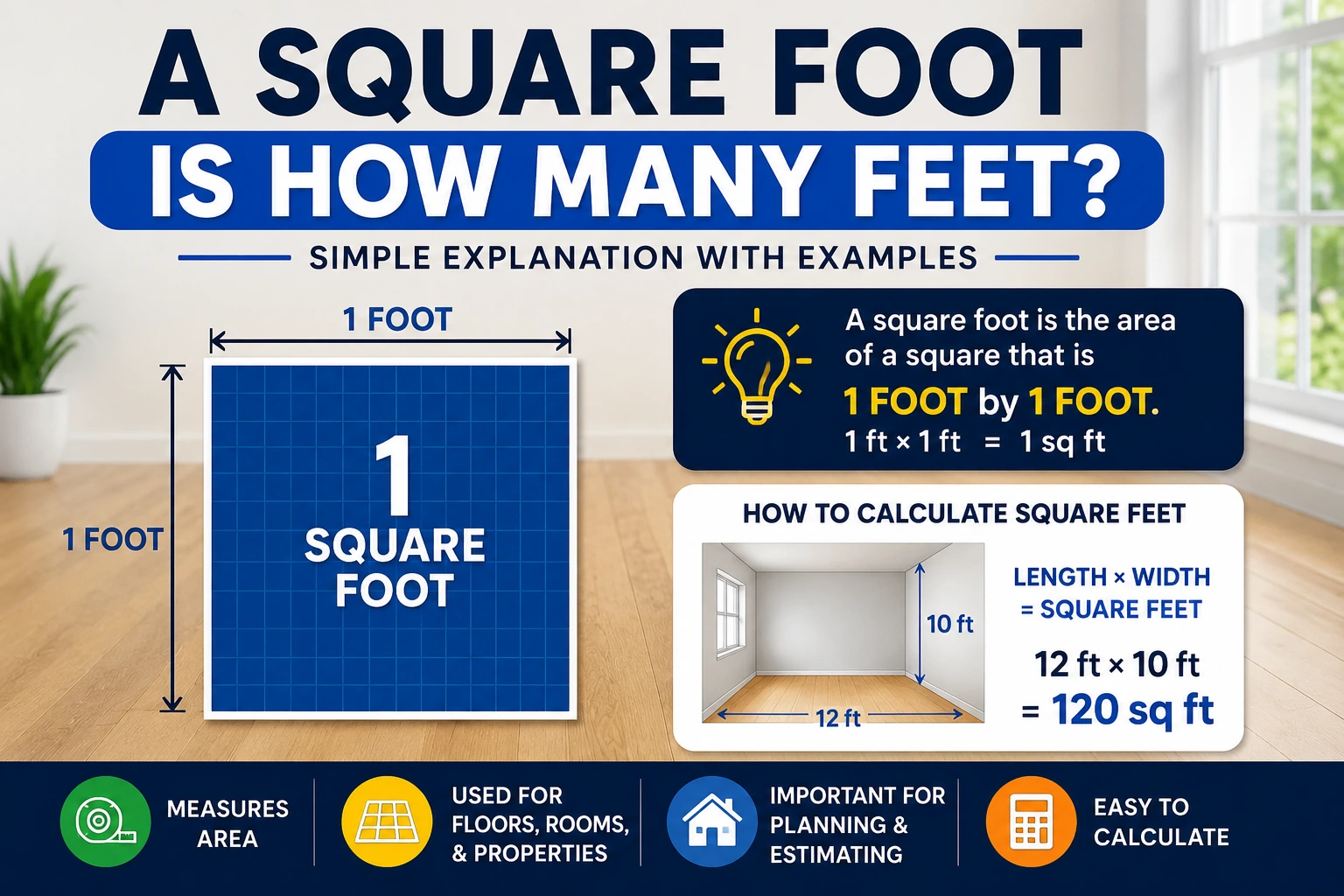
What Is a Square Foot?
A square foot measures area.
A square foot is simply:
- 1 foot long
- 1 foot wide
Square footage tells you the size of a surface but does not account for depth.
That’s why converting a cubic yard into square feet requires knowing how thick the dirt layer will be.
How Many Square Feet in a Yard of Dirt?
The exact answer depends on the depth of the dirt.
Why Depth Matters
Think of spreading a pile of dirt.
If you spread it very thinly, it covers a large area.
If you spread it thickly, it covers a smaller area.
The deeper the dirt layer, the fewer square feet it will cover.
Basic Formula
Use this formula:
Square Feet Covered = 324 ÷ Depth (in inches)
This works because:
- One cubic yard = 27 cubic feet
- 27 cubic feet = 324 square feet at 1-inch depth
As depth increases, coverage decreases.
Coverage Chart for One Cubic Yard of Dirt
The following chart provides quick answers to the question, how many square feet in a yard of dirt?
| Depth | Coverage Area |
|---|---|
| 1 inch | 324 sq ft |
| 2 inches | 162 sq ft |
| 3 inches | 108 sq ft |
| 4 inches | 81 sq ft |
| 5 inches | 65 sq ft |
| 6 inches | 54 sq ft |
| 8 inches | 40 sq ft |
| 10 inches | 32 sq ft |
| 12 inches | 27 sq ft |
This chart is widely used by landscapers and soil suppliers when estimating material requirements.
How to Calculate Dirt Coverage Yourself
Knowing how to calculate dirt coverage can save money and prevent over-ordering.
Step 1: Measure the Area
Measure the length and width of the area.
Example:
- Length = 20 feet
- Width = 15 feet
Area:
20 × 15 = 300 square feet
Step 2: Determine Desired Depth
Decide how deep you want the dirt.
Typical depths include:
| Project | Recommended Depth |
|---|---|
| Lawn repair | 1–2 inches |
| New grass installation | 3–4 inches |
| Vegetable garden | 6–12 inches |
| Raised garden bed | 8–12 inches |
| Fill low spots | Varies |
Step 3: Calculate Required Cubic Yards
Formula:
Cubic Yards = (Square Feet × Depth in Inches) ÷ 324
Example:
300 square feet at 3-inch depth
300 × 3 = 900
900 ÷ 324 = 2.78 cubic yards
You would order approximately 3 cubic yards of dirt.
Common Landscaping and Gardening Examples
Let’s look at practical situations homeowners encounter.
Example 1: Garden Bed
A garden measures:
- 12 feet × 10 feet
Area:
120 square feet
Desired depth:
4 inches
Calculation:
120 × 4 = 480
480 ÷ 324 = 1.48 cubic yards
Order approximately 1.5 cubic yards.
Example 2: Lawn Top Dressing
Lawn area:
2,000 square feet
Depth:
1 inch
Calculation:
2,000 ÷ 324
Result:
6.17 cubic yards
You would need about 6.5 cubic yards.
Example 3: Raised Garden Bed
Garden dimensions:
- 8 feet × 12 feet
Area:
96 square feet
Depth:
10 inches
Calculation:
96 × 10 ÷ 324
Result:
2.96 cubic yards
Order approximately 3 cubic yards.
Topsoil vs Fill Dirt Coverage
Many people assume all dirt is the same. It isn’t.
Topsoil
Topsoil is rich in nutrients and organic matter.
Best for:
- Gardens
- Flower beds
- Lawns
- Landscaping
Topsoil is often spread at depths between 2 and 6 inches.
Fill Dirt
Fill dirt contains very little organic material.
Best for:
- Leveling land
- Filling holes
- Foundation preparation
- Grading projects
Coverage calculations remain the same because both are measured in cubic yards.
The only difference is their purpose.
Dirt Coverage Comparison Table
Here is a practical reference chart for multiple cubic yards.
| Cubic Yards | Coverage at 2 Inches | Coverage at 3 Inches | Coverage at 4 Inches |
|---|---|---|---|
| 1 | 162 sq ft | 108 sq ft | 81 sq ft |
| 2 | 324 sq ft | 216 sq ft | 162 sq ft |
| 3 | 486 sq ft | 324 sq ft | 243 sq ft |
| 5 | 810 sq ft | 540 sq ft | 405 sq ft |
| 10 | 1,620 sq ft | 1,080 sq ft | 810 sq ft |
This chart helps estimate larger landscaping jobs quickly.
Common Mistakes When Estimating Dirt
Many homeowners order the wrong amount because of simple mistakes.
Ignoring Depth
The biggest mistake is assuming one cubic yard covers a fixed number of square feet.
Coverage changes dramatically with depth.
Not Measuring Accurately
Guessing dimensions often leads to ordering too little or too much dirt.
Always measure carefully.
Forgetting Soil Settling
Fresh soil often settles over time.
Experts typically order 5–10% extra material to account for settling.
Overlooking Uneven Terrain
Sloped yards require more material than flat surfaces.
Always add a small buffer when working on uneven ground.
Expert Tips for Ordering Dirt
Professional landscapers follow several best practices.
Order Slightly More Than Needed
A shortage can delay your project and increase delivery costs.
A small surplus is usually better than running out.
Verify Soil Quality
Not all dirt is equal.
Ask suppliers about:
- Organic content
- Drainage characteristics
- Soil screening
- Weed content
Consider Compaction
Heavy equipment and foot traffic can compact soil.
Additional material may be required after settling.
Use a Coverage Calculator
Many landscaping suppliers provide online calculators that simplify estimating cubic yards.
When You Need More Than One Yard of Dirt
Large projects often require multiple cubic yards.
Examples include:
New Lawn Installation
A 5,000-square-foot lawn at 3-inch depth needs:
5,000 × 3 ÷ 324
≈ 46 cubic yards
Vegetable Garden
A 20 × 20 garden:
400 square feet
At 8-inch depth:
400 × 8 ÷ 324
≈ 10 cubic yards
Backyard Leveling
Even moderate grading projects can require dozens of cubic yards depending on the elevation change.
For large projects, consult a landscaping professional to verify calculations.
Why Understanding Dirt Coverage Matters
Knowing how many square feet in a yard of dirt helps you:
- Avoid overspending
- Prevent project delays
- Reduce material waste
- Improve landscaping accuracy
- Estimate delivery costs
- Plan projects more efficiently
Whether you’re building a garden bed or leveling a yard, accurate calculations save both time and money.
FAQs
How many square feet does 1 cubic yard of dirt cover?
One cubic yard of dirt covers approximately 324 square feet at 1-inch depth, 162 square feet at 2-inch depth, and 108 square feet at 3-inch depth.
How do I convert cubic yards of dirt to square feet?
You must know the depth. Divide 324 by the depth in inches to determine the square footage covered by one cubic yard.
How many cubic yards of dirt do I need for 1,000 square feet?
At a depth of 3 inches, you would need approximately 9.3 cubic yards of dirt.
Does topsoil cover more area than fill dirt?
No. Coverage depends on volume and depth, not soil type. One cubic yard of topsoil and one cubic yard of fill dirt cover the same area at the same depth.
How much does a cubic yard of dirt weigh?
A cubic yard of dirt typically weighs between 2,000 and 3,000 pounds, depending on moisture content and soil composition.
Conclusion
So, how many square feet in a yard of dirt? The answer depends entirely on the depth of the material. One cubic yard can cover 324 square feet at 1 inch deep, 162 square feet at 2 inches, or 108 square feet at 3 inches. Understanding this relationship between volume and area allows you to accurately estimate soil requirements for gardens, lawns, landscaping, and construction projects. By measuring your space carefully, selecting the proper depth, and using the formulas provided in this guide, you can order the right amount of dirt and complete your project efficiently without unnecessary expense or waste.
discover more