

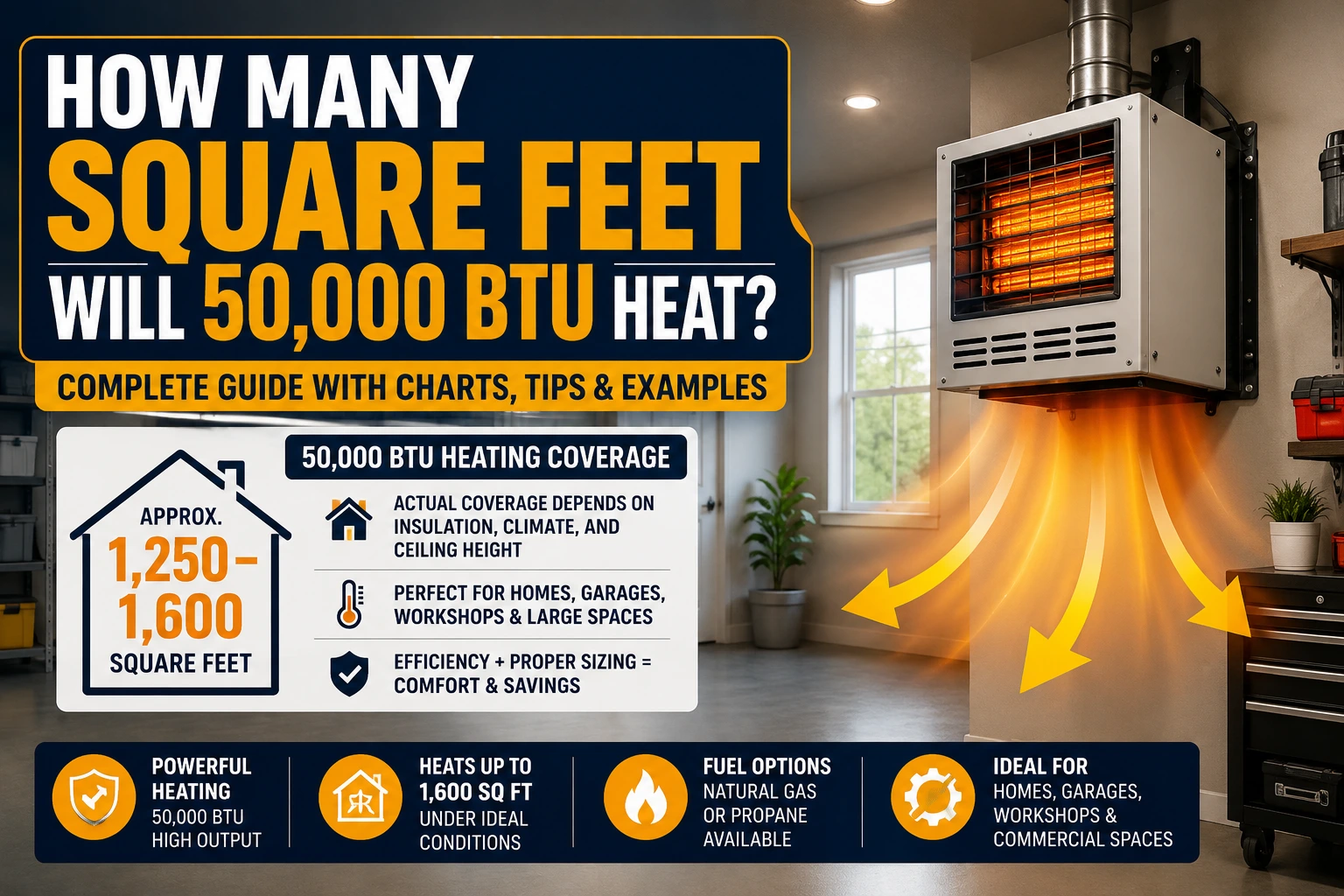
If you’re wondering how many square feet will 50000 BTU heat, the answer depends on several factors such as climate, insulation, ceiling height, and heater efficiency. However, under normal residential conditions, a 50,000 BTU heater can typically heat between 1,250 and 1,600 square feet.
In colder climates or poorly insulated buildings, the coverage may be closer to 1,000–1,250 square feet. In warmer regions with excellent insulation, the same heater may comfortably warm up to 1,800 square feet.
Understanding BTU ratings helps you choose the right heating system for your home, garage, workshop, or commercial space. Selecting the correct heater size improves comfort while reducing energy costs.
What Does 50,000 BTU Mean?
BTU stands for British Thermal Unit. It measures the amount of heat a heating system can produce.
One BTU is the amount of energy required to raise the temperature of one pound of water by one degree Fahrenheit.
The higher the BTU rating:
- The more heat the unit produces
- The larger the area it can heat
- The faster it can warm a room
However, bigger isn’t always better. Oversized heaters can waste fuel and create uneven temperatures.
How Many Square Feet Will 50,000 BTU Heat?
A common HVAC guideline is:
- 30–40 BTU per square foot in average climates.
Using this rule:
| BTU Rating | Approximate Coverage |
|---|---|
| 30,000 BTU | 750–1,000 sq ft |
| 40,000 BTU | 1,000–1,300 sq ft |
| 50,000 BTU | 1,250–1,600 sq ft |
| 60,000 BTU | 1,500–2,000 sq ft |
| 80,000 BTU | 2,000–2,600 sq ft |
This estimate assumes:
- Standard 8-foot ceilings
- Average insulation
- Moderate climate
- Modern windows and doors
BTU Heating Coverage Chart
| Home Condition | Estimated Coverage |
| Excellent insulation | 1,600–1,800 sq ft |
| Average insulation | 1,250–1,600 sq ft |
| Older home | 1,100–1,400 sq ft |
| Poor insulation | 900–1,200 sq ft |
| Garage or workshop | 1,000–1,400 sq ft |
Factors That Affect Heating Performance
Several factors influence how much area a 50,000 BTU heater can effectively heat.
Climate
Colder climates require more BTUs to maintain comfortable indoor temperatures.
Insulation
Well-insulated homes retain heat much better than older buildings with poor insulation.
Ceiling Height
Rooms with high ceilings contain more air volume, requiring additional heating power.
Windows
Large or single-pane windows allow heat to escape more quickly.
Heater Efficiency
High-efficiency gas furnaces and modern propane heaters convert more fuel into usable heat.
Real-World Examples
Example 1: Family Home
A 1,400-square-foot home with good insulation can usually be heated comfortably using a 50,000 BTU furnace.
Example 2: Detached Garage
A 1,200-square-foot insulated garage can stay warm throughout winter with a properly installed 50,000 BTU garage heater.
Example 3: Workshop
A workshop with frequent door openings may require additional BTUs because heat escapes more often.
BTU vs Square Foot Comparison
| Area | Recommended BTU |
| 500 sq ft | 15,000–20,000 |
| 800 sq ft | 24,000–30,000 |
| 1,000 sq ft | 30,000–40,000 |
| 1,500 sq ft | 45,000–60,000 |
| 2,000 sq ft | 60,000–80,000 |
Is a 50,000 BTU Heater Right for You?
A 50,000 BTU heater is ideal for:
- Medium-sized homes
- Large garages
- Workshops
- Basements
- Retail spaces
- Warehouses with insulation
It may not be sufficient for:
- Very large homes
- Buildings with poor insulation
- Spaces with vaulted ceilings
- Extremely cold climates without supplemental heating
Benefits of a 50,000 BTU Heater
- Heats large areas quickly
- Suitable for residential and commercial use
- Available in propane, natural gas, and electric models
- Good balance of efficiency and performance
- Works well in garages and workshops
Drawbacks
- Higher fuel consumption than smaller units
- Oversizing can reduce efficiency
- Installation costs may be higher
- Requires adequate ventilation for gas models
Expert Tips
- Improve insulation before upgrading your heater.
- Seal doors and windows to reduce heat loss.
- Use a programmable thermostat.
- Service your heater annually.
- Match BTU output to your local climate.
Common Mistakes
- Buying the largest heater available.
- Ignoring insulation quality.
- Forgetting ceiling height.
- Blocking heating vents.
- Skipping annual maintenance.
FAQ 1: How many square feet will a 50,000 BTU heater heat?
A 50,000 BTU heater generally heats 1,250–1,600 square feet under average conditions.
FAQ 2: Can a 50,000 BTU heater heat a garage?
Yes. Most insulated garages between 1,000 and 1,400 square feet can be heated effectively with a 50,000 BTU heater.
FAQ 3: Does insulation affect BTU coverage?
Absolutely. Better insulation allows the heater to warm a larger area while using less energy.
FAQ 4: Is 50,000 BTU enough for a 2,000-square-foot house?
Usually not. A 2,000-square-foot home often requires 60,000–80,000 BTUs, depending on climate and insulation.
FAQ 5: Which fuel type is best for a 50,000 BTU heater?
Natural gas is often the most economical where available, while propane is an excellent option for areas without gas lines.
Conclusion
If you’re asking how many square feet will 50000 BTU heat, the general answer is 1,250 to 1,600 square feet under normal conditions. However, the actual coverage depends on insulation quality, climate, ceiling height, window efficiency, and heater type. Choosing the correct BTU rating ensures consistent indoor comfort, lower energy bills, and longer equipment life. Before purchasing a heating system, evaluate your home’s unique heating requirements or consult an HVAC professional to select the most efficient solution.
Discover more