
If you’re planning a garage, workshop, office, storage building, or home renovation project, you may be wondering how many square feet is 24 x 30. Square footage is one of the most important measurements in construction, real estate, flooring, and interior design because it helps determine space requirements, material quantities, and project costs.
Fortunately, calculating square footage is simple once you understand the formula. Whether you’re buying flooring, estimating paint, comparing property sizes, or designing a new structure, knowing the square footage of a 24 x 30 area can help you make better decisions.
In this guide, you’ll learn the exact calculation, practical examples, material estimates, comparisons, and expert tips for using a 24 x 30 space effectively.
Quick Answer
The answer is:
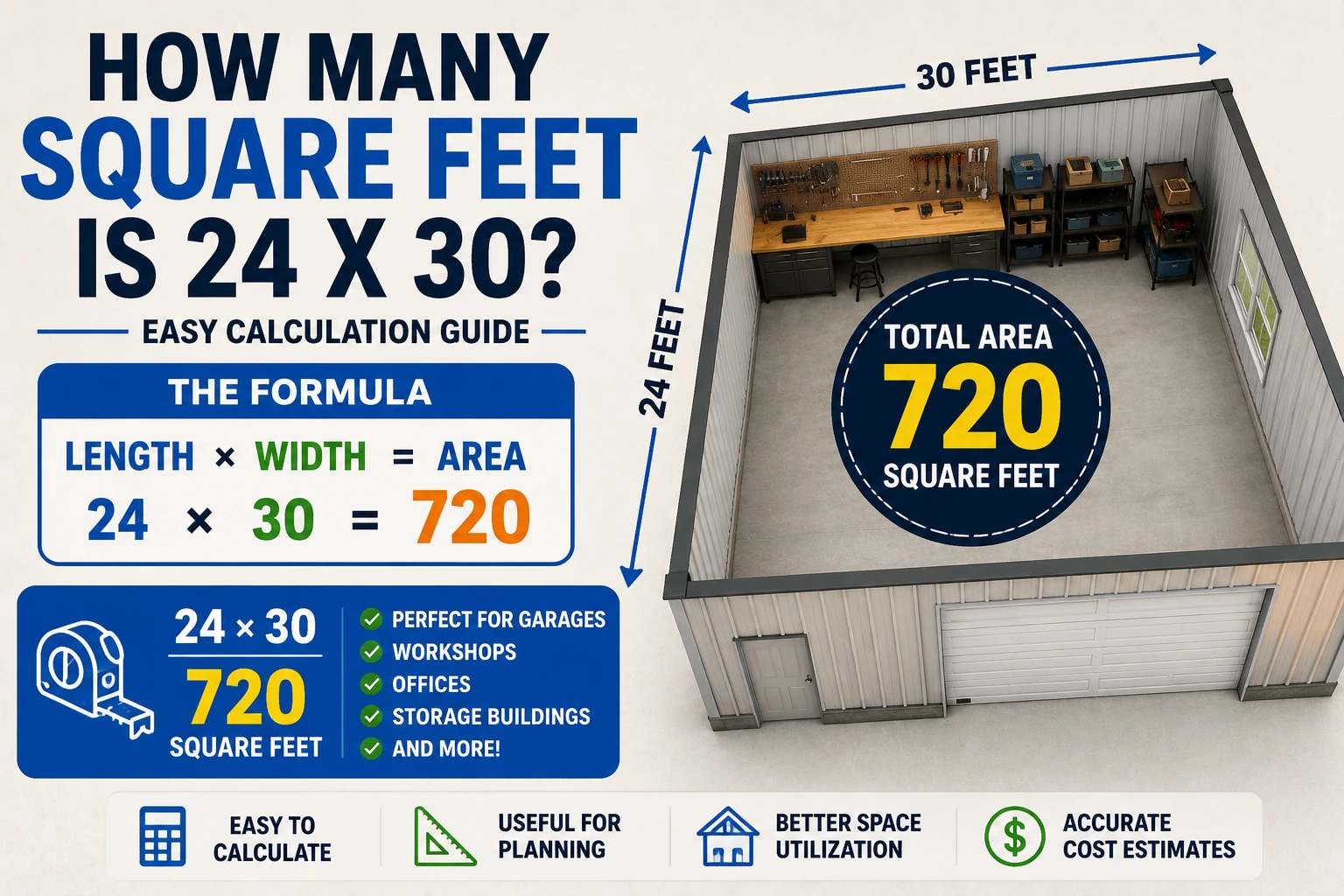
24×30=720 square feet
A space measuring 24 feet by 30 feet equals 720 square feet.
This calculation assumes both dimensions are measured in feet.
Understanding Square Footage
Before calculating area, it helps to understand what square footage means.
What Is Square Footage?
Square footage measures the total area inside a two-dimensional space.
One square foot represents:
- 1 foot long
- 1 foot wide
Area is measured by multiplying length by width.
Builders, architects, and real estate agents commonly use square footage to describe room sizes and building dimensions.
Why Square Feet Matter
Square footage helps determine:
- Flooring requirements
- Property value
- Construction costs
- Heating and cooling needs
- Furniture planning
- Space utilization
Without accurate square footage calculations, project budgets can quickly become inaccurate.
How Many Square Feet Is 24 x 30?
The calculation is straightforward.
The Formula
To find square footage:
Area=Length×Width
For a 24 x 30 space:
- Length = 24 feet
- Width = 30 feet
Step-by-Step Calculation
Multiply the dimensions:
24×30=720
Result:
720 square feet
Therefore, a room, garage, building, or open area measuring 24 feet by 30 feet contains exactly 720 square feet.
24 x 30 Square Footage Conversion Table
Here are additional conversions for a 24 x 30 space.
| Measurement Type | Equivalent Size |
|---|---|
| Square Feet | 720 sq ft |
| Square Yards | 80 sq yd |
| Square Meters | 66.89 sq m |
| Acres | 0.0165 acres |
| Hectares | 0.0067 hectares |
These conversions are useful for international projects and land planning.
How Big Is a 24 x 30 Space?
Many people understand numbers better when compared to real-world spaces.
Visualizing 720 Square Feet
A 24 x 30 area is approximately:
- A large two-car garage
- A small apartment
- A workshop
- A compact office
- A studio living space
While 720 square feet isn’t huge, it can still be highly functional when designed efficiently.
Common Building Types
Many structures are built using 24 x 30 dimensions because they provide a balance between affordability and usability.
Examples include:
- Detached garages
- Metal buildings
- Home offices
- Storage facilities
- Tiny homes
- Hobby workshops
Real-World Examples of a 24 x 30 Area
Let’s look at how 720 square feet can be used in everyday situations.
24 x 30 Garage
One of the most common uses.
A 24 x 30 garage can typically accommodate:
- Two vehicles
- Workbench
- Storage shelves
- Lawn equipment
Many homeowners choose this size because it offers extra storage space beyond vehicle parking.
Tiny Home
A 720-square-foot tiny home can include:
- Living room
- Kitchen
- Bathroom
- One or two bedrooms
Modern floor plans make surprisingly efficient use of this space.
Workshop
For woodworking, automotive work, or hobbies, a 24 x 30 workshop provides room for:
- Equipment
- Storage cabinets
- Work tables
- Project space
Many small business owners find this size practical and affordable.
Office Space
A 720-square-foot office can comfortably fit:
- Multiple desks
- Conference area
- Storage units
- Reception space
This size works well for startups and professional service businesses.
Flooring and Material Estimates for 720 Square Feet
Knowing square footage helps estimate materials.
Flooring
For a 720-square-foot area, you’ll typically need:
- 720 square feet of flooring
- 5–10% extra for waste
Recommended purchase:
- 756–792 square feet
Carpet
Most installers recommend ordering extra carpet for:
- Seams
- Trimming
- Pattern matching
Paint
For floor coating or similar projects, knowing the square footage helps estimate coverage rates.
Always consult manufacturer specifications.
Tile
Tiles are usually sold by square foot.
A 720-square-foot area often requires:
- 760–800 square feet of tile after accounting for cuts and waste.
Comparing 24 x 30 to Other Common Sizes
| Dimensions | Square Feet |
|---|---|
| 20 x 20 | 400 |
| 20 x 30 | 600 |
| 24 x 24 | 576 |
| 24 x 30 | 720 |
| 25 x 30 | 750 |
| 30 x 30 | 900 |
| 30 x 40 | 1,200 |
This comparison helps place a 24 x 30 structure into perspective.
Benefits and Limitations of a 24 x 30 Space
Benefits
Affordable Construction
Smaller structures cost less to build and maintain.
Efficient Layout
A 24 x 30 design can support many uses without excessive space.
Lower Utility Costs
Heating and cooling expenses are generally lower than larger buildings.
Flexible Uses
Suitable for:
- Garages
- Workshops
- Offices
- Tiny homes
- Storage buildings
Limitations
Limited Expansion Space
Large families or growing businesses may outgrow 720 square feet.
Storage Constraints
Extensive storage needs may require additional structures.
Fewer Large Vehicle Options
Large RVs or multiple oversized vehicles may not fit comfortably.
Common Square Footage Calculation Mistakes
Many property owners make avoidable errors.
Mixing Measurement Units
Ensure all dimensions are measured in feet before calculating.
Forgetting Irregular Areas
Rooms with alcoves or extensions require separate calculations.
Rounding Too Early
Use exact measurements whenever possible.
Measuring Exterior Instead of Interior
Depending on the project, interior dimensions may differ from exterior dimensions.
Ignoring Material Waste
Always add extra material for cuts, mistakes, and installation requirements.
Expert Tips for Accurate Measurements
Measure Twice
Verify dimensions before ordering materials.
Use a Laser Measure
Digital measuring tools improve accuracy.
Create a Sketch
Drawing a floor plan helps avoid mistakes.
Include Closets and Storage Areas
Don’t overlook small sections.
Add Waste Allowance
For flooring projects, include 5–15% extra material depending on the product.
Strong Summary
If you’re asking how many square feet is 24 x 30, the answer is simple:
24 × 30 = 720 square feet.
A 720-square-foot space is commonly used for garages, workshops, offices, storage buildings, and compact homes. Understanding this measurement helps with budgeting, flooring purchases, construction planning, and property comparisons.
Whether you’re a homeowner, contractor, or DIY enthusiast, accurate square footage calculations are essential for successful project planning.
9. FAQs
FAQ 1: How many square feet is a 24 x 30 building?
A building measuring 24 feet by 30 feet contains 720 square feet.
FAQ 2: Is a 24 x 30 garage big enough for two cars?
Yes. In many cases, a 24 x 30 garage comfortably accommodates two vehicles and additional storage space.
FAQ 3: How many square yards is 24 x 30?
720 square feet divided by 9 equals 80 square yards.
FAQ 4: How many square meters is 24 x 30?
A 24 x 30 area equals approximately 66.89 square meters.
FAQ 5: How much flooring do I need for a 24 x 30 room?
You need at least 720 square feet of flooring, plus an additional 5–10% for waste and cuts.
10. Conclusion
Understanding how many square feet is 24 x 30 is valuable for construction, remodeling, flooring, and real estate projects. By multiplying 24 feet by 30 feet, you get 720 square feet, a size commonly used for garages, workshops, offices, and compact homes. Knowing this square footage allows you to estimate materials accurately, compare property sizes, and plan projects with confidence. Whether you’re building, renovating, or buying materials, understanding area calculations can save both time and money.
Discover more