
If you’re wondering how many square feet in a 12 x 14 room, the answer is simple—but understanding how to use that number can make a big difference in your home planning decisions. Whether you’re buying flooring, arranging furniture, or evaluating property size, knowing square footage is essential.
Let’s break it down in the easiest way possible so you not only get the answer but also fully understand how it works in real life.
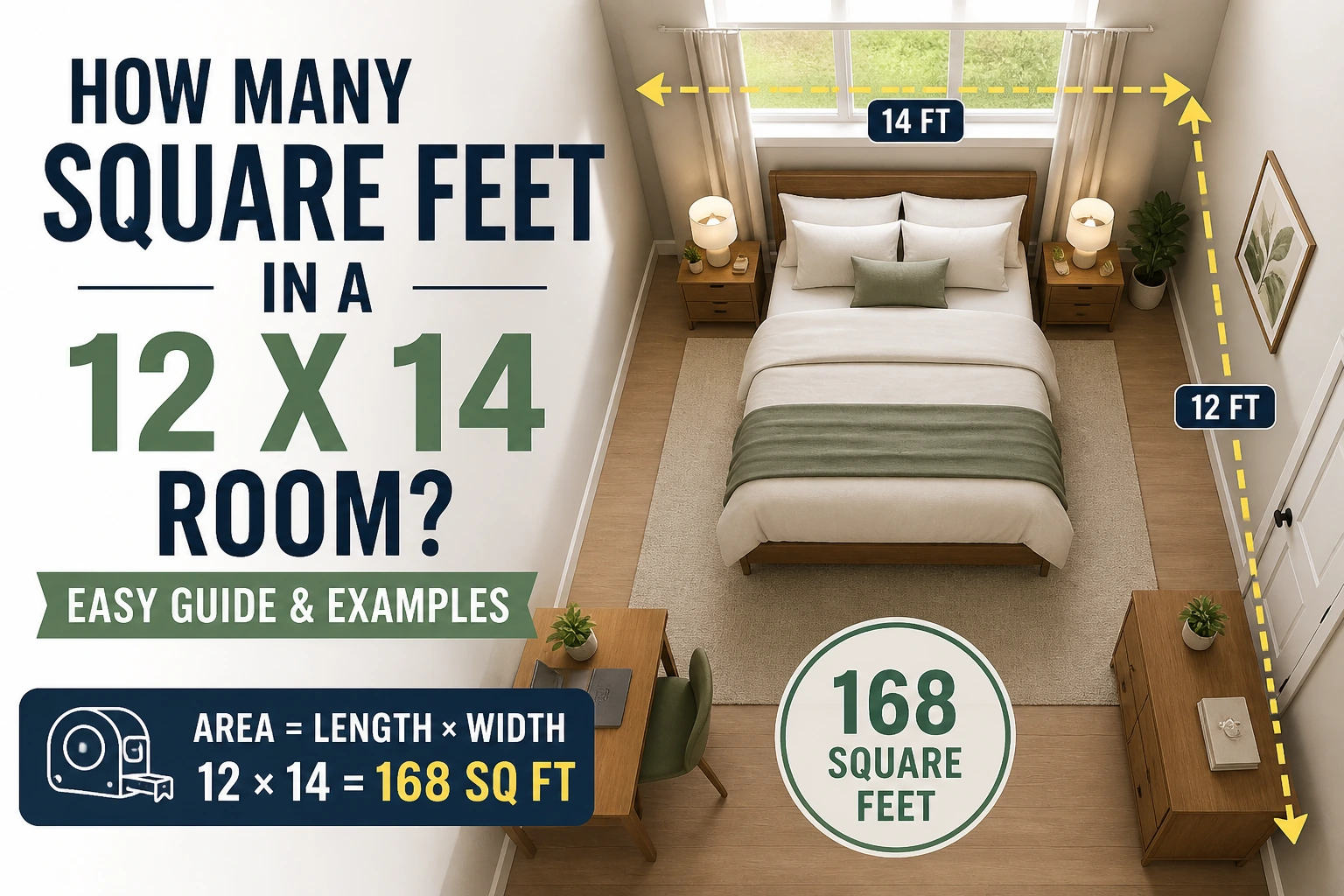
Quick Answer: Square Footage of a 12 x 14 Room
A 12 x 14 room equals:
168 square feet
This comes from multiplying the length by the width:
12 × 14 = 168 sq ft
That’s the total floor area of the room.
Understanding Square Feet (Simple Explanation)
Square feet is a way to measure area. It tells you how much surface space a room covers.
Think of it like this:
- One square foot = a square that is 1 foot long and 1 foot wide
- A 168 sq ft room means 168 of those small squares fit inside
This measurement is commonly used in:
- Real estate
- Construction
- Interior design
- Flooring installation
How to Calculate Square Feet Step by Step
Formula for Square Footage
The basic formula is:
Length × Width = Square Feet
It works for all rectangular and square rooms.
Example Calculation (12 x 14)
Let’s apply it:
- Length = 12 feet
- Width = 14 feet
Now multiply:
12 × 14 = 168 square feet
That’s it. No complex math needed.
Why Square Footage Matters
Knowing how many square feet in a 12 x 14 room is not just academic—it has real-world uses.
Flooring
If you’re installing tiles, carpet, or wood flooring:
- You’ll need enough material to cover 168 sq ft
- Always buy 5–10% extra for waste
Example:
168 + 10% = about 185 sq ft of material needed
Furniture Planning
Square footage helps you:
- Avoid overcrowding
- Choose the right bed size
- Plan walking space
A 12 x 14 room comfortably fits:
- Queen bed
- Small desk
- Wardrobe
Real Estate Value
In property listings:
- Larger square footage = higher value
- Helps compare homes fairly
Even a difference of 20–30 sq ft can matter in pricing.
Visualizing a 12 x 14 Room Size
Sometimes numbers don’t feel real until you visualize them.
A 12 x 14 room is roughly:
- A medium-sized bedroom
- Slightly larger than a standard bedroom (10×12)
- Big enough for 2–3 major furniture pieces
You can imagine:
- 12 feet = about the length of a small car
- 14 feet = slightly longer than that
So overall, it’s a comfortable but not huge space.
Common Uses for a 12 x 14 Room
A room of this size is very versatile. Here are common uses:
- Bedroom
- Guest room
- Home office
- Kids room
- Small living room
Layout Example
You could fit:
- Queen bed
- Side tables
- Small dresser
- Chair
But adding too much furniture will make it feel cramped.
Comparison with Other Room Sizes
Here’s how a 12 x 14 room compares to other common sizes:
| Room Size | Square Feet | Size Comparison |
|---|---|---|
| 10 x 10 | 100 sq ft | Small room |
| 10 x 12 | 120 sq ft | Standard bedroom |
| 12 x 14 | 168 sq ft | Medium room |
| 12 x 16 | 192 sq ft | Larger bedroom |
| 15 x 20 | 300 sq ft | Large living room |
Key Insight
A 12 x 14 room sits in the middle range—not small, not large.
Tips to Measure Your Room Correctly
Even though 12 x 14 seems straightforward, measuring errors are common.
Follow these tips:
- Use a measuring tape (not guessing)
- Measure wall to wall
- Remove obstacles like furniture
- Round to the nearest inch or foot
- Double-check your measurements
If your room isn’t perfectly rectangular, divide it into smaller sections and calculate each part separately.
Common Mistakes to Avoid
Many people make simple errors when calculating square footage.
Here are the most common ones:
1. Mixing Units
- Don’t mix feet and inches
- Convert everything to feet first
2. Forgetting Extra Space
- Closets or alcoves may or may not be included
- Always confirm what you’re measuring
3. Not Adding Waste for Materials
- Flooring and tiles require extra
- Never buy exact square footage
4. Assuming All Rooms Are Rectangular
- Some rooms have irregular shapes
- Adjust calculations accordingly
Expert Tips for Space Optimization
A 12 x 14 room can feel bigger or smaller depending on design.
Here’s how to maximize space:
Use Light Colors
- Makes the room feel open
- Reflects more light
Choose Multi-Functional Furniture
- Storage beds
- Foldable desks
Keep Layout Simple
- Avoid overcrowding
- Maintain walking space
Use Vertical Space
- Wall shelves
- Tall cabinets
Mirrors Help
- Create illusion of more space
Practical Example: Flooring Cost Estimate
Let’s say flooring costs $5 per square foot.
For a 12 x 14 room:
- Area = 168 sq ft
- Cost = 168 × $5 = $840
Add 10% extra:
- Total = ~$924
This shows why accurate measurement matters—it directly affects cost.
Is a 12 x 14 Room Big Enough?
It depends on your needs.
Good for:
- Single person bedroom
- Guest room
- Office
Not ideal for:
- Large families
- Luxury master bedroom
Overall, it’s considered a comfortable medium-sized room.
How It Compares to Apartment Rooms
In many apartments:
- Bedrooms range from 100–150 sq ft
- So 168 sq ft is slightly above average
That makes it a good-sized bedroom in most homes.
FAQs
1. How many square feet in a 12 x 14 room exactly?
A 12 x 14 room has 168 square feet, calculated by multiplying length and width.
2. Is 168 square feet a big room?
It’s a medium-sized room—comfortable for a bedroom but not very large.
3. How much flooring do I need for a 12 x 14 room?
You need at least 168 sq ft, plus 5–10% extra for waste (around 180–185 sq ft).
4. Can a king-size bed fit in a 12 x 14 room?
Yes, but space will be limited for additional furniture.
5. How do I calculate square feet for any room?
Multiply the length by the width in feet. That gives you square footage.
Conclusion
Understanding how many square feet in a 12 x 14 room is simple—the answer is 168 square feet. But knowing how to use that number is what truly matters. From planning furniture layouts to estimating flooring costs, square footage plays a key role in everyday decisions.
A 12 x 14 room offers a balanced space—large enough to be comfortable, yet small enough to manage easily. By measuring accurately, avoiding common mistakes, and applying smart design tips, you can make the most of every square foot.
Whether you’re designing, buying, or renovating, this knowledge helps you plan smarter and avoid costly errors.
Discover more