
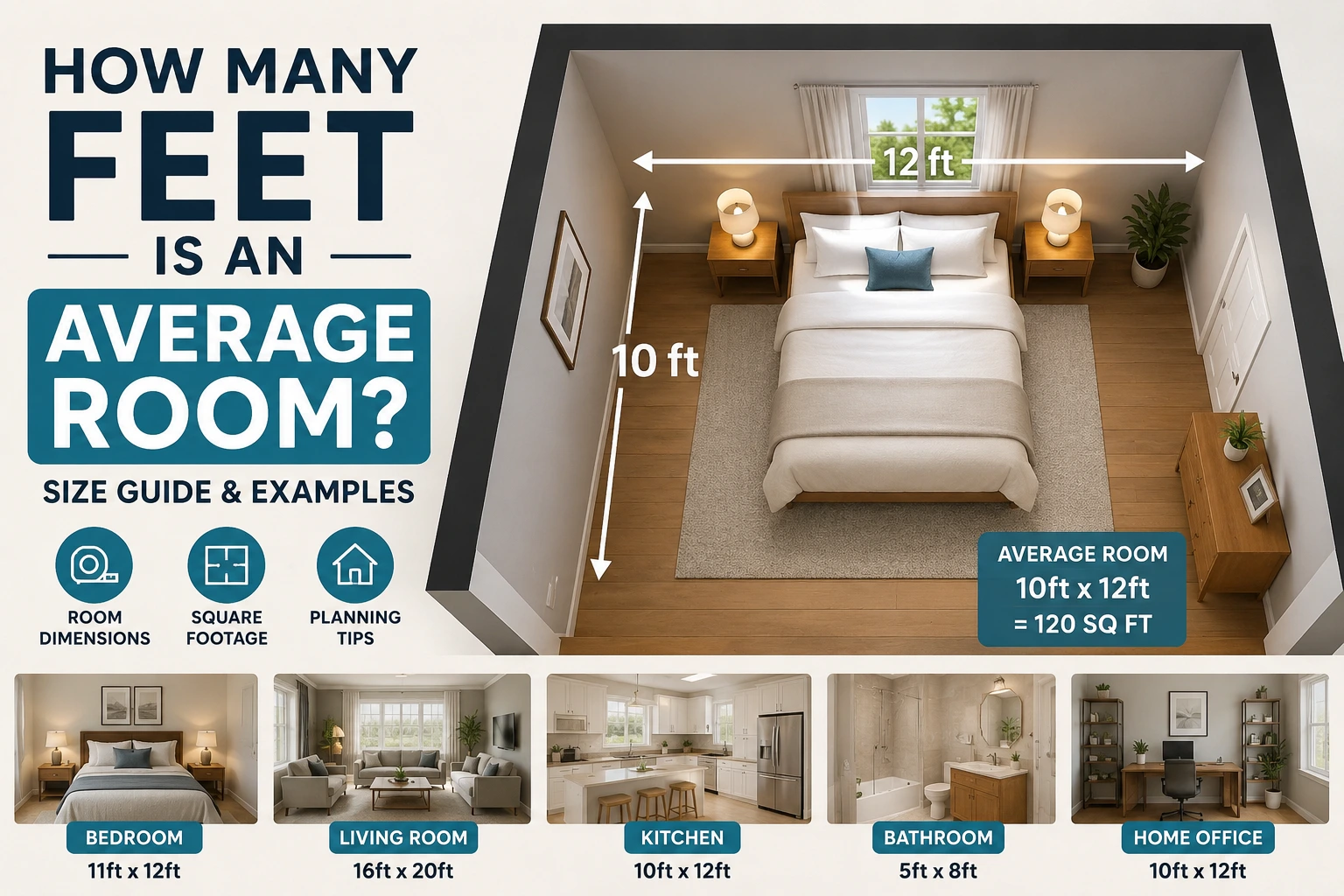
When planning furniture placement, buying flooring, renovating a home, or simply comparing properties, one common question comes up: how many feet is an average room?
The answer depends on the room’s purpose. Bedrooms, living rooms, kitchens, and offices all have different standard dimensions. However, most average rooms in modern homes range between 10 feet by 12 feet and 12 feet by 15 feet, providing enough space for daily activities while remaining practical for construction costs.
Understanding average room dimensions helps homeowners make better design decisions, estimate renovation expenses, and evaluate property value more accurately.
In this guide, you’ll learn standard room sizes, square footage calculations, practical examples, and expert recommendations for home planning.
Understanding Average Room Size
Before discussing exact measurements, it’s important to understand what room size means.
A room has two primary dimensions:
- Length
- Width
These measurements are usually expressed in feet.
For example:
- 10 feet × 12 feet
- 12 feet × 15 feet
- 15 feet × 20 feet
The total floor area is measured in square feet.
Square Footage Formula
Square Feet=Length×Width
A room measuring 10 feet by 12 feet contains:
120 square feet
This is often considered a typical bedroom size.
How Many Feet Is an Average Room?
The average room in a residential home is usually between:
| Room Dimension | Square Feet |
|---|---|
| 10 ft × 10 ft | 100 sq ft |
| 10 ft × 12 ft | 120 sq ft |
| 12 ft × 12 ft | 144 sq ft |
| 12 ft × 15 ft | 180 sq ft |
Most builders consider a room around 120–180 square feet to be average.
In terms of dimensions, an average room is commonly:
- 10–15 feet long
- 10–15 feet wide
This range provides adequate space for furniture, storage, and comfortable movement.
Average Room Sizes by Room Type
Different rooms serve different functions. Therefore, their dimensions vary significantly.
Average Bedroom Size
Bedrooms are among the most commonly measured rooms.
Typical bedroom dimensions include:
| Bedroom Type | Average Size |
|---|---|
| Small Bedroom | 10 × 10 ft |
| Standard Bedroom | 11 × 12 ft |
| Master Bedroom | 14 × 16 ft |
A standard bedroom usually falls between:
- 120–150 square feet
- 10–12 feet wide
- 10–14 feet long
This allows space for:
- Bed
- Nightstands
- Dresser
- Walking space
Average Living Room Size
Living rooms tend to be larger because they accommodate multiple people.
Common dimensions include:
| Living Room Type | Average Dimensions |
|---|---|
| Small | 12 × 15 ft |
| Average | 16 × 20 ft |
| Large | 20 × 25 ft |
An average living room often measures around:
- 16 feet wide
- 20 feet long
Total area:
320 square feet
Average Dining Room Size
Dining rooms need sufficient space for a table and seating.
Typical dimensions:
| Dining Room | Dimensions |
|---|---|
| Small | 10 × 10 ft |
| Average | 12 × 14 ft |
| Large | 14 × 18 ft |
Most dining rooms range from:
140–200 square feet.
Average Kitchen Size
Modern kitchens vary greatly.
Typical dimensions include:
| Kitchen Type | Dimensions |
|---|---|
| Small | 8 × 10 ft |
| Average | 10 × 12 ft |
| Large | 12 × 16 ft |
Many family homes have kitchens around:
120–180 square feet.
Average Bathroom Size
Bathrooms are generally the smallest rooms.
Average dimensions:
| Bathroom Type | Dimensions |
|---|---|
| Half Bath | 3 × 6 ft |
| Full Bath | 5 × 8 ft |
| Master Bath | 8 × 12 ft |
A standard bathroom often contains:
40–60 square feet.
Average Home Office Size
Since remote work has become more common, home offices have grown in popularity.
Typical office dimensions:
| Office Type | Dimensions |
|---|---|
| Small | 8 × 10 ft |
| Average | 10 × 12 ft |
| Large | 12 × 15 ft |
An average home office provides approximately:
120 square feet.
Average Room Size Chart
The following chart summarizes common room dimensions:
| Room Type | Average Dimensions | Average Sq Ft |
|---|---|---|
| Bedroom | 11 × 12 ft | 132 |
| Master Bedroom | 14 × 16 ft | 224 |
| Living Room | 16 × 20 ft | 320 |
| Dining Room | 12 × 14 ft | 168 |
| Kitchen | 10 × 12 ft | 120 |
| Bathroom | 5 × 8 ft | 40 |
| Home Office | 10 × 12 ft | 120 |
How to Calculate Room Size in Square Feet
Calculating room area is simple.
Step 1: Measure Length
Use a tape measure to find the room’s length.
Example:
12 feet
Step 2: Measure Width
Measure the room’s width.
Example:
10 feet
Step 3: Multiply the Measurements
12×10=120
Result:
120 square feet
Example 2
A room measuring:
15 feet × 18 feet
Produces:
15×18=270
Result:
270 square feet
This would be considered a large room.
Factors That Affect Room Dimensions
There is no single standard room size because many factors influence design.
Home Age
Older homes often feature:
- Smaller bedrooms
- Separate dining rooms
- Compact kitchens
Newer homes usually offer:
- Open floor plans
- Larger living spaces
- Bigger master suites
Building Type
Room sizes vary by property type:
- Apartments
- Condominiums
- Single-family homes
- Luxury homes
Apartments generally have smaller average rooms than detached houses.
Geographic Location
Housing markets influence room dimensions.
Urban homes often prioritize efficient space usage, while suburban homes may include larger rooms and more square footage.
Room Purpose
Each room is designed for specific activities.
For example:
- Bedrooms prioritize sleeping and storage.
- Living rooms prioritize gathering and entertainment.
- Kitchens prioritize cooking efficiency.
The intended purpose largely determines room dimensions.
Small vs Average vs Large Rooms
Understanding room categories can help when evaluating properties.
| Category | Dimensions | Square Feet |
|---|---|---|
| Small Room | 8 × 10 ft | 80 |
| Average Room | 10 × 12 ft | 120 |
| Medium Room | 12 × 15 ft | 180 |
| Large Room | 15 × 20 ft | 300 |
| Very Large Room | 20 × 20 ft | 400 |
Most residential rooms fall within the average or medium categories.
Why Knowing Room Dimensions Matters
Knowing room size offers several practical benefits.
Furniture Planning
Accurate measurements help determine whether furniture will fit comfortably.
Flooring Estimates
Flooring materials are priced by square foot.
Knowing room size prevents overbuying or underbuying materials.
Paint Calculations
Wall and floor measurements assist in estimating paint requirements.
Property Comparisons
Square footage helps buyers compare homes objectively.
Renovation Planning
Contractors rely on accurate room dimensions when preparing estimates.
Common Mistakes When Measuring a Room
Many people make simple measurement errors.
Measuring Only One Wall
Rooms are not always perfectly rectangular.
Measure both length and width carefully.
Ignoring Closets
Closets can affect usable square footage.
Forgetting Alcoves
Small recesses and extensions should be included when calculating area.
Mixing Units
Always use the same measurement unit throughout calculations.
Rounding Too Much
Precise measurements improve budgeting and planning accuracy.
Expert Tips for Planning Room Layouts
Professional designers recommend the following:
Leave Walking Space
Maintain at least:
- 30–36 inches around major furniture
Scale Furniture Properly
Large furniture can overwhelm smaller rooms.
Measure Before Buying
Always verify dimensions before purchasing:
- Sofas
- Beds
- Tables
- Cabinets
Consider Future Needs
Choose layouts that remain functional as family needs change.
Use Digital Floor Plans
Modern room-planning software can visualize furniture placement before making purchases.
Understanding Room Measurements and Standards
According to information from Wikipedia’s room article, room dimensions have evolved significantly over time due to changing building practices, lifestyle needs, and architectural trends.
Today, builders focus on balancing comfort, functionality, and affordability. This is why most average rooms remain within the 100–200 square foot range, providing practical living space without significantly increasing construction costs.
9. Frequently Asked Questions
1. How many feet is an average bedroom?
An average bedroom is typically between 10 × 12 feet and 12 × 12 feet, providing roughly 120–144 square feet.
2. What is considered a standard room size?
A standard room size is usually around 120–180 square feet, depending on the room’s purpose.
3. Is a 10 × 10 room small?
Yes. A 10 × 10 room is considered small but still functional for a bedroom, office, or guest room.
4. How do I calculate square footage?
Multiply the room’s length by its width.
Example:
12 ft × 10 ft = 120 sq ft.
5. What is the average living room size?
Most living rooms measure approximately 16 × 20 feet, resulting in about 320 square feet.
10. Conclusion
So, how many feet is an average room? In most homes, average rooms measure between 10 and 15 feet in both length and width, creating a floor area of approximately 120–180 square feet. Bedrooms tend to be smaller, while living rooms are often much larger.
Understanding room dimensions helps with furniture planning, remodeling projects, flooring estimates, and property comparisons. Whether you’re buying a home, renovating a room, or simply curious about residential design, knowing standard room sizes provides valuable insight into how living spaces are planned and used.
Discover more