

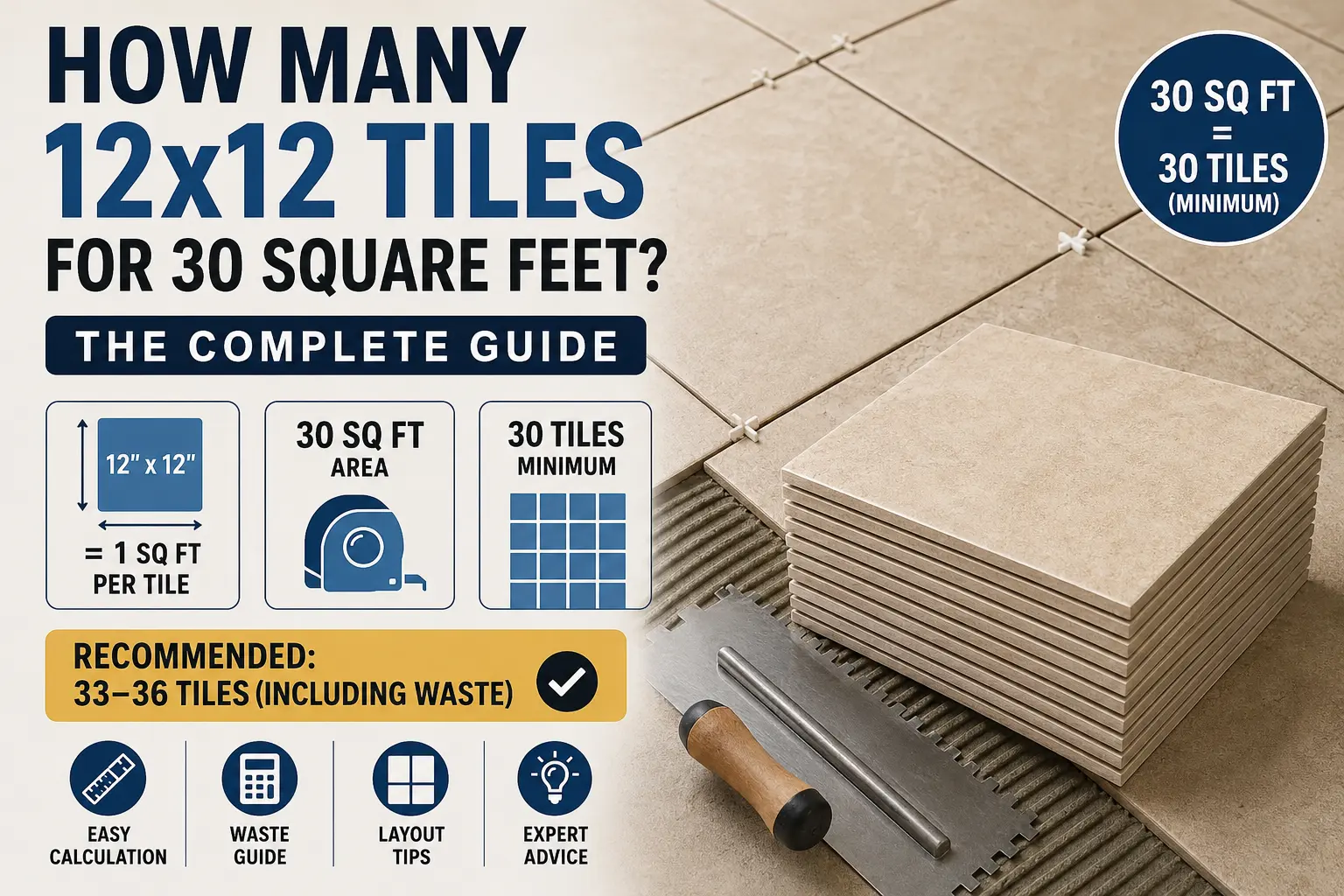
Planning a flooring or wall project starts with one important question: how many tiles do you actually need? If you are wondering how many 12×12 tiles for 30 square feet are required, the short answer is simple. You usually need 30 tiles because each 12×12 tile covers approximately 1 square foot.
However, real tile projects are not always that straightforward. You also need to think about tile waste, cuts around corners, grout spacing, broken tiles, and future repairs. Buying the exact number can leave you short during installation.
This detailed guide explains everything you need to know about calculating tile quantities accurately. You will learn formulas, practical examples, waste calculations, professional tips, and common mistakes to avoid.
Understanding 12×12 Tile Coverage
A 12×12 tile measures:
12 inches×12 inches=1 square foot
Since 12 inches equals 1 foot, a 12×12 tile covers exactly 1 square foot of space.
That means:
- 1 tile = 1 square foot
- 10 tiles = 10 square feet
- 30 tiles = 30 square feet
This makes calculations easier compared to smaller or irregular tile sizes.
Still, actual tile coverage may slightly vary because of:
- Grout joints
- Tile trimming
- Pattern layouts
- Breakage during installation
That is why professionals always recommend ordering extra tiles.
How to Calculate Tiles for 30 Square Feet
The standard tile calculation formula is:
Number of Tiles=Tile AreaTotal Area
For a 30-square-foot area:
1 sq ft per tile30 sq ft=30 tiles
So, you need:
- 30 tiles minimum
- Around 33 to 36 tiles recommended after adding waste allowance
Exact Answer: How Many 12×12 Tiles for 30 Square Feet
Here is the quick answer:
| Area Size | Tile Size | Tiles Needed |
|---|---|---|
| 30 square feet | 12×12 inches | 30 tiles |
| 30 square feet with 10% waste | 12×12 inches | 33 tiles |
| 30 square feet with 15% waste | 12×12 inches | 35 tiles |
For most projects, buying 10% extra is considered safe.
If your room has many corners or a diagonal pattern, increase the waste allowance to 15%.
Why You Should Buy Extra Tiles
Many DIY beginners buy the exact number of tiles and later regret it. Tile installation almost always creates some waste.
Extra tiles help cover:
Broken Tiles
Tiles can crack during:
- Transport
- Cutting
- Installation
Future Repairs
If one tile gets damaged years later, matching replacements may no longer be available.
Complex Room Shapes
Rooms with:
- Curves
- Corners
- Cabinets
- Doorways
often require more tile cuts.
Pattern Layouts
Diagonal or herringbone layouts create additional waste because of angled cuts.
Tile Waste Percentage Explained
Waste percentage refers to extra tiles added beyond the exact room size.
Here is a common guideline:
| Installation Type | Recommended Waste |
|---|---|
| Straight layout | 5–10% |
| Diagonal layout | 10–15% |
| Complex patterns | 15–20% |
For a simple 30-square-foot project:
30×1.10=33 tiles
With 10% extra, you should buy about 33 tiles.
Tile Calculation Formula
If you want to calculate tiles for any room size, follow these steps.
Step 1: Measure Room Length
Example:
- Length = 6 feet
Step 2: Measure Room Width
Example:
- Width = 5 feet
Step 3: Calculate Area
6×5=30 square feet
Step 4: Divide by Tile Coverage
Since one 12×12 tile covers 1 square foot:
130=30 tiles
Step 5: Add Waste Allowance
Add 10%:
30+(30×0.10)=33 tiles
Final estimate:
- Buy 33 tiles
Tile Coverage Chart for Common Room Sizes
This chart helps estimate tile quantities quickly.
| Room Size | Tiles Needed | With 10% Extra |
|---|---|---|
| 10 sq ft | 10 | 11 |
| 20 sq ft | 20 | 22 |
| 30 sq ft | 30 | 33 |
| 40 sq ft | 40 | 44 |
| 50 sq ft | 50 | 55 |
| 75 sq ft | 75 | 83 |
| 100 sq ft | 100 | 110 |
This table assumes:
- 12×12 tiles
- Straight installation pattern
Factors That Affect Tile Quantity
Even though the formula is simple, several factors can change the number of tiles you need.
Grout Line Thickness
Wider grout lines slightly reduce tile coverage.
Common grout widths:
- 1/16 inch
- 1/8 inch
- 3/16 inch
Tile Size Variations
Some tiles labeled “12×12” may actually measure:
- 11.75 inches
- 11.8 inches
Always check manufacturer specifications.
Room Shape
A square room wastes less tile than:
- L-shaped rooms
- Bathrooms with fixtures
- Kitchens with cabinets
Tile Direction
Diagonal layouts increase waste because more cutting is required.
Common Mistakes When Estimating Tiles
Many homeowners underestimate tile requirements. Avoid these common mistakes.
Forgetting Waste Allowance
This is the most common problem.
Buying exact quantities often leads to:
- Delays
- Extra shipping costs
- Color mismatch issues
Ignoring Obstacles
Areas around:
- Toilets
- Cabinets
- Kitchen islands
still require careful cutting.
Measuring Incorrectly
Always measure twice before ordering.
Even small mistakes can change tile counts significantly.
Mixing Tile Batches
Different production batches may have slightly different shades.
Buying all tiles together helps maintain color consistency.
Best Tile Layout Tips for Beginners
Proper planning improves both appearance and efficiency.
Dry Lay Tiles First
Place tiles on the floor before installation to preview:
- Pattern
- Alignment
- Cuts
Start From the Center
Center layouts often create a more balanced appearance.
Avoid Tiny Edge Pieces
Very small cut tiles near walls can look unprofessional.
Adjust the layout slightly for larger edge cuts.
Use Tile Spacers
Spacers help maintain even grout lines and a clean finish.
12×12 Tile vs Other Tile Sizes
Different tile sizes affect the number of tiles required.
| Tile Size | Coverage Per Tile | Tiles for 30 sq ft |
|---|---|---|
| 6×6 | 0.25 sq ft | 120 |
| 12×12 | 1 sq ft | 30 |
| 12×24 | 2 sq ft | 15 |
| 24×24 | 4 sq ft | 8 |
Larger tiles:
- Require fewer grout lines
- Create a modern look
- Often make rooms appear larger
Smaller tiles:
- Offer better slip resistance
- Work well in bathrooms
- Create decorative patterns
Professional Tips for Accurate Tile Estimates
Experts use a few simple tricks to improve accuracy.
Order One Extra Box
Even after calculations, having spare tiles is smart.
Keep Leftover Tiles
Store extras for future repairs.
Measure in Feet and Inches
Precise measurements reduce ordering mistakes.
Use Manufacturer Coverage Data
Some tile boxes list:
- Coverage area
- Recommended spacing
- Waste estimates
Always check packaging details.
Round Up, Never Down
If calculations produce decimals, always round upward.
Example:
- 32.2 tiles = buy 33 tiles
Practical Example for a Small Bathroom
Imagine a bathroom floor measuring:
- 5 feet wide
- 6 feet long
Area calculation:
5×6=30 square feet
Using 12×12 tiles:
30÷1=30 tiles
Adding 10% waste:
30×1.10=33 tiles
Recommended purchase:
- 33 tiles
This estimate gives enough material for cuts and possible breakage.
Are 12×12 Tiles Good for Small Rooms?
Yes, 12×12 tiles are one of the most versatile tile sizes available.
They work well for:
- Bathrooms
- Kitchens
- Laundry rooms
- Entryways
- Small living spaces
Benefits include:
- Easy installation
- Simple calculations
- Balanced appearance
- Moderate grout lines
However, larger tiles may make very small spaces appear more open.
How Many Boxes of Tile Do You Need?
Tiles are usually sold by the box.
A box may cover:
- 10 sq ft
- 15 sq ft
- 20 sq ft
If one box covers 15 square feet:
1533=2.2 boxes
Since you cannot buy partial boxes easily, round up to:
- 3 boxes
Always check packaging coverage before ordering.
FAQs
How many 12×12 tiles do I need for exactly 30 square feet?
You need 30 tiles because each 12×12 tile covers about 1 square foot.
Should I buy extra tiles?
Yes. Most installers recommend buying 10–15% extra for cuts, breakage, and future repairs.
Does grout spacing affect tile quantity?
Yes, but only slightly. Wider grout lines can change the final layout and coverage.
How many boxes of 12×12 tile cover 30 square feet?
It depends on the box coverage. If one box covers 15 square feet, you need about 3 boxes including waste allowance.
Are 12×12 tiles good for floors?
Yes. They are popular for kitchens, bathrooms, hallways, and many residential flooring projects.
Conclusion
If you were wondering how many 12×12 tiles for 30 square feet, the standard answer is simple: you need approximately 30 tiles because each tile covers 1 square foot.
However, smart planning goes beyond the basic calculation. Adding 10–15% extra tiles helps cover cuts, installation mistakes, and future repairs. For most projects, buying around 33 to 35 tiles is the safest choice.
By measuring carefully, understanding waste percentages, and planning your layout properly, you can avoid expensive mistakes and complete your tile project with confidence.
discover more
how many acre feet of water does a household use